West Nile Studies Begin

The mysteries of West Nile virus are being uncovered at Colorado State University (CSU), thanks to a joint effort of the United States Equestrian Team (USET), the Centers for Disease Control (CDC), and the United States Department of Agriculture

Read More

EIA Awareness Spreads

Show officials around the country have been cracking down on enforcement of having negative Coggins tests with horses. For example, two trailerloads of entries into a Mobile, Ala., horse show made the news in February when they were rejected for no

Read More

Final NAHMS Equine ’98 Study Information Released

Lameness ranks as the most expensive health issue for horse owners nationwide (as compared to colic and EPM), according to the United States Department of Agriculture’s National Animal Health Monitoring System (NAHMS) Equine ’98 Study. NAHMS

Read More

Equestrian Public Service Award Announced

 The American Quarter Horse Association recently launched a new award to recognize American Quarter Horses which work to ensure the public’s safety (i.e., police horse, parks mounted rangers, beach patrol, sheriff’s posse, etc.).

The

Read More

EPM: A Vet’s View

Equine protozoal myeloencephalitis (EPM) is a serious neurological disease and a common cause of ataxia (lack of coordinated movements) and weakness in horses. The causative agent of EPM is Sarcocystis neurona, a protozoan parasite that infects

Read More

WNV Case Definition

Probable, presumptive, suspected, and confirmed. All of these words are used to describe equine disease cases tested for West Nile virus (WNV). The cases are confirmed on a local, state, or national level. What do these descriptions”P>Probable, presumptive, suspected, and confirmed. All of these words are used to describe equine disease cases tested for West Nile virus (WNV). The cases are confirmed on a local, state, or national level. What do these descripti”>Probable, presumptive, suspected, and confirmed. All of these words are used to describe equine disease cases tested for West Nile virus (WNV). The cases are confirmed on a local, state, or national level. What do these descrip”Probable, presumptive, suspected, and confirmed. All of these words are used to describe equine disease cases tested for West Nile virus (WNV). The cases are confirmed on a local, state, or national level. What do these descri”Probable, presumptive, suspected, and confirmed. All of these words are used to describe equine disease cases tested for West Nile virus (WNV). The cases are confirmed on a local, state, or national level. What do these descri”robable, presumptive, suspected, and confirmed. All of these words are used to describe equine disease cases tested for West Nile virus (WNV). The cases are confirmed on a local, state, or national level. What do the”obable, presumptive, suspected, and confirmed. All of these words are used to describe equine disease cases tested for West Nile virus (WNV). The cases are confirmed on a local, state, or national level. Wha”bable, presumptive, suspected, and confirmed. All of these words are used to describe equine disease cases tested for West Nile virus (WNV). The cases are confirmed on a local, state, or national lev”able, presumptive, suspected, and confirmed. All of these words are used to describe equine disease cases tested for West Nile virus (WNV). The cases are confirmed on a local, state, or nation”ble, presumptive, suspected, and confirmed. All of these words are used to describe equine disease cases tested for West Nile virus (WNV). The cases are confirmed on a local, state, or n”le, presumptive, suspected, and confirmed. All of these words are used to describe equine disease cases tested for West Nile virus (WNV). The cases are confirmed on a local, state, “e, presumptive, suspected, and confirmed. All of these words are used to describe equine disease cases tested for West Nile virus (WNV). The cases are confirmed on a local, stat”, presumptive, suspected, and confirmed. All of these words are used to describe equine disease cases tested for West Nile virus (WNV). The cases are confirmed on a local, st” presumptive, suspected, and confirmed. All of these words are used to describe equine disease cases tested for West Nile virus (WNV). The cases are confirmed on a local, s” presumptive, suspected, and confirmed. All of these words are used to describe equine disease cases tested for West Nile virus (WNV). The cases are confirmed on a local, s”presumptive, suspected, and confirmed. All of these words are used to describe equine disease cases tested for West Nile virus (WNV). The cases are confirmed on a local, “presumptive, suspected, and confirmed. All of these words are used to describe equine disease cases tested for West Nile virus (WNV). The cases are confirmed on a local, “resumptive, suspected, and confirmed. All of these words are used to describe equine disease cases tested for West Nile virus (WNV). The cases are confirmed “esumptive, suspected, and confirmed. All of these words are used to describe equine disease cases tested for West Nile virus (WNV). The cases are “sumptive, suspected, and confirmed. All of these words are used to describe equine disease cases tested for West Nile virus (WNV). The c”umptive, suspected, and confirmed. All of these words are used to describe equine disease cases tested for West Nile virus (WN”mptive, suspected, and confirmed. All of these words are used to describe equine disease cases tested for West Nile v”ptive, suspected, and confirmed. All of these words are used to describe equine disease cases tested for West”tive, suspected, and confirmed. All of these words are used to describe equine disease cases tested fo”ive, suspected, and confirmed. All of these words are used to describe equine disease cases test”ve, suspected, and confirmed. All of these words are used to describe equine disease cases “e, suspected, and confirmed. All of these words are used to describe equine disease cas”, suspected, and confirmed. All of these words are used to describe equine disease c” suspected, and confirmed. All of these words are used to describe equine disease ” suspected, and confirmed. All of these words are used to describe equine disease “suspected, and confirmed. All of these words are used to describe equine disease”suspected, and confirmed. All of these words are used to describe equine disease”uspected, and confirmed. All of these words are used to describe equi”spected, and confirmed. All of these words are used to desc”pected, and confirmed. All of these words are used”ected, and confirmed. All of these words a”cted, and confirmed. All of these w”ted, and confirmed. All of th”ed, and confirmed. All o”d, and confirmed. Al”, and confirmed. ” and confirmed.” and confirmed.”and confir”nd co”d

Read More
Researchers Evaluate Field Glucose Test in Ponies

Pony Power!

The genuine pony displays the traits of centuries of pony progenitors, distinguishing himself from small horse breeds. In general, the pony is the same animal as the horse, yet he has many traits that make him unique.

Read More

Importance of Tapeworms in Colic

It is well recognized that there is a relationship between parasitic infections of horses and the clinical signs of colic. Parasites can cause colic through mechanical damage, allergic irritation, interference with nerve transmission,

Read More

One More Human West Nile Case In NJ

Laboratory testing and analysis completed last week by the federal Centers for Disease Control and Prevention (CDC) have confirmed that a fifth New Jersey resident was infected with the West Nile virus (WNV) this past summer.

The

Read More

Cisplatin for Sarcoids, Carcinomas

Laurie R. Goodrich, DVM, MS, of Cornell University, described the benefits of injecting Cisplatin mixed in an oily emulsion to treat sarcoids and squamous cell carcinomas. She presented her findings at the recent American Association of Equine

Read More

EPM Vaccine Is Licensed

The U.S. Department of Agriculture announced on Dec. 18 that it had issued a conditional license to Fort Dodge Laboratories, Inc., of Fort Dodge, Iowa, a division of American Home Products, Inc., for a vaccine intended to aid in

Read More

State Agencies Ask Floridians To Look For West Nile Virus

The Florida Departments of Health (DOH), Agriculture and Consumer Services (FDACS), and the Fish and Wildlife Conservation Commission (FWCC) are asking Floridians to help determine if West Nile virus (WNV) arrives in the state.

Dead bird

Read More

Blood Builders (Hematinics)

Administration of hematinics (also known as blood builders) to horses, either in the form of dietary supplements or as injectable compounds, is commonly practiced by owners, trainers, and veterinarians.

Read More

USGS Researchers: West Nile Moves Bird-to-Bird

Scientists from the U.S. Geological Survey said recently that the West Nile Virus can be transmitted from bird-to-bird in a confined laboratory setting. It had been thought that the virus was only transmitted through mosquito bites.

Read More

Delaware Horse Tests Positive for West Nile Virus

The Delaware Department of Agriculture has confirmed that a horse from a farm on the northwest side of Clayton has tested positive for West Nile virus (WNV). This is the first appearance of the virus in Delaware.

The horse was first

Read More

Old Habits Dies Of Heart Attack

Champion and All American Derby (Grade 1) Quarter Horse Racing winner Old Habits died Tuesday morning of an apparent heart attack after a gallop at the San Luis Rey Downs training center. Trainer Danny Cardoza was ponying Old Habits off the trac

Read More

More From The Horse

White horse nose detail
Pferd im herbstlichen Wald
Fine art horse nose with black copy space
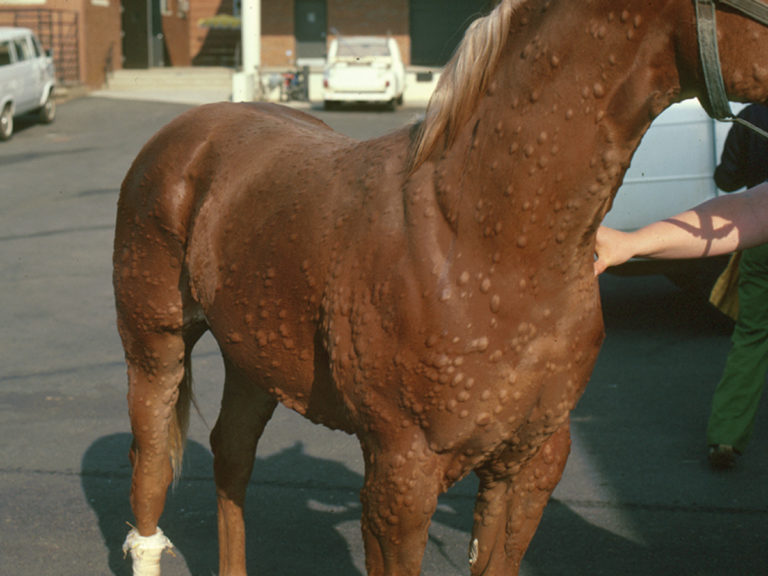
hives in horses

Stay on top of the most recent Horse Health news with

FREE weekly newsletters from TheHorse.com

Weekly Poll

sponsored by:

Create a free account with TheHorse.com!

The Horse
Privacy Overview

This website uses cookies so that we can provide you with the best user experience possible. Cookie information is stored in your browser and performs functions such as recognising you when you return to our website and helping our team to understand which sections of the website you find most interesting and useful.