The pony was not vaccinated against the virus, which is spread by mosquitoes.

This is the state’s 16th case of EEE in an equid in 2021.

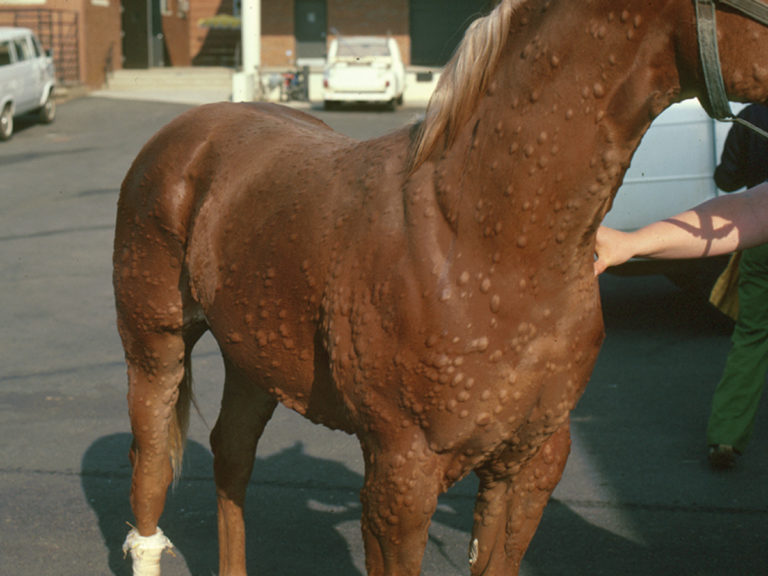
A researcher describes ectoparasites, infections, and hypersensitivity disorders that can cause pruritus in horses.

Rabies infection can be insidious and vague, posing a threat to you, your horses, and your pets without you even realizing it.
Both horses were unvaccinated for EEE and were euthanized.

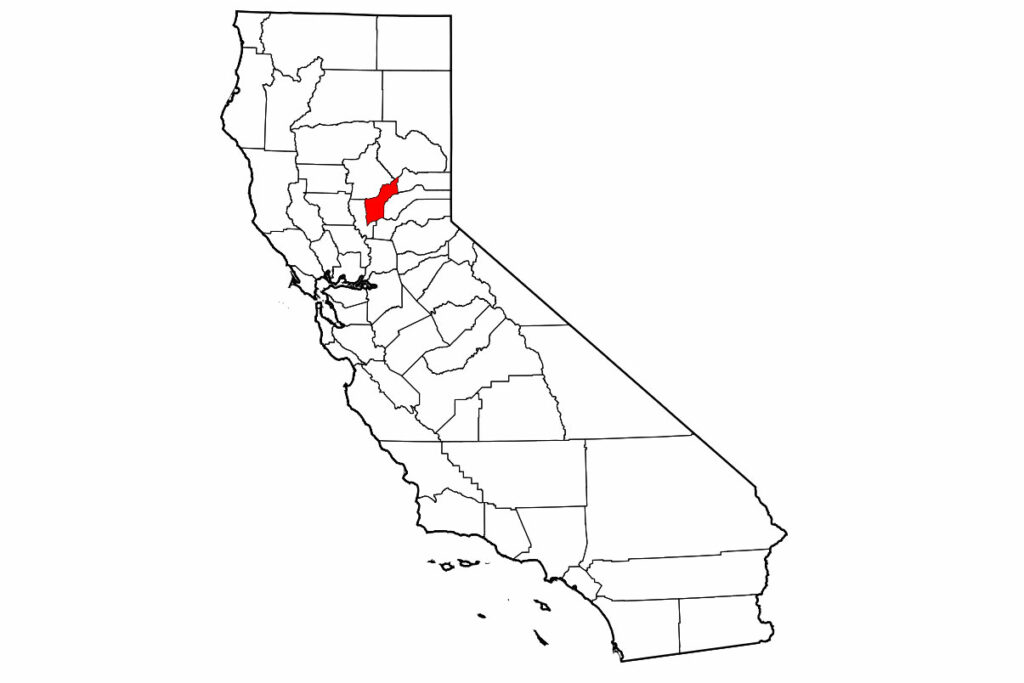
The horses are located in El Paso and Logan counties.

The horse was unvaccinated for the potentially fatal mosquito-borne disease.

The Snyder County horse was confirmed positive by the state veterinarian’s office.

Thirty-eight exposed horses on the affected horse’s premises are under official quarantine.

The mare’s boarding facility had pre-emptively enacted movement restrictions following a mare in another province showing clinical signs days earlier.

The horse marks the state’s second confirmed equine case in 2021.

Movement restrictions have been enacted on the affected horse and any potentially exposed equines.

The affected horse presented with depression and lethargy.

The case is the state’s third equine confirmed in 2021.