Equine Safety and Yellow Buttercups
Buttercups can cause mouth pain and blisters, drooling, oral and gastric ulcers, colic, and diarrhea in horses that eat them.

Buttercups can cause mouth pain and blisters, drooling, oral and gastric ulcers, colic, and diarrhea in horses that eat them.

Aged horses require the same, if not higher, level of care as their younger counterparts. Learn about the unique needs of old horses, and meet five over-30 horses with age-related ailments.
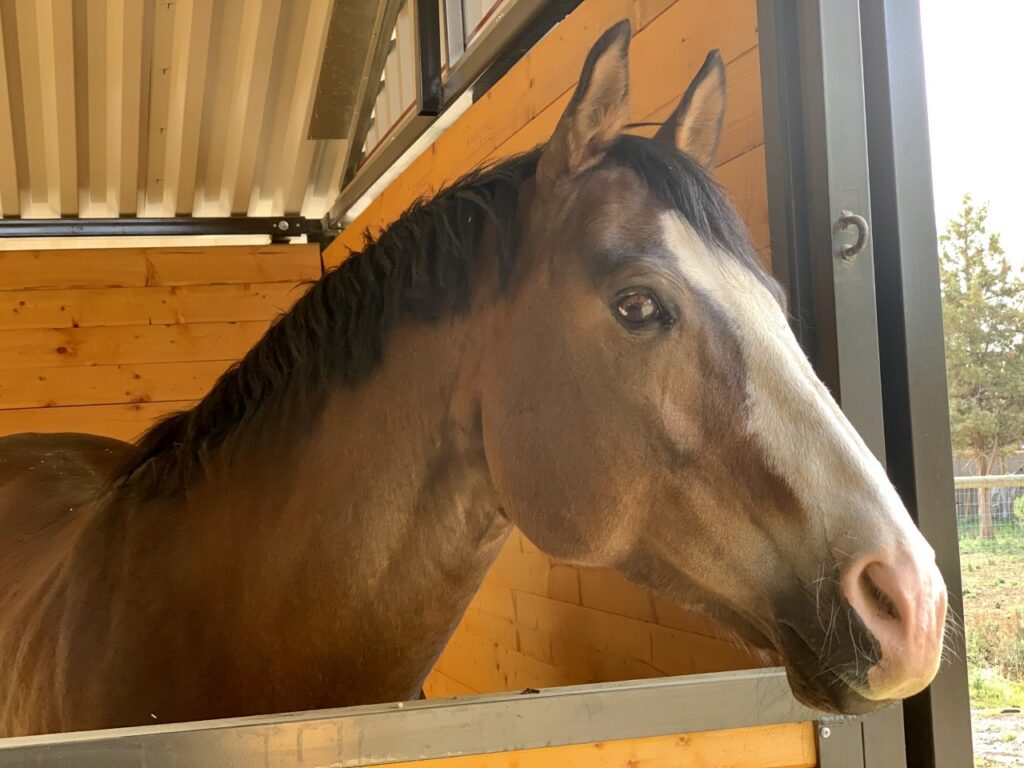
Does your horse break out into hives during stressful situations?

Officials have imposed a quarantine on the affected horse’s premises.


My older horse has respiratory allergies. Is there anything I can do to help him breathe easier while wearing a muzzle?

Colitis is inflammation of the large or small colon that can lead to diarrhea, proliferation of harmful bacteria, and even death in severe cases.

Horses might chew trees for a variety of reasons, such as boredom or nutritional deficiency. Learn about the benefits and risks, and how to protect your horses and your trees.

In horses, guttural pouches can be the source of various bacterial and fungal infections. A veterinarian explains how empyema, chondroids, mycosis, and other conditions can afflict these structures.
The horses resided at the same Shelby County boarding facility.
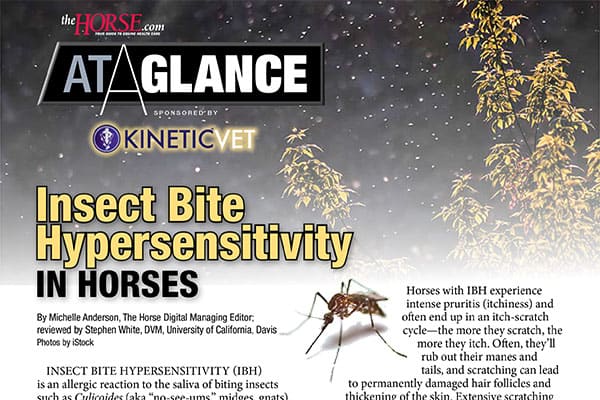
Do you have an itchy horse? We have help! Check out our special report on sweet itch. Sponsored by Kinetic Vet.

Four horses tested positive, eight are suspected positive, and four more were potentially exposed after traveling to a New York show.

In addition to the three affected horses, 43 horses were potentially exposed.


A study looking at fasting horses might help scientists better interpret microbiota test results in colicking horses.
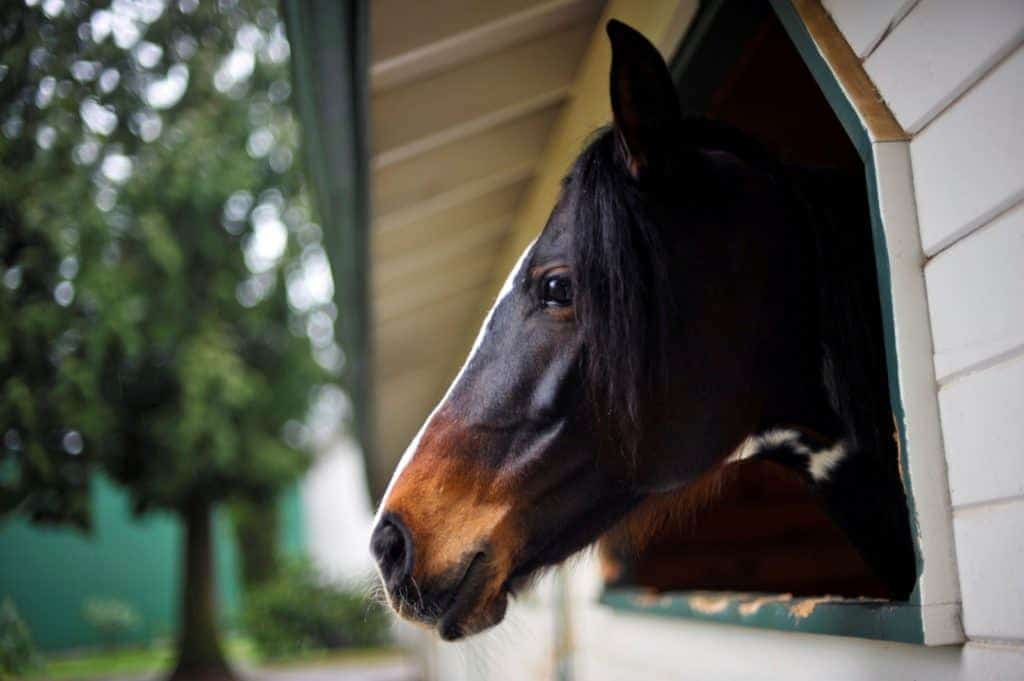
If you’ve got a horse with insect bite hypersensitivity, midges might not be your only problem. Researchers found that IBH horses are more likely to develop allergic reactions elsewhere—specifically, in the breathing passages.