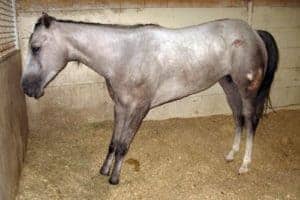
Managing Obese Horses to Prevent Laminitis
Blood insulin levels can warn of increased risk of laminitis in obese horses and ponies and spur owners to mitigate it.

Blood insulin levels can warn of increased risk of laminitis in obese horses and ponies and spur owners to mitigate it.

Hyperinsulinemia-associated laminitis has become a great risk for the health and welfare of domestic horses. Although medications for this condition exist, they cannot replace good management.
Horses with ID are at greater risk of developing laminitis. Knowing if your horse has a metabolic problem can help you prevent this painful condition.

Learn how smart trimming and shoeing techniques can help arthritic horses.

Cadaver hoof study confirms expectation that heart-bar shoes can reduce coffin bone motion in horses with laminitis.

Reacting quickly and correctly to an episode of HAL will give your horse a greater chance for future soundness.

When managing laminitic horses, making dietary changes is often necessary for the success of other treatment efforts.

Learn why some horses are more likely to develop EMS and associated laminitis and how to tell if your horse is at risk.

Punctures, abscesses, and worse: What to do when your horse’s hoof is hurting and whom to call for help.

Learn about the 4 stages of wound repair and the steps you can take to help your horse’s wounds heal.

When a horse’s healing process gets derailed, wounds can become chronic. Here’s how to prevent complications.

Discover what researchers are learning about the microbiota’s role in the horse’s digestive system, respiratory tract, skin, and more.

Our equine nutrition expert offers a reader advice on how to feed a thin horse with a history of laminitis without causing another bout of the disease.

Is club foot an inherited condition in horses? A veterinarian offers her thoughts.

No horse is perfect, and many with conformational flaws go on to compete successfully. What can you live with and how?
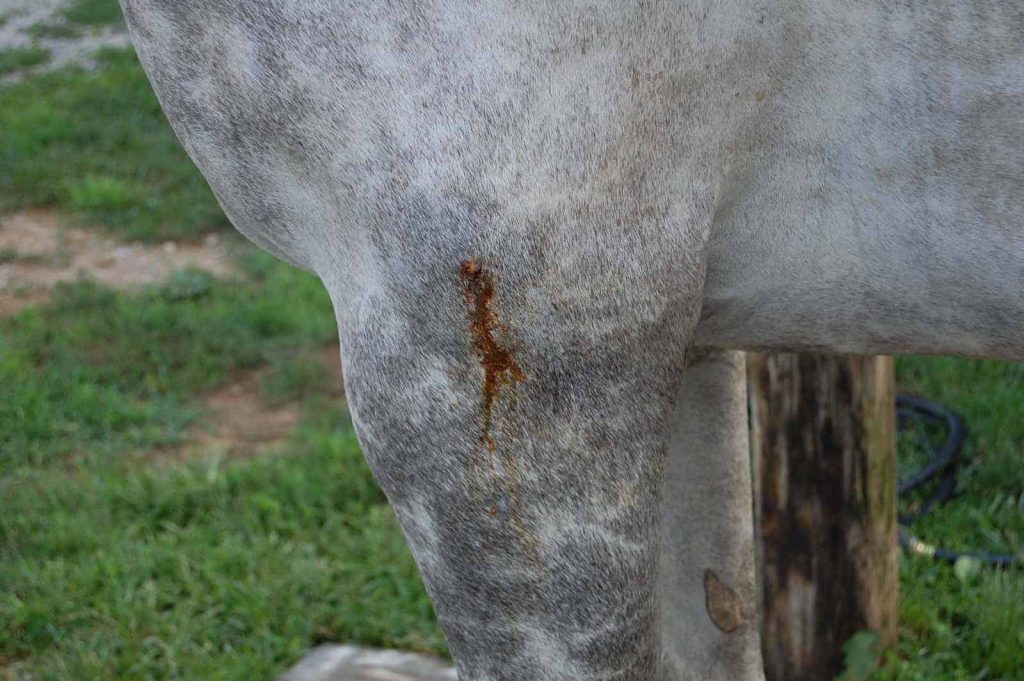
They might appear minor on the surface, but puncture wounds can involve dangerous underlying damage and infection. Here’s what you need to know about these injuries.