Colorado Confirms First Equine West Nile Case of 2013
A 3-month-old colt from Montezuma County, Colo., has tested positive for West Nile virus.

A 3-month-old colt from Montezuma County, Colo., has tested positive for West Nile virus.

Two unvaccinated horses residing in western Idaho have tested positive for West Nile virus (WNV).

The U.S. Geological Survey WNV disease map indicates this is the first equine WNV case reported this year.
One recent study found tick paralysis had a 26% mortality rate in affected Australian horses.
Veterinarians say the identification of the parasite in a Florida horse is cause for increased vigilance.

How have you been addressing West Nile virus prevention in your horse(s)? How have you tackled mosquito source reduction in your barn area?

The very safest method of mosquito control for you, your horses and the environment includes reducing the breeding ground for mosquitoes: mud and stagnant water. Here is a checklist of horse farm management techniques for reducing mosquito habitat.

Mosquitoes are more than just annoying, blood-sucking pests—they also carry infectious diseases that can incapacitate or kill your horses.
While fall armyworm is a pest of cattle and horse pastures, it should not affect horses.
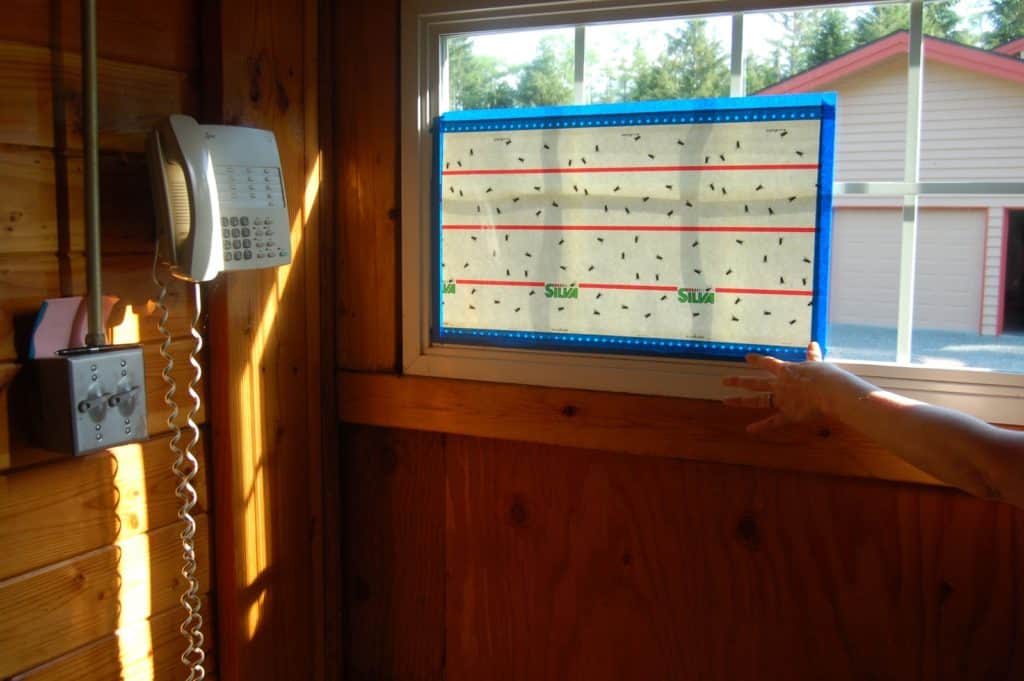
An integrated pest management program can help insects, such as flies and mosquitoes, from bugging you and your horses. Here are a few inexpensive tips.
Horse owners in many parts of the United States already deal with concerns of blister beetles in alfalfa hay as part of their everyday regimen.

Is your horse a noisy and uncomfortable breather? Does he struggle to breathe when you’re riding? Is his performance suffering because of it?

According to a recent study, a coat pattern with numerous narrow stripes deteres horseflies from landing.
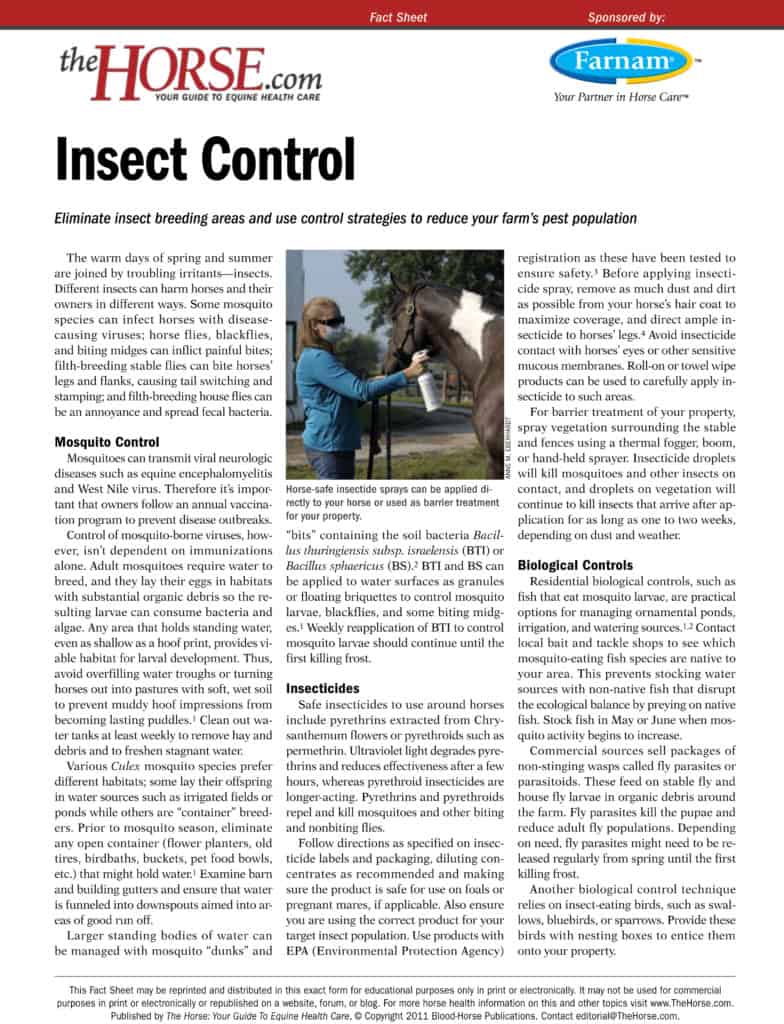
Reduce your horse farm’s fly and mosquito populations by eliminating insect breeding areas and using pest control strategies, such as insecticides, biological controls, and good hygiene.
As rain continues across the state, insects might find their way into people’s waterlogged backyards, homes,

By providing swallows with nest boxes, you can help their populations increase and make a huge dent in the numbers of insects around your property this summer.