Infographic: Protecting Your Horse From Disease
An equine disease outbreak can be dangerous for your horse and expensive for you. Protect your horse from infectious disease exposure by using tips from our step-by-step visual guide.

An equine disease outbreak can be dangerous for your horse and expensive for you. Protect your horse from infectious disease exposure by using tips from our step-by-step visual guide.

Is your horse showing clinical signs of an infectious disease? Here’s how to care for your horse and protect others in our step-by-step visual guide.

All owners should know their horses’ normal vital signs and how to take them correctly. Here’s a review.

Blood testing can provide important information, but it almost always needs to be interpreted relative to the clinical examination findings, history, and additional testing in order to arrive at an accurate diagnosis of the problem.

Spring is a great time to schedule a veterinary visit and create a vaccination plan for your horse. Get the most out of your horse’s annual wellness exam with help from our experts.

Should routine blood tests be used to assess a horse’s health as part of a prepurchase exam?

Vets caring for Friesians should interpret a few tests differently than they would in the average horse.
The program includes lectures on feeding senior horses, saddle fitting, moon blindness, bandaging, and more.
Every horse owner or caretaker should know how to take a horse’s temperature, pulse, and respiration.

The mucous membranes can provide useful clues about the health of the internal workings of a horse.
Temperature, pulse, and respiration are three vital signs to know how to check if you own or ride horses.
The easiest place to take a horse’s heart rate, or pulse, is the mandibular artery located under the jaw.
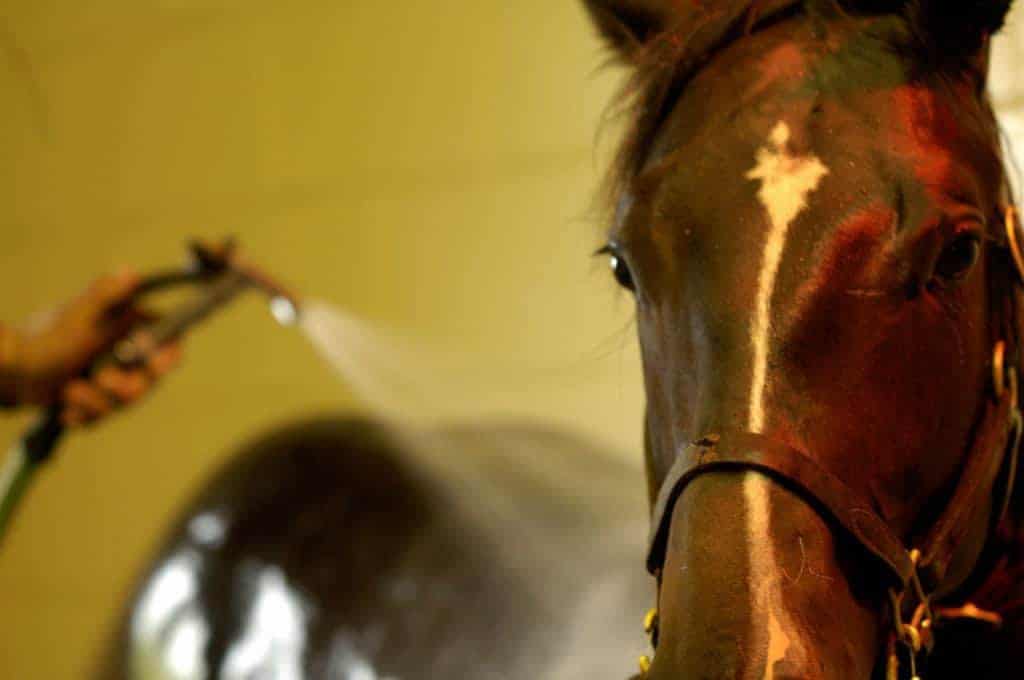
What are some signs that a horse has overheated?
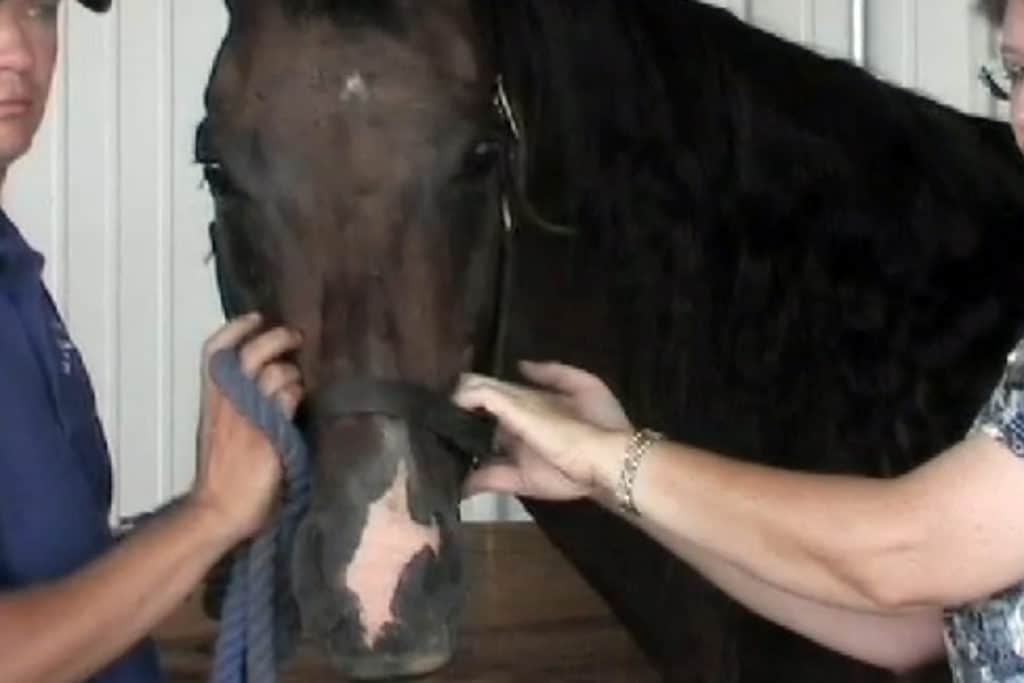
Dr. Scott Palmer explains how vital signs are used to monitor racehorses during and after training.
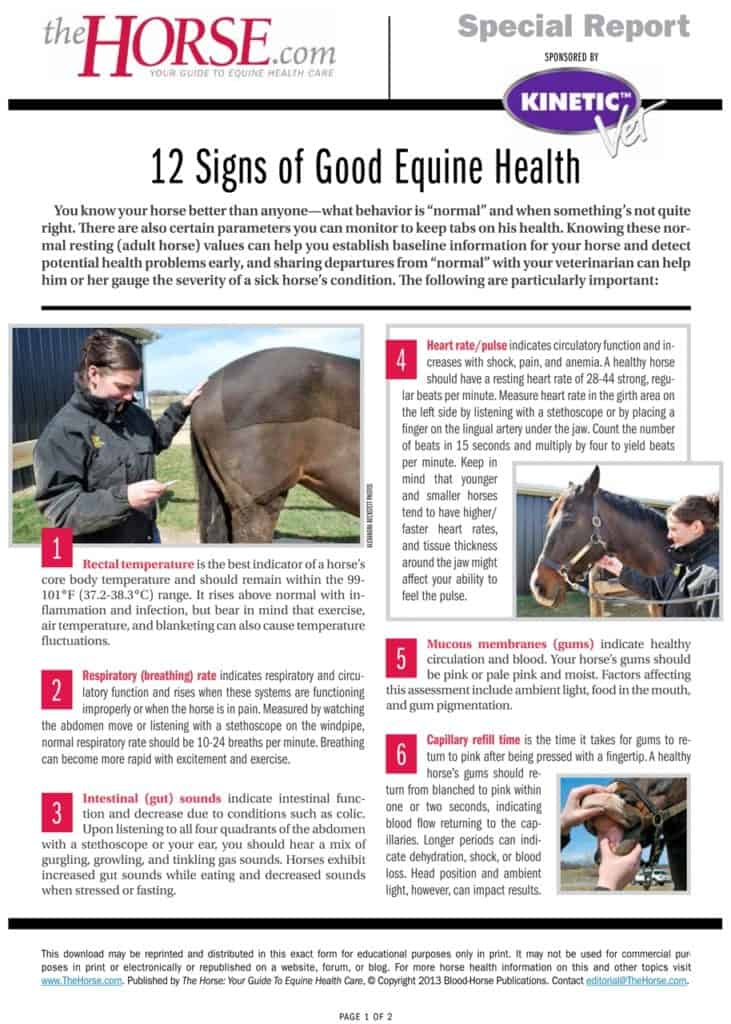
Knowing normal resting (adult horse) vital-sign values can help you establish baseline information for your horse and detect potential health problems early. Learn how in this special report.
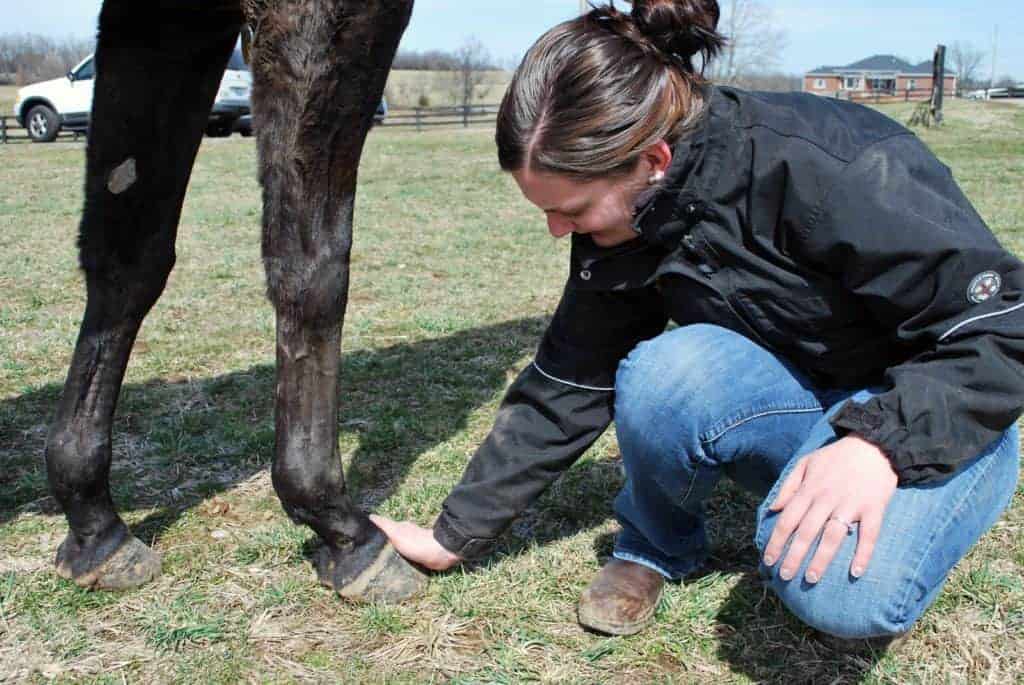
Examine your horse’s vital signs, body, and behavior on a regular basis to be a better horse owner.