The Road to Recovery: Rehab for the Horse’s Upper-Body
In the first of this two-part series, we’ll explore full-body rehabilitation options, from the horse’s head to tail.

In the first of this two-part series, we’ll explore full-body rehabilitation options, from the horse’s head to tail.

Read top tweets and take-home messages from industry experts on common racing injuries, their approach to effective rehab and what they’ve seen horses go on to do after recovery.

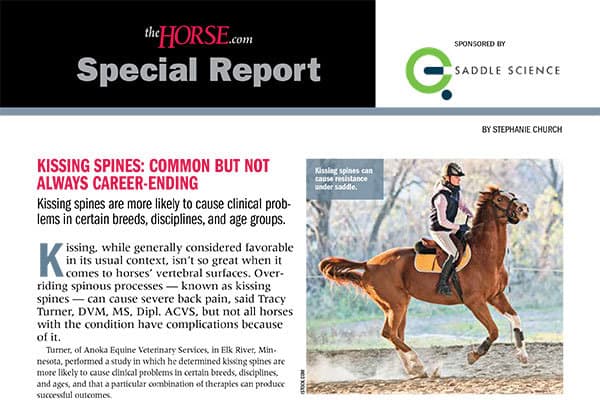
Kissing spines are more likely to cause clinical problems in certain horse breeds, disciplines, and age groups. Download this special report to learn more.

Veterinarians have tested a new method for assessing equine performance with positive results.

The saddle you bought a decade ago for your now-retired show horse doesn’t fit your new prospect. Now what? Learn how to find a saddle fitter, buy or modify a saddle, and recognize the right fit for your horse.

Degeneration involves changes in the discs’ color, texture, and integrity due to age and possibly use, researchers said.
Researchers in the United Kingdom are hoping owners of horses diagnosed with or suspected of having back problems will complete a survey for a study in progress.

Horseback riding requires healthy backs–not just for horses but also humans. In fact, human back health can have direct implications on equine back health, as well as the horse’s welfare and performance.

Funtional electrical stimulation, or FES, might help reduce back pain in horses with asymmetric multifidi muscles, researchers found.

Vets discussed kissing spines, memory foam, English and Western saddle fit, rider weight, rein lameness, and more.

Having your saddle fit is paramount to your horse’s comfort and soundness.

Most respondents said their horses’ comfort is the most important factor when choosing a saddle pad.

Articles on laminitis, colic, hoof abscesses, licking and chewing, and wound care are among the most-read in 2017.

Rider biomechanics significantly impact horse biomechanics, affecting performance, musculoskeletal health, and welfare.

Lameness was the most common issue ride vets found, but 48% of affected horses had no further vet exams or treatment.
The program will focus on the latest research, from equine pain recognition to rider posture and equine biomechanics.
Stay on top of the most recent Horse Health news with
"*" indicates required fields