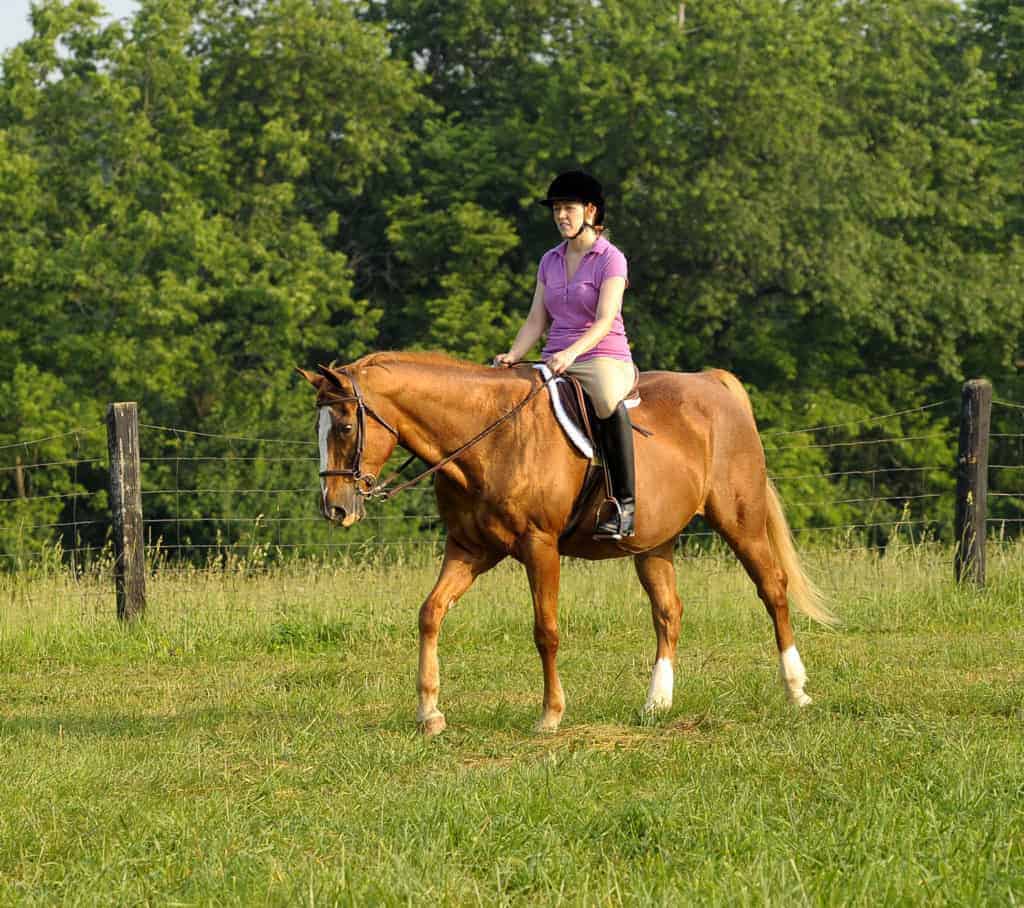
Older Horses: Decreased Thermoregulation During Exercise
Senior horses have a propensity for developing hyperthermia, or elevated body temperature, when exercising.

Senior horses have a propensity for developing hyperthermia, or elevated body temperature, when exercising.

Researchers recently investigated how certain arthritic joint tissues respond to treatments such as shock wave.

Fluid caused little reaction in some horses’ stem cells but promoted or inhibited growth in others.

Adjusting what a horse consumes can help prevent or squelch some equine ailments.
As lush summer grass grows, unfortunately so does your horse’s risk for laminitis.
The Ohio State University College of Veterinary Medicine is seeking horses diagnosed with osteoarthritis to
Researchers are examining a promising genetic lab approach to curing osteoarthritis (OA) in horses.
A team of researchers recently determined what they believe to be the ideal first step for diagnosing PPID
“The Horse Owner’s Guide to Regenerative Medicine” will take place June 4 from 2:00 to 5:00 p.m., in Lexington
The Equine Cushing’s and Insulin Resistance Group (ECIR Group) recently announced plans for the First Annual No Laminitis! Conference to take place on Aug. 5-7, 2011, hosted by Black Horse Consulting in conjunction with DeMario Farms of Chittenango,
My mare foaled in November 2007 and to date (Feb. 2011), she still produces enough milk that when you…
Equine endocrine disorders–namely pituitary pars intermedia dysfunction (PPID, or equine Cushing’s disease) and equine metabolic syndrome– represent an area of horse health that researchers are still working to fully understand. The collective
The University of California, Davis, annual equine medicine symposium is scheduled for April 9. This year’s topic is “The Golden Years: Helping Your Horse Mature Gracefully,” and it will cover everything you ever wanted to know about helping your
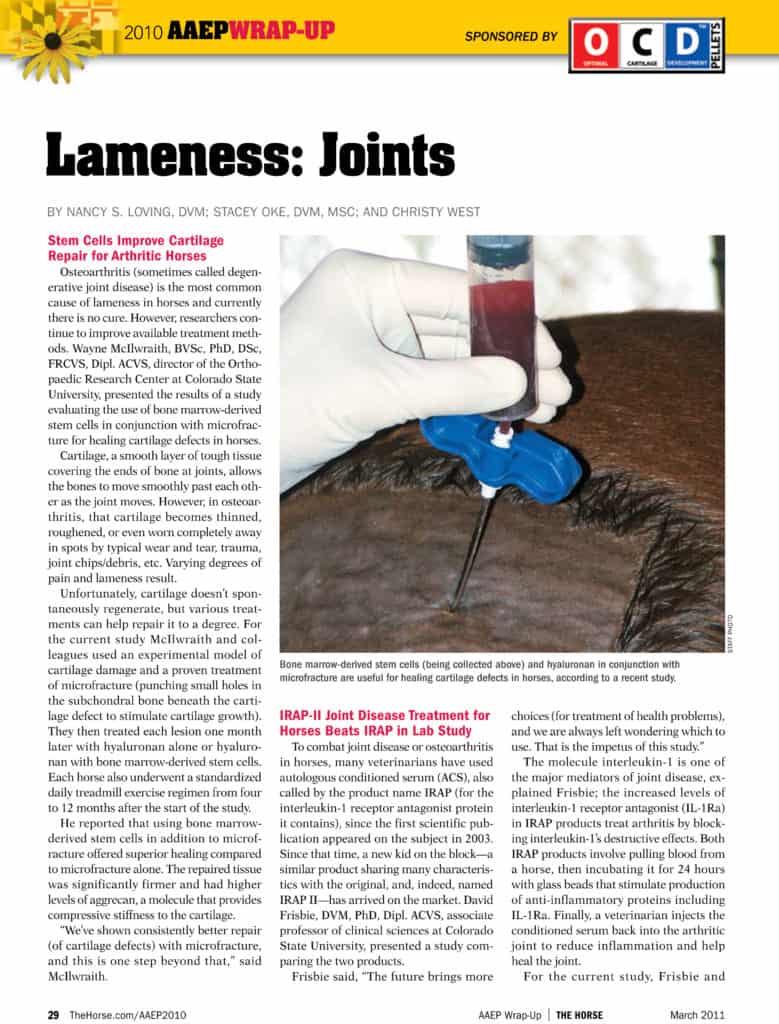
During the 2010 American Association of Equine Practitioners convention, veterinarians discussed the use of stem cells for arthritis in horses, irap vs. irapII, joint health supplements, TMJ disease, non-surgical pastern joint fusion, stifle abnormalities in cutting horses, and embryonic stem cells for tendon repair.

Equine osteoarthritis is expensive to manage, with estimated annual costs as high as $10,000-15,000 per horse to diagnose, treat, and medicate, researchers found in one study.
Midwest horse enthusiasts are encouraged to register for the Illinois/Wisconsin Bi-State Horse Workshop on April 2, at the Kenosha County Center in Bristol, Wis. A full-day program organized and sponsored by Illinois and Wisconsin Cooperative