Equine Joint Injections
Equine joint injections can help veterinarians diagnose lameness or medicate a horse’s painful joint.

Equine joint injections can help veterinarians diagnose lameness or medicate a horse’s painful joint.

Just because a horse is older does not mean he needs a special diet. However, many older horses with special physical or nutritional needs (geriatric horses) require specific diets and feed modifications to maintain good health and body condition.

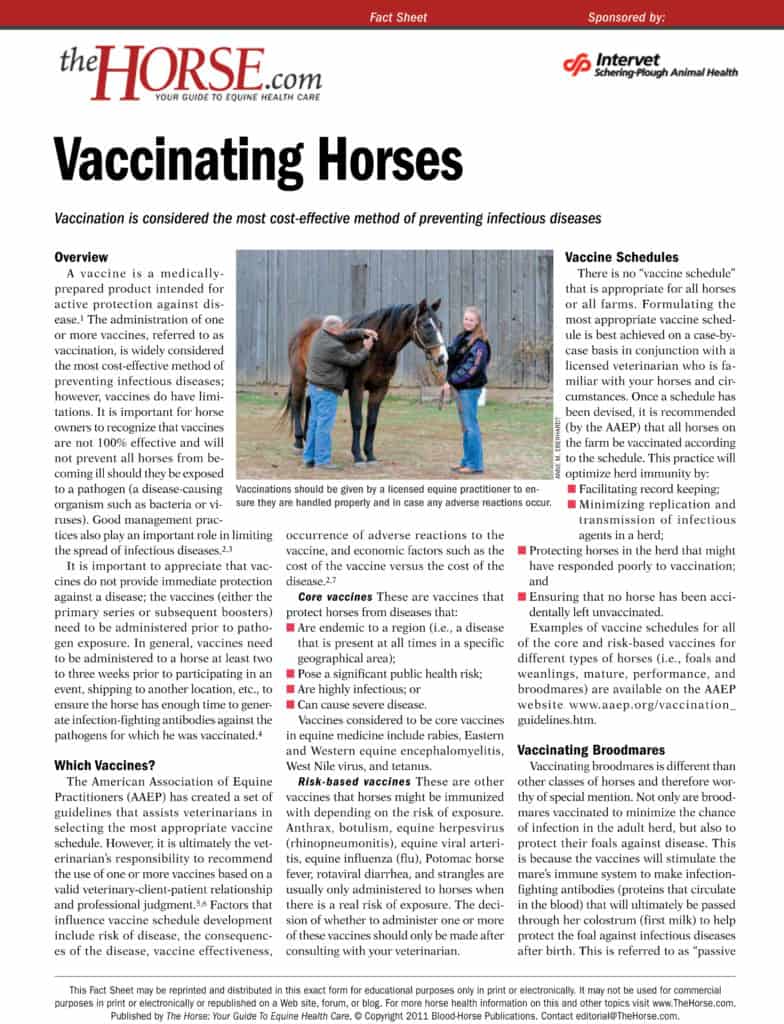
Vaccinating horses is generally considered to be the most cost-effective method of preventing infectious diseases; however, vaccines do have limitations.
A joint is defined as an anatomic union or junction between two or more bones. There are three basic types of joints in the horse: Synovial, fibrous, and cartilaginous.

Equine joint supplements have been purported to decrease inflammation, increase mobility, and more. This guide to equine joint supplements includes a seven-step quality evaluation process and tips for choosing a safe and effective product.

Equine arthritis refers to an inflammation of the joint. There are different kinds of arthritis, such as septic arthritis and rheumatoid arthritis. However, the most important arthritis affecting horses is osteoarthritis.

Know the facts of Equine Cushing’s, a hormonal disease in horses often linked to a pituitary gland tumor. Included in this fact sheet are an overview of the disease, clinical signs, diagnosis, treatment, and prognosis for future health.
Equine metabolic syndrome is a devastating disease characterized by the three main features of obesity, insulin resistance, and laminitis. Certain breeds or individual horses are predisposed to EMS, and are often referred to as “easy keepers.” These
Learn about the normal functions of bones, cartilage, soft tissues, and fluids within the fetlock joint.

Navigating through the volumes of information on equine Cushing’s disease and equine metabolic syndrome (EMS) can be time-consuming, frustrating, and extremely confusing for horse owners. The two diseases are somewhat similar, but treatments differ.
What was the hottest news in equine veterinary medicine in 2009? During the popular Kester News Hour session at the annual American Association of Equine Practitioners (AAEP) Convention, three top veterinarians (who focus on equine reproduction
The hottest news in equine lameness and surgery was presented the popular Kester News Hour session at the annual American Association of Equine Practitioners (AAEP) convention.
Horses with Cushing’s disease tend to have higher fecal egg counts than healthy horses.
Osteoarthritis (OA) is a major cause of wastage in the equine industry, especially considering that an estimated 81% of the 9.3 million horses in America are involved in equitation and performance. A mainstay treatment for OA is the use of
Osteoarthritis of the distal (lower) hock joints is a common performance problem in sport horses.
Kristine Urschel, PhD, assistant professor in Animal and Food Sciences at the University of Kentucky, has been awarded a two-year $100,000 grant by the Morris Animal Foundation.
Stay on top of the most recent Horse Health news with
"*" indicates required fields