Horse Health Recommendations for Extreme Winter Conditions
Dr. Pamela Wilkins offers recommendations for horse safety in extreme winter conditions, including providing shelter, warm water, and protecting older horses.
How to care for the basic health needs of horses

Dr. Pamela Wilkins offers recommendations for horse safety in extreme winter conditions, including providing shelter, warm water, and protecting older horses.

No building is completely fireproof, but farm owners and managers can take certain steps to minimize the chances of a fire occurring.
“Back problems can be performance-limiting in the horse due to pain and reduced range of motion and flexibility,” reported Kent Allen, DVM, of Virginia Equine Imaging, as he presented on equine back pain at the 2010 American Association of Equine Practitioners Convention, held Dec. 4-8 in Baltimore Md.

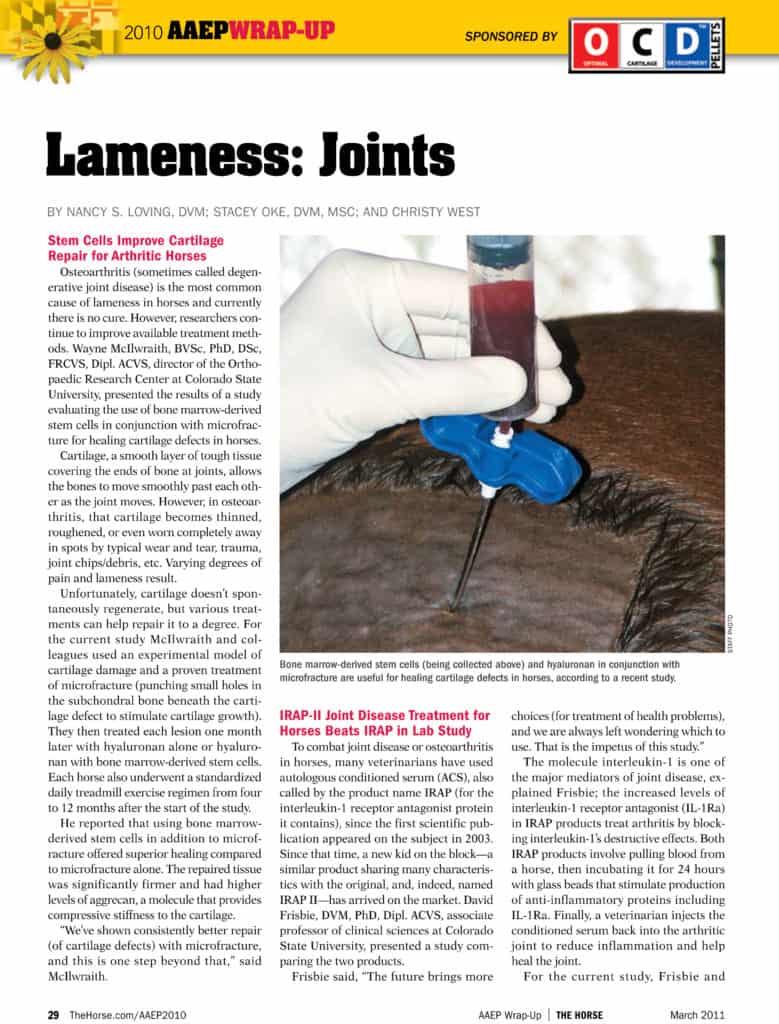
Back problems, stem cells for tendon injury, rehabilitating after an injury, pigeon fever, and more were discussed during the Lameness/Soft Tissue session at the 2010 American Association of Equine Practitioners convention. (Interview with moderator Dr. Brad Jackman)
Cold winds and changing winter weather might not seem like contributing factors for equine colic; however, these conditions can foster changes in routine and eating habits that could affect your horse’s well-being.
Current evidence suggests that the most successful treatments are a combination of the drug rifampin and a macrolide (an antimicrobial drug).

Excerpted tips on properly caring for the pregnant mare, newborn foal, and growing foal up to weaning with Dr. Nathan Slovis of the Hagyard Equine Medical Institute.

Preparing your horse for winter means different things in different geographic areas. For some, winter is time to remove a horse’s shoes and give him a break, while for others winter is a prime show season.
A survey September 2010 conducted by Saddle Up Safely, a rider safety awareness coalition of 40 community organizations led by the University of Kentucky College of Agriculture’s Equine Initiative and UK HealthCare, reveals that equestrians are experiencing too many riding accidents that could be prevented or minimized.

Learn about your horse’s skull and teeth, and where you should never hit your horse, in this anatomy video with Dr. Roberta Dwyer of the University of Kentucky.

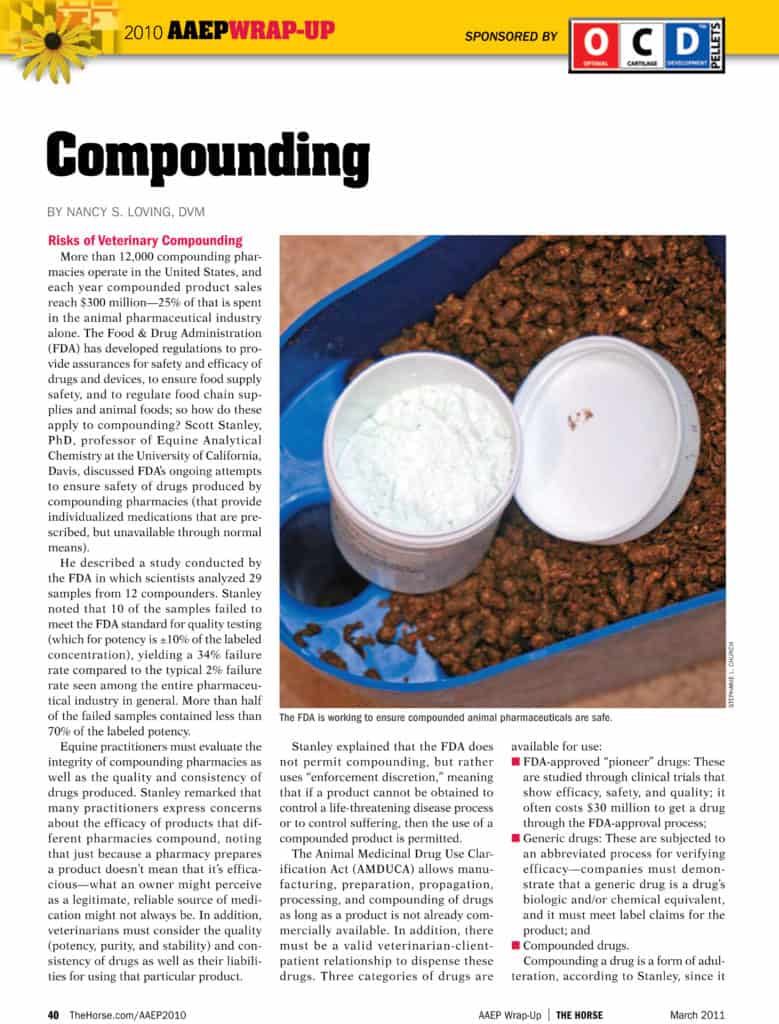
Discussion of compounded medications for horses, including legal/illegal use and potential risks, by Scott Stanley, PhD, of the University of California, Davis. (Presented at the 2010 American Association of Equine Practitioners convention)

Discussion of the session on sedatives and anesthetics for horses at the 2010 American Association of Equine Practitioners convention with Dr. John Hubbell of The Ohio State University.
Kentucky is in the throes of an early season arctic blast that could cause problems for livestock operations. A blast of arctic air recently filtered into the lower Ohio Valley, resulting in highs only in the 20s for most Kentucky locations. These temperatures combined with gusty winds causes an extended period of livestock cold stress in the danger and emergency categories.

Dr. Paul Morley discusses infectious diseases and biosecurity as they relate to both animals and people.

What hidden dangers lurk in your barn? Learn how to maximize air quality and improve safety in the stable.

Discussion of threats to U.S. agrosecurity (security of agriculture industries) and ways we can protect ourselves and our horses from intentional and unintentional threats.
Stay on top of the most recent Horse Health news with
"*" indicates required fields