Poll Recap: Sun Protection for Horses
Of the 529 respondents, 154 said they apply sunscreen and/or zinc oxide cream to protect their horses from sunburn.

Of the 529 respondents, 154 said they apply sunscreen and/or zinc oxide cream to protect their horses from sunburn.
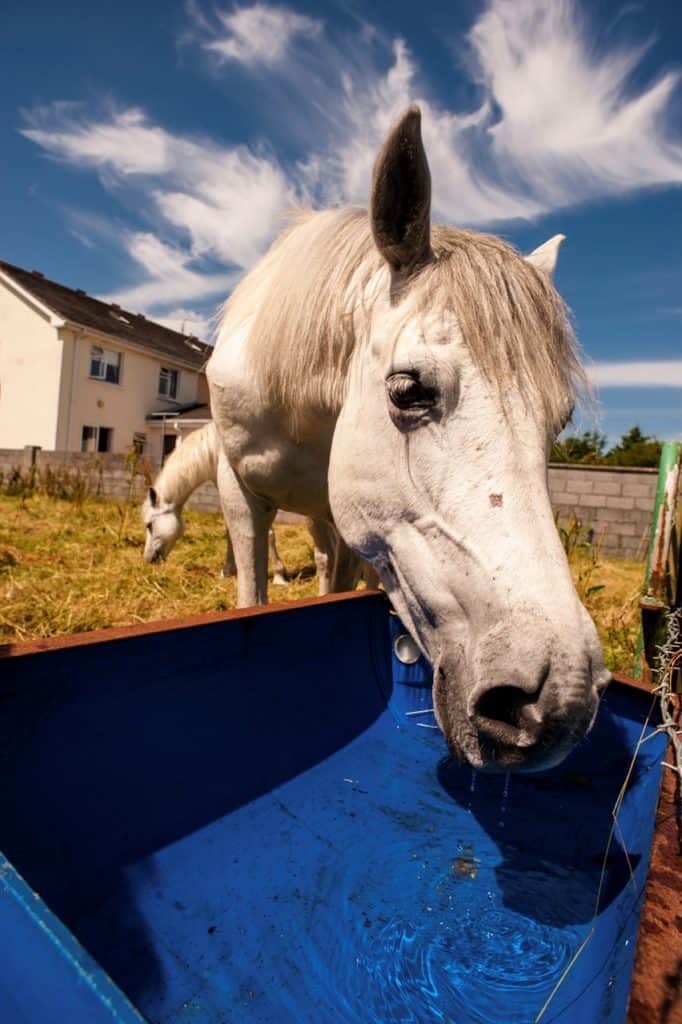
A lack of water in your horse’s diet can have serious consequences. Here’s what to remember.

Janet Johnston, DVM, Dipl. ACVIM, ACVS, shares 10 tips to keep horses comfy and safe in the summer heat.

Learn about this frustrating contagious equine skin disease and how to prevent its spread.
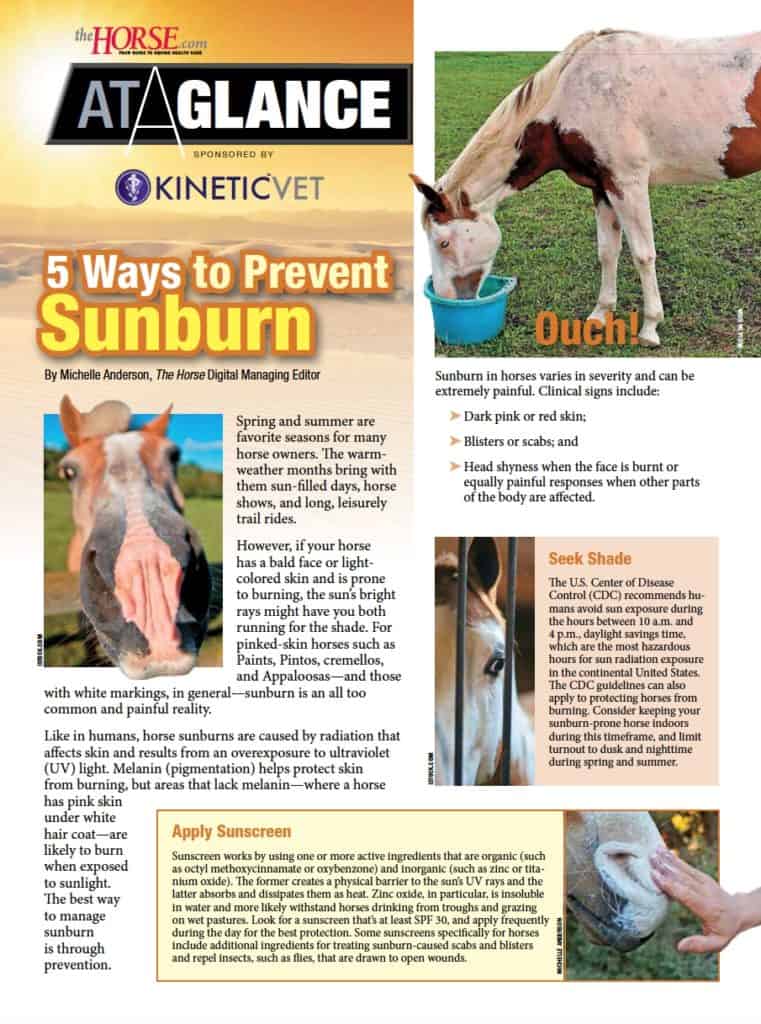
Use this cheat sheet to protect your horse from the sun’s harmful UV rays.

Sun damage is serious in horses. In this infographic, find how to protect you pink-skinned horses from the sun.
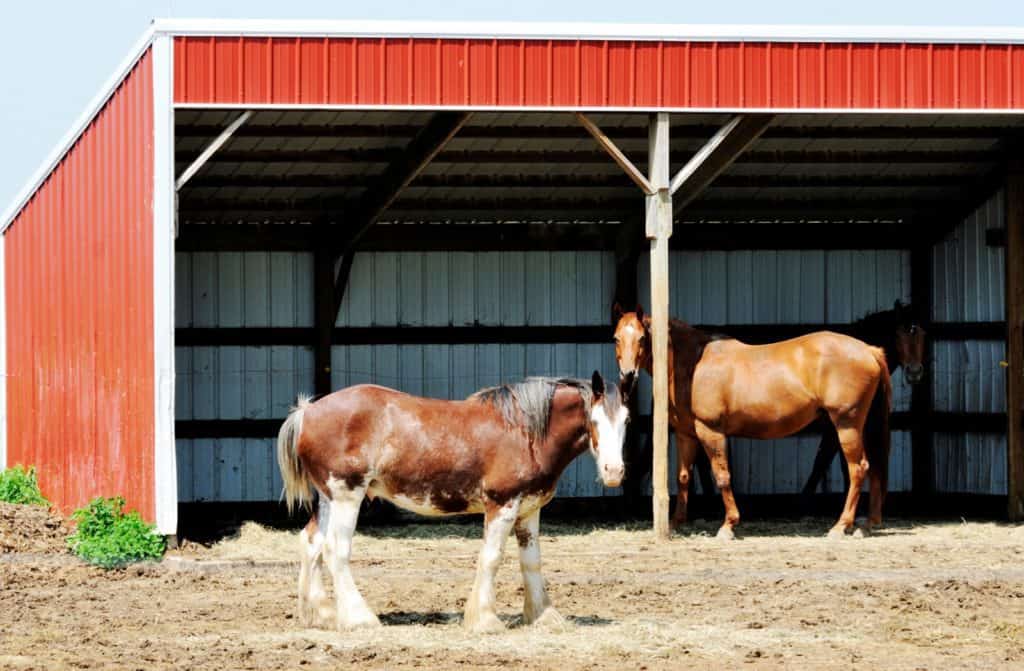
Researchers found providing a climate-appropriate shelter in the summer can provide horses with shade and insect relief.
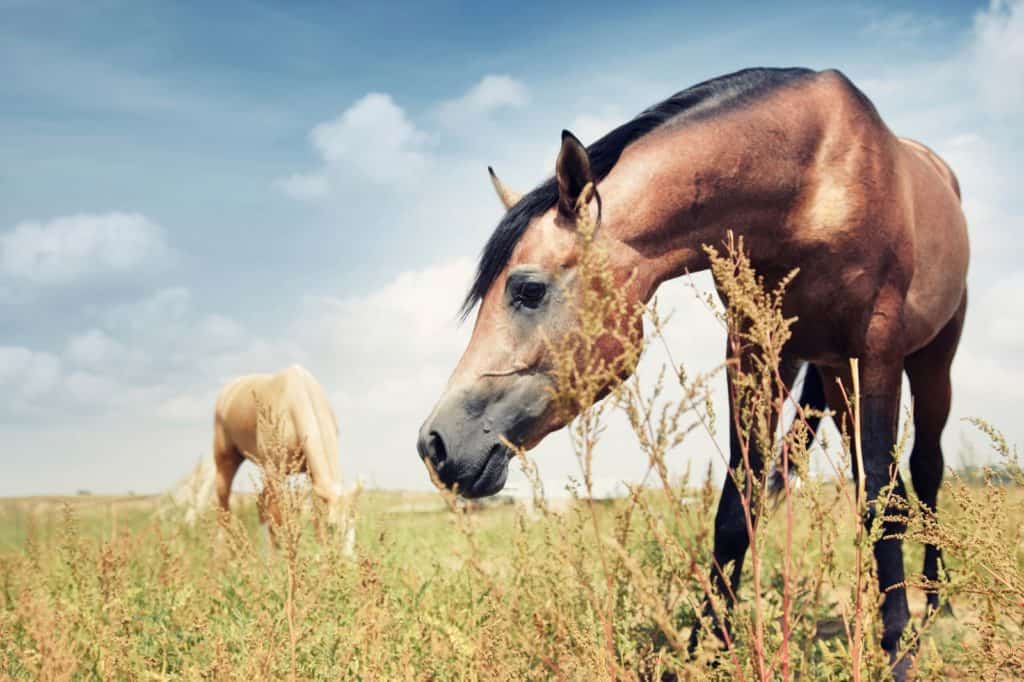
Asthmatic horses’ clinical signs worsened when temperature and humidity increased suddenly, researchers found.

Learn more about this potentially dangerous condition in horses and how to manage it.

From providing water and electrolytes to monitoring the temperatures and riding accordingly, remember these top tips.

Of the 804 respondents, 429 said they give their horses electrolytes year-round, after hard work, or during the summer.

More than half of the 1,474 respondents (761) said they do not ride their horses when it is warmer than 90 degrees.

Trees, sheds, and other structures can provide horses relief from wind, rain, heat, and more. Here’s what to remember.

Anhidrotic horses don’t sweat well or at all, which can be dangerous in warm climates. Here’s what to watch for.

Regulating body temperature becomes difficult for all horses when temperatures exceed 90 degrees, so avoid exercising them during very hot periods.
Summer means hot, humid weather in many parts of the country. Learn what steps to take to ensure your horses stay cool and comfortable when temperatures rise.