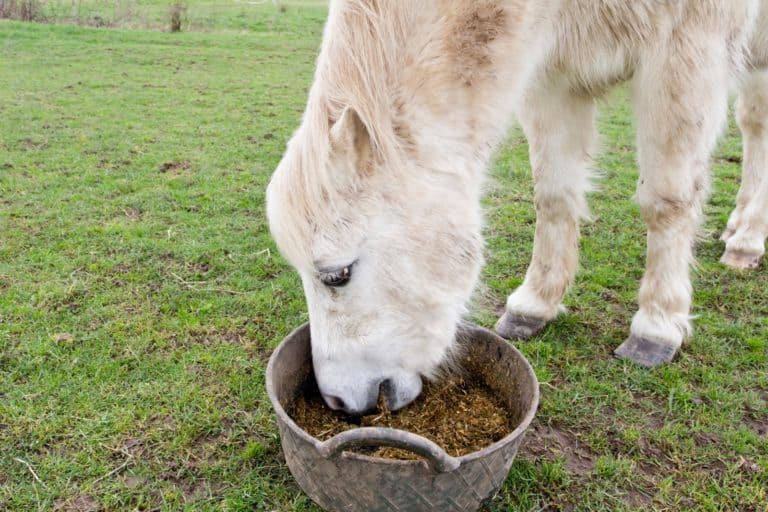
How Can I Combat My Senior Horse’s Loose Manure?
Why might replacing long-stem hay with hay pellets help resolve a senior horse’s loose manure? Our equine nutritionist weighs in.

Why might replacing long-stem hay with hay pellets help resolve a senior horse’s loose manure? Our equine nutritionist weighs in.
Learn how to read supplement labels and the difference between ingredients that offer potential therapeutic benefits and those meant to improve flavor or act as preservatives.

Our nutritionist helps a reader make sense of horse feeds advertised as low-sugar, low-starch, lite, and more.

Find out why this grass is a popular hay for horses and how, in some cases, it might cause problems.

Our equine nutritionist offers suggestions for finding a grazing muzzle to fit your horse.

Our equine nutritionist explains the differences between horse life-stage and feed types.

Make sure your horse’s diet supports his regular exercise program with these tips.

A ration balancer might offer the best balance of nutrients and protein for your horse during stall rest.

In regions with mild climates, proper pasture management can allow horses to graze throughout the year.

Our nutritionist weighs whether steaming or soaking hay is more effective at reducing NSC levels for horses with insulin resistance.

Many gastric-support supplements include pectin and lecithins. Find out how they might help horses with EGUS.
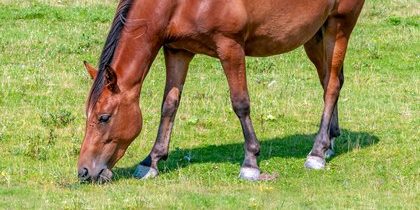
Our nutritionist explains how horses break down dietary fat despite not having a gallbladder for bile storage.

While scales are most accurate, they’re not always accessible. Here are some other weight estimation techniques to try.
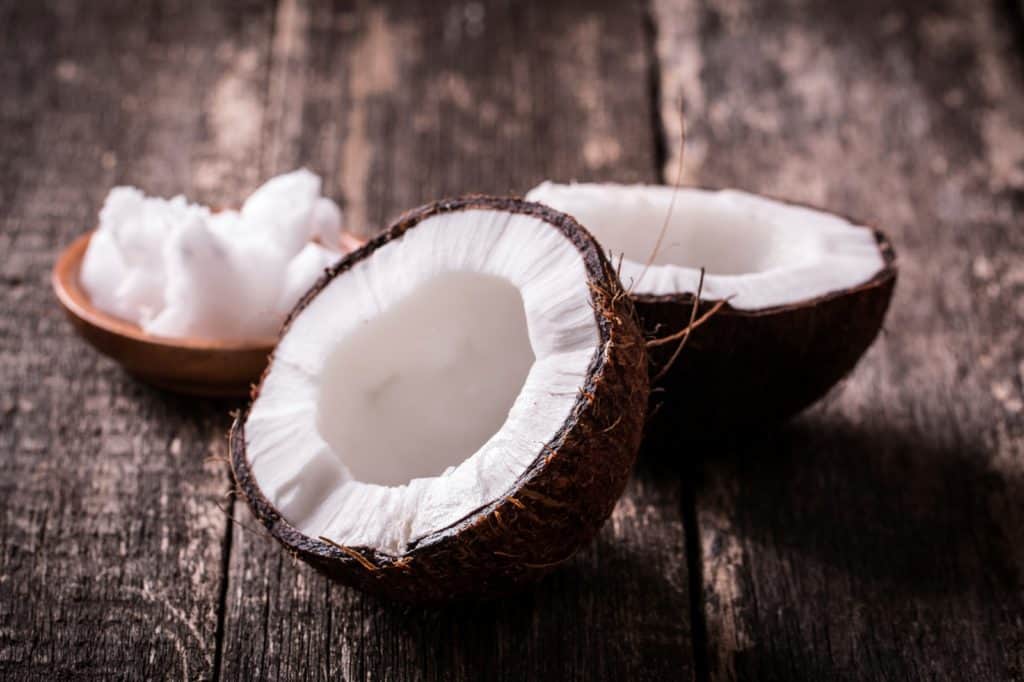
Is rice bran or coconut (copra) meal a better option to help a horse gain weight? Our nutritionist shares her thoughts.
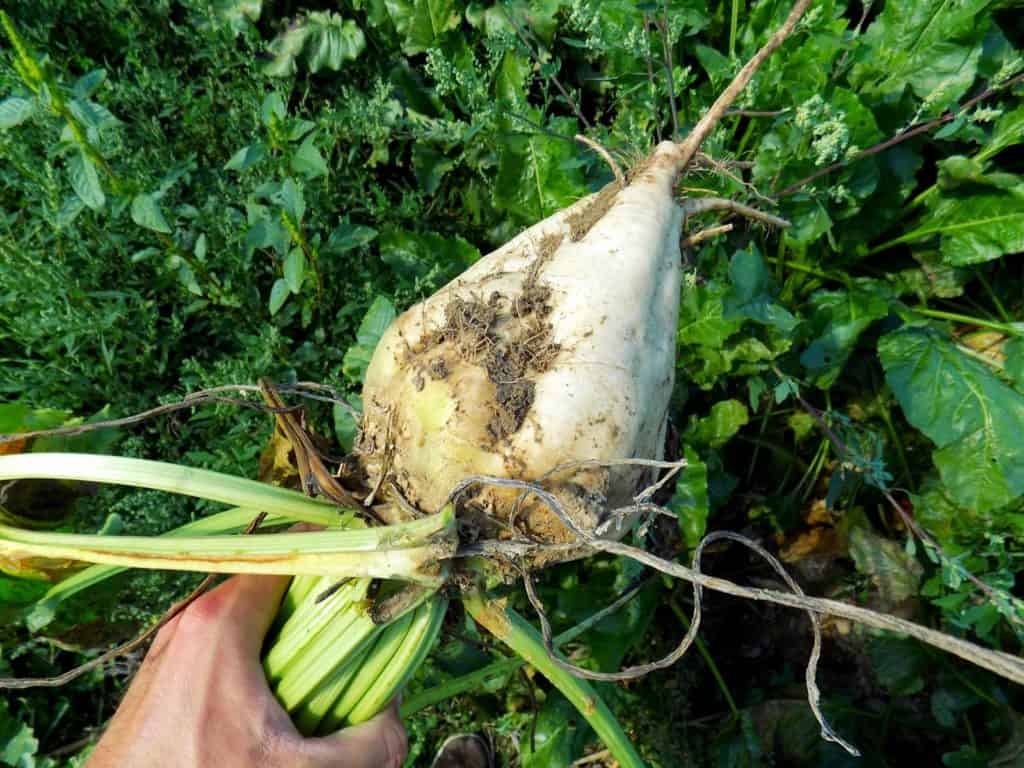
Is the sugar content in beet pulp too high for some horses? Read an equine nutritionist’s answer.

I used a senior equine feed to help my hard keeper gain weight. Now, should I switch him to a low-NSC product?