Are Unshod Dressage Horses at a Competitive Disadvantage?
Some riders believe shoes help give a dressage horse better gaits; scientists have found that idea to be mostly a myth.

Some riders believe shoes help give a dressage horse better gaits; scientists have found that idea to be mostly a myth.

Researchers determined that 89% of affected horses benefited from a procedure called medial patellar ligament splitting.
Get take-home messages from the 2015 USEF High-Performance Sports Medicine Veterinary Meeting in Portland, Oregon.

Find out what the equine genome can tell us about our horses and preventing genetic disease.

A vet and horse behavior expert shares how to distinguish between normal hind-leg resting behavior and lameness.

Learn about three techniques riders can use to improve motion deficits using the horse’s proprioceptive awareness.
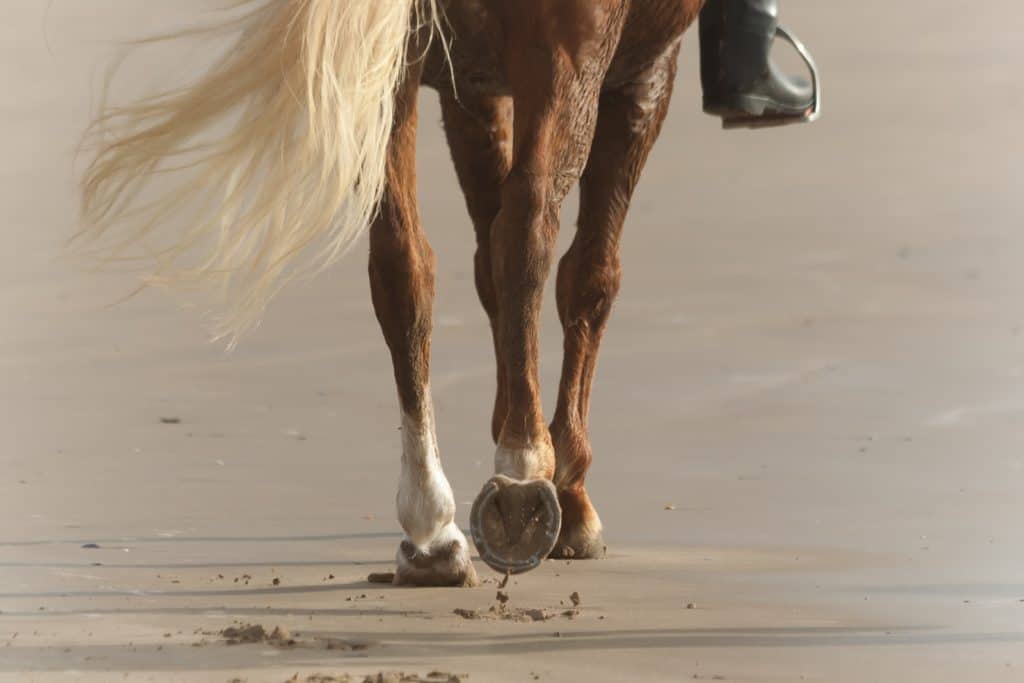
Good leg conformation in a horse is a must if that animal is to remain serviceably sound for performance.
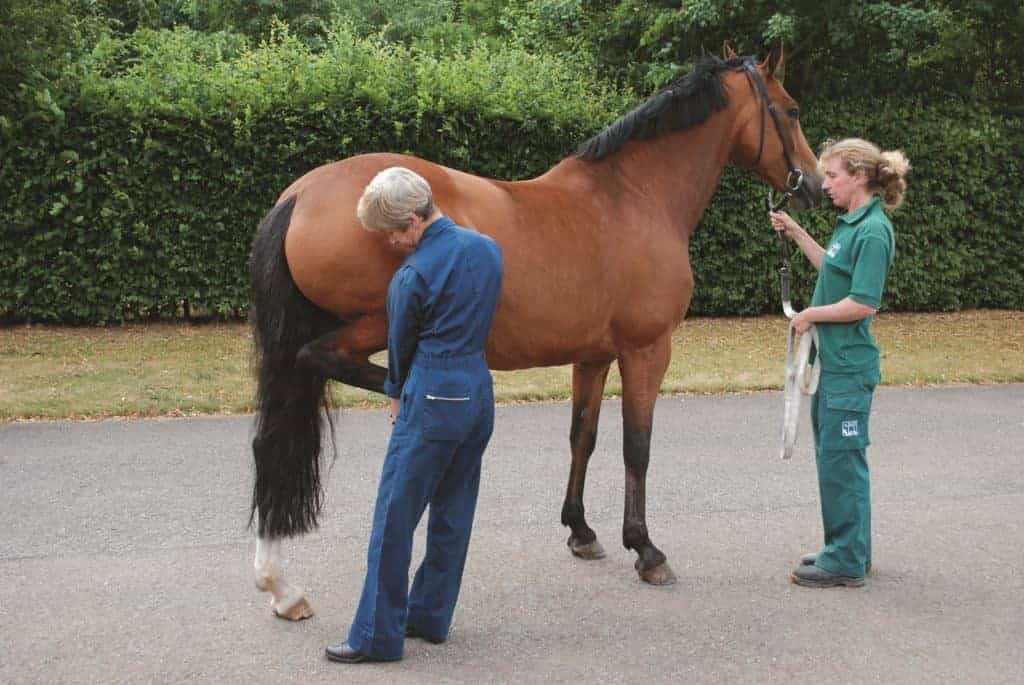
The Animal Health Trust orthopedics team performs cutting-edge research of equine anatomy and function.

Researchers used sensors to measure a horse’s movements and quantify limb movement outside a gait laboratory.
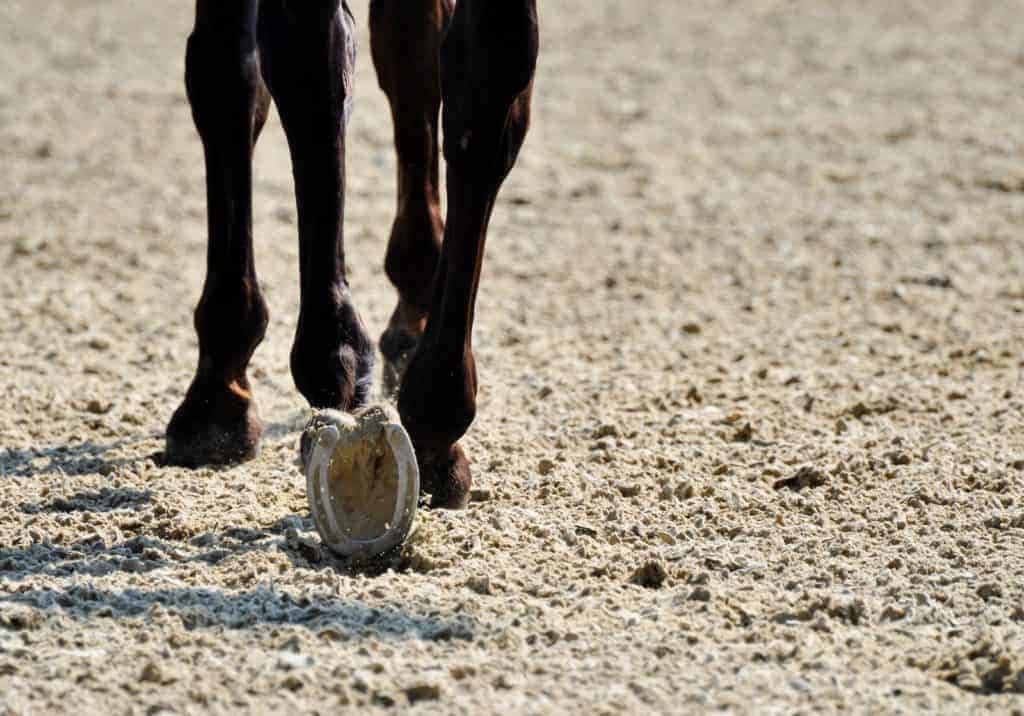
Researchers evaluated shoeing options to optimize hind hoof unrollment (or toe movement through the stride).
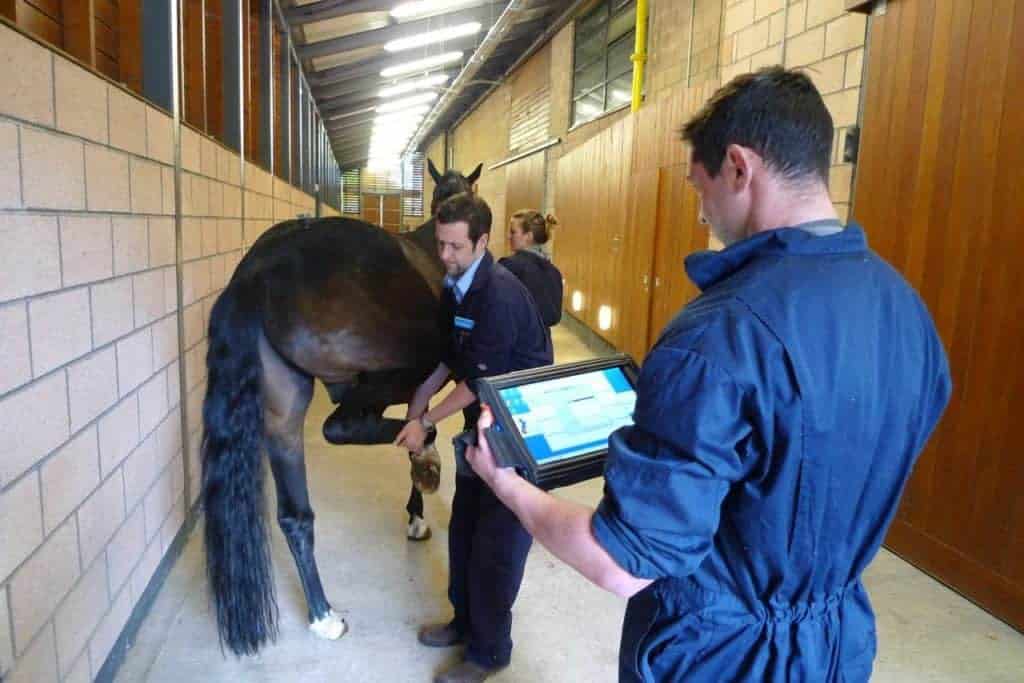
Recent research shows that a sensor-based system can effectively measure a horse?s response to flexion tests.
Slowing down the trot during exams for mildly lame horses could yield more accurate results, researchers say.
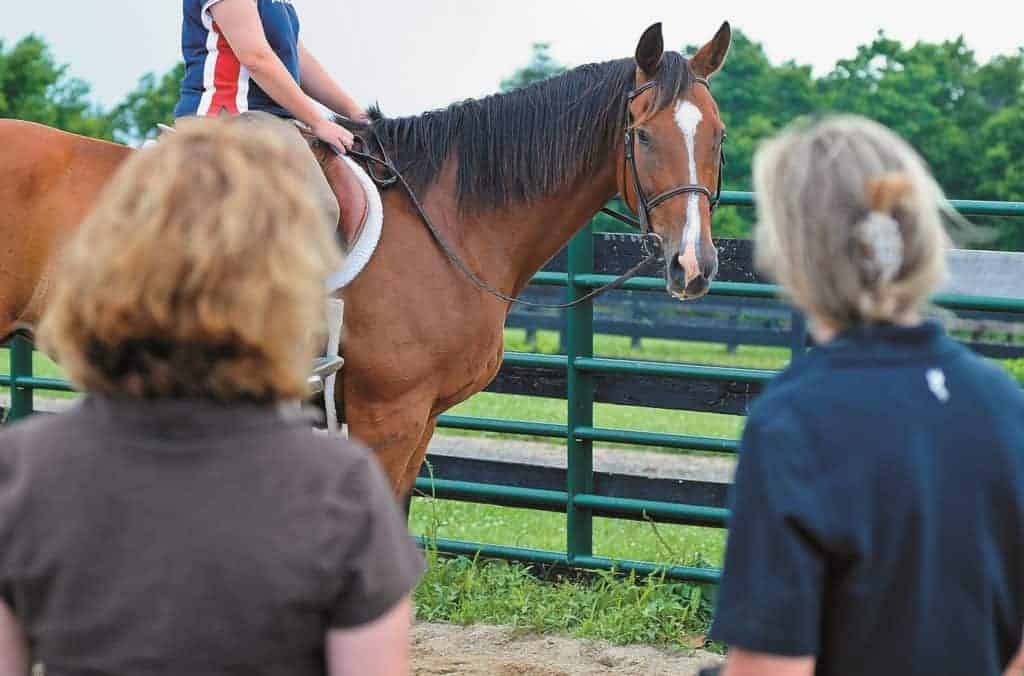
Horses topped out at 29% of their body weight in a study that evaluated gait changes when loaded.
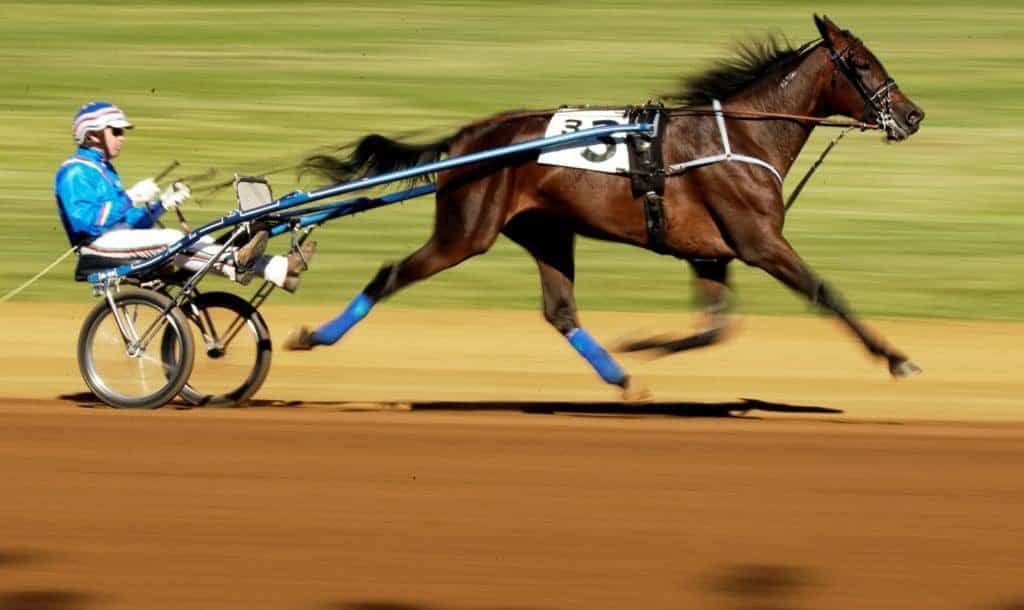
Swedish researchers discovered that genetic makeup affects locomotion patterns in horses.

In this particular study, the 5- and 60-second flexions did not yield the same results.
Researchers have identified and are studying a gene mutation linked to altered gait in horses.