Feeding Choke-Prone Horses
Find out which horses are at the highest risk for feed-related choke and what you can do to reduce that risk.

Find out which horses are at the highest risk for feed-related choke and what you can do to reduce that risk.

Evacuating horse owners aren’t the only ones that should prepare in advance. Here’s what farm owners opening their facilities to displaced horses should know.

Switch your horse’s feed type or amount gradually to minimize his risk of digestive upset. Plan any nutrient-dense dietary changes carefully to avoid health problems such as colic or laminitis and to allow for maximum nutrient digestion.

Is question organic or nongenetically modified hays better for horses? A forage specialist explains why the answer to this hotly debated question could come down to personal preference.

We must consider the breeds of our horses and ponies when planning their diets. Here’s a look at what we currently know about feeding major equid categories and where we’re heading.

Whether you’re taking your horse on a back-country vacation, moving out of state, or traveling to the World Equestrian Games, don’t assume your horse’s feed will be available at your destination.

Take steps to manage your horse’s weight and behavior while he’s cooped up.
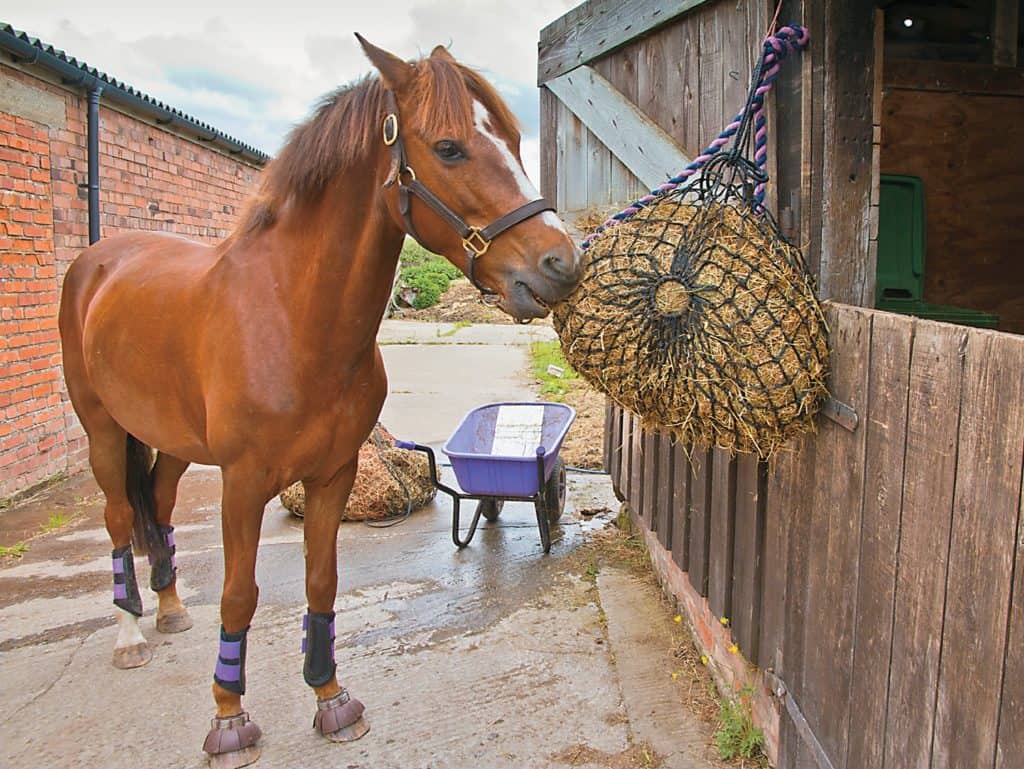
Common feeding practices could be causing your horse’s stomach acid levels to rise.
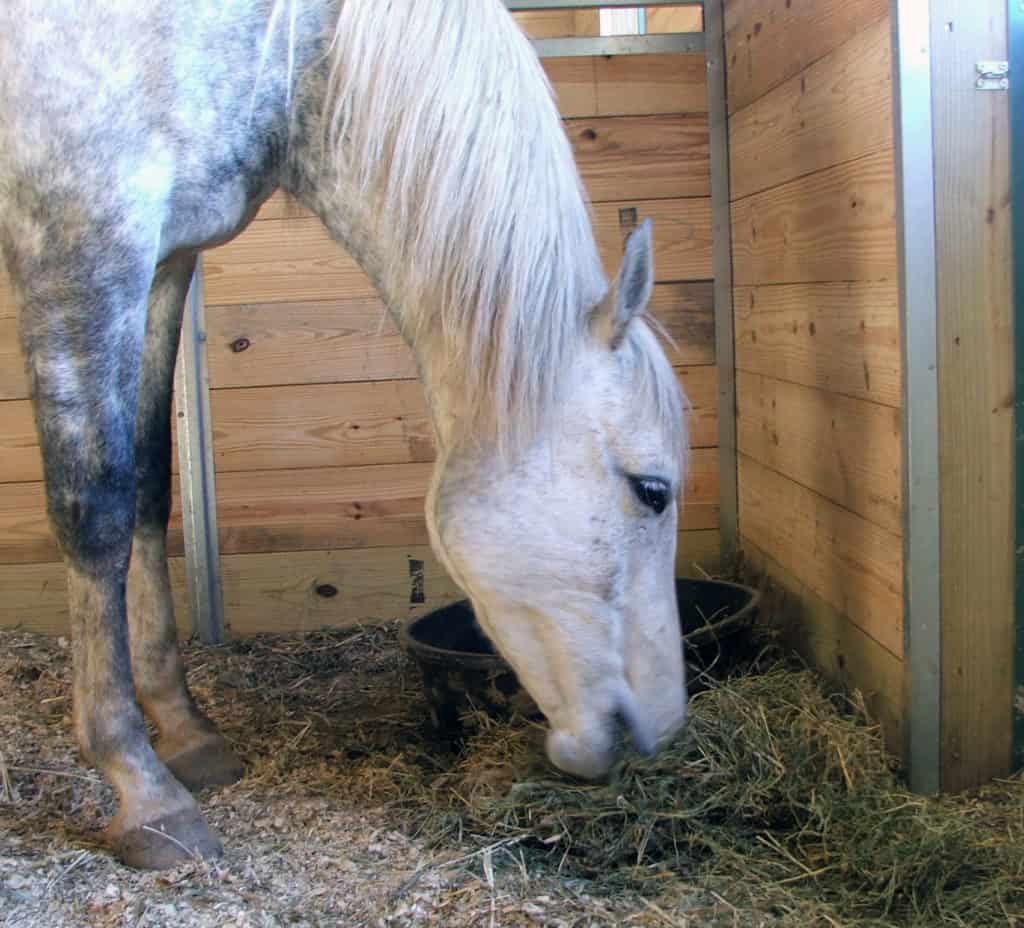
A brief period of fasting prior to omeprazole administration could help maximize drug absorption and, thus, efficacy.
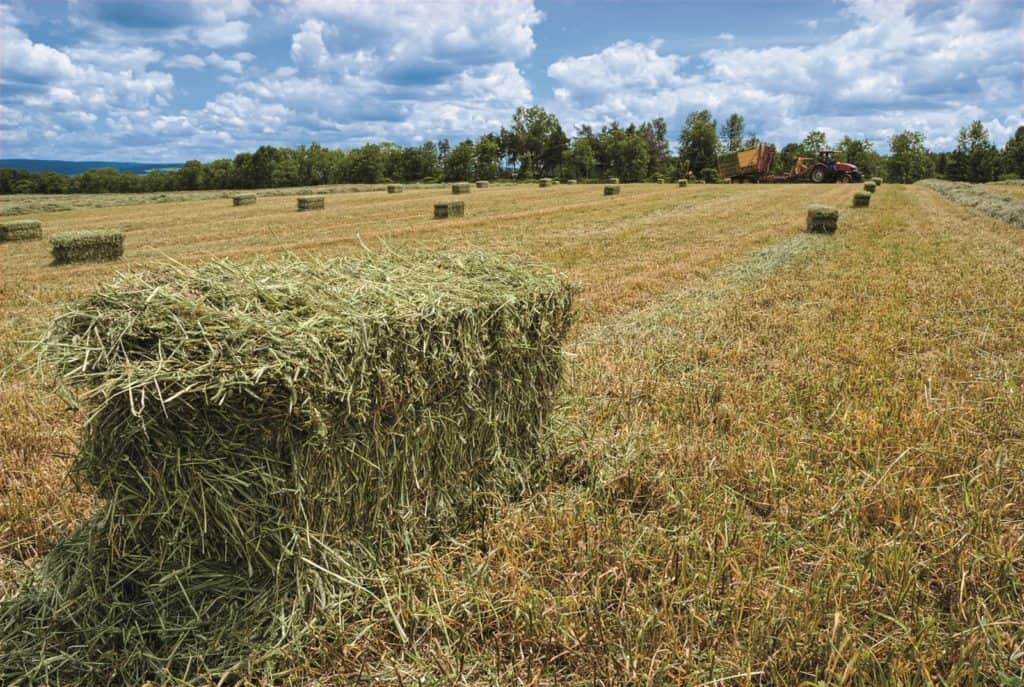
Should you avoid purchasing hay treated with propionic acid (a preservative) for horses? Not necessarily, our nutritionist says.
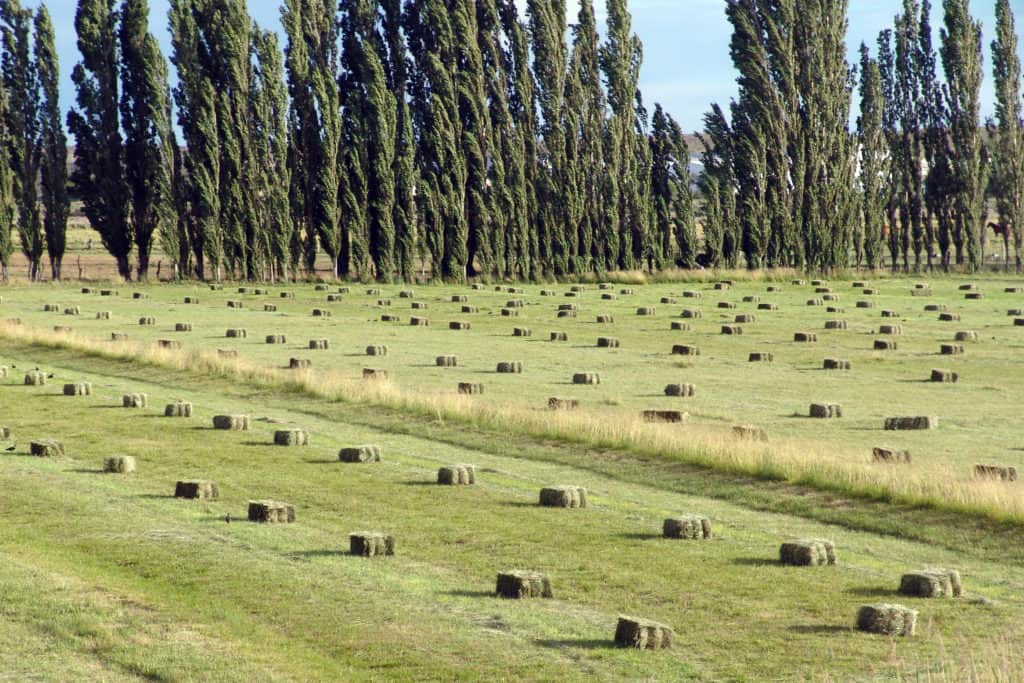
Scorched rangelands, shrinking production acreage, and recent tariffs all share the blame for horse hay price increases in California, a forage specialist from the University of California, Davis, says.

Does your herd leader get too much to eat while the low man doesn’t get enough? Here’s our expert’s advice.

Hay can become a significant fuel source for fires or even cause a fire through spontaneous combustion. Learn how to best store your hay from Alayne Blickle of Horses for Clean Water and Dr. Rebecca Gimenez of Technical Large Animal Emergency Rescue.

Does your performance horse need to pack on a few more pounds? Here are some tips to consider when managing a hard-keeping equine athlete.

Nutritionist Dr. Clair Thunes explains why ration-balancer protein contents might seem high but aren’t.
The riders proved that their horses’ positive drug tests resulted from hay contaminated with autumn crocus, which can be toxic to horses.