How to Choose a Ration Balancer for Your Horse
An equine nutritionist explains why you should consider your individual horse’s needs and forage source before choosing a ration balancer.

An equine nutritionist explains why you should consider your individual horse’s needs and forage source before choosing a ration balancer.

Vitamins and minerals comprise a small portion of the horse’s diet by weight, but their importance is enormous. Learn more about when supplementation might be needed.

Not all carbohydrates are created equal, and “low-carb” definitely doesn’t mean “no-carb.” A nutritionist explains.

An equine nutritionist shares tips to reduce impaction colic risk in senior horses, focusing on hydration, digestion, proper feeding practices, and more.

Researchers found that a herd of Icelandic horses survived after their water source froze amid snowstorms. But, as a rule, horses should always have access to fresh water.

Should you adjust your horse’s diet if he will have time off during winter? What changes are safe to make? An equine nutritionist explains.

An equine nutritionist emphasizes the importance of fiber in horse diets and shares 2 rules for safe fiber-feeding practices.

Researchers believe exercise, stress, and diet can contribute to leaky gut in horses, but a prebiotic product might reduce the incidence.

Extruded horse feeds offer higher digestibility, longer consumption time, and decreased dust and pathogens, making them an ideal option for feeding some types of horses.

Horses that are used to being on pasture during the spring, summer, and fall might experience nutrient deficiencies during the winter.

Dr. Patty Graham-Thiers describes the safest ways to help a horse lose weight without overrestricting his forage intake and increasing his risk of gastric ulcers.

Dr. Kelly Vineyard explains how to estimate the amount of grass your horse consumes when turned out on pasture and calculate his total daily forage intake.

When your older horse’s pearly whites are past their prime, keep an eye out for signs of specific problems.
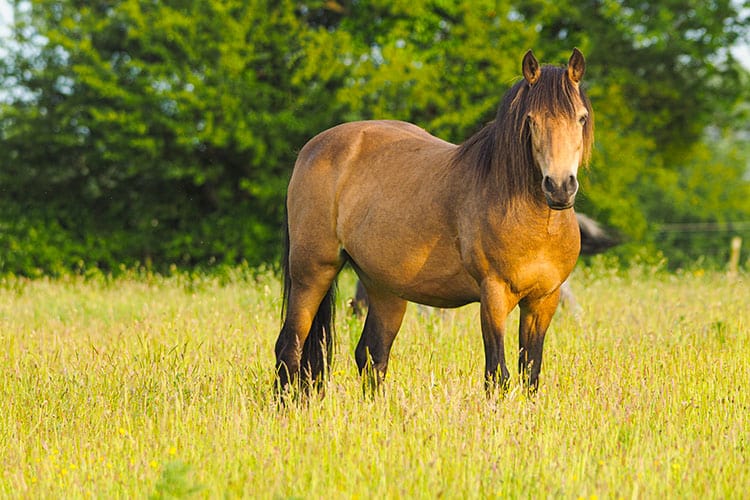
Here are some tips for promoting nonworking horses’ optimal health (and preventing potential problems) with nutrition.

Horses tend to drink less as the temperature of their water drops. However, when given the choice between cold and warm water, horses consume the former.

Learn how to calculate the amount of forage your horse or pony needs to achieve a healthy weight and what types of hay might be best for weight loss.