7 Dietary Deficiencies in Horses
Providing a balanced diet that meets your horse’s nutritional needs and being aware of possible shortcomings are vital for his care. Read about seven aspects of your horse’s diet that might not be up to par.

Providing a balanced diet that meets your horse’s nutritional needs and being aware of possible shortcomings are vital for his care. Read about seven aspects of your horse’s diet that might not be up to par.

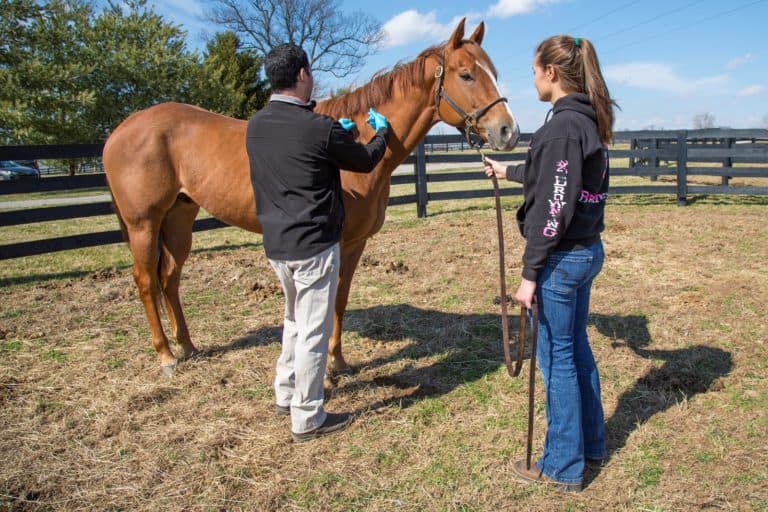
Veterinarians could soon determine which horses are at risk of certain neurologic diseases through a simple urine test that reveals how a horse breaks down vitamin E.

Horses might chew trees for a variety of reasons, such as boredom or nutritional deficiency. Learn about the benefits and risks, and how to protect your horses and your trees.

Vitiligo results in depigmentation of a horse’s skin and might be related to stress or a nutritional deficiency. Research into the condition is limited. Here’s what we know.

If you live at northern latitudes, you might lack vitamin D. But what about your horse?

What is the best way to test for vitamin E deficiency, and how often should you test your horse? Dr. Carrie Finno of the University of California, Davis, offers advice.

Few horses are lucky enough to have constant, year-round access to fresh, green grass, which provides the best natural source of vitamin E. This powerful antioxidant supports muscle and nerve health. Is your horse getting enough? Learn about horses’ vitamin E requirements and how to prevent deficiencies during this live event. Sponsored by Kentucky Performance Products.

Chia is calcium-rich, but inverted calcium-to-phosphorus ratios can cause horses big problems. Here’s what to know.

Learn about steps veterinarians can take to figure out why a horse is losing weight.

Selenium is required in very small amounts in the equine diet, but it has an important role in maintaining horse health.

Discover the differences between these two trendy, omega-3-packed seeds that can be used to supplement equine diets.

Dr. Clair Thunes shares information about how blood tests can help ensure your horse is getting the nutrition he needs.

Moving north for the summer or south for the winter with horses can make feeding them a consistent diet challenging. An equine nutritionist offers tips to ease the transition.
Scientists are working to decide whether to update the National Research Council’s Nutrient Requirements for Horses and, if they go ahead with a revision, you might be able to help. Here’s how.

Are your horses getting the nutrition they need? Find out during Equine Nutrition Awareness Month, brought to you by The Horse and ADM Animal Nutrition.

Weanlings should grow steadily and moderately as rapid weight gain could put them at risk for developmental orthopedic diseases. Three experts share their tips for achieving appropriate growth via nutrition.