Choosing the Right Type of Oil for Your Horse
Adding oil to your horse’s diet can improve coat quality and weight gain. An equine nutritionist describes factors to consider before choosing an oil to feed your horse.

Adding oil to your horse’s diet can improve coat quality and weight gain. An equine nutritionist describes factors to consider before choosing an oil to feed your horse.

Training horses to maximize their abilities comes with potential pitfalls, but consistent attention to detail can help prevent most issues.

Two equine biomechanics researchers share insight on how to properly use equine training aids such as elastic bands, longeing systems, and various rein rigs.

Osteoarthritis might not be completely avoidable as a horse ages, but early diagnosis and conscientious care can slow its advance and minimize pain.

Could artificial intelligence help determine if horses are sound to compete during a 3-day event? Find out what experts think.


Researchers recently described the appearance of normal and injured equine patellar ligaments on stifle ultrasound, which had not been previously reported.

Experts described 6 new studies that made significant impacts on equine musculoskeletal problem diagnosis and treatment in 2024.

Learn how arena footing affects horse and rider safety, and what 5 factors to consider when choosing and maintaining footing.

Researchers found ciclesonide is effective when treating young racehorses with moderate equine asthma over a short period of time.

Vitamins and minerals comprise a small portion of the horse’s diet by weight, but their importance is enormous. Learn more about when supplementation might be needed.

Drs. Sherry Johnson and Kelly Zeytoonian, paid consultants of American Regent Animal Health, share their experiences using Adequan i.m.® (polysulfated glycosaminoglycan) as part of their multimodal approach to managing degenerative joint disease (DJD).

Learn how bisphosphonates, drugs that inhibit bone breakdown and resorption, can help treat bone injuries in horses.

A USEF veterinarian shares important biosecurity information for those planning to host or attend competitions this year.

Not all carbohydrates are created equal, and “low-carb” definitely doesn’t mean “no-carb.” A nutritionist explains.
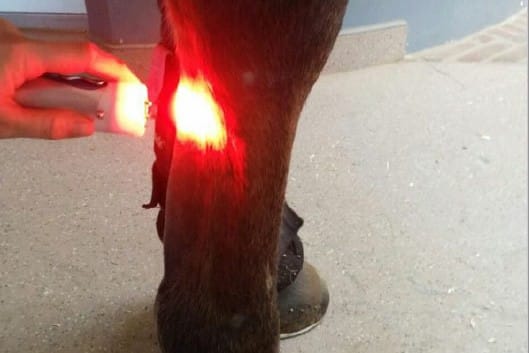
Learn more about Class IV laser treatments, the current research, and opportunities for further advancement.