Health Considerations for World Equestrian Games Horses
Quarantine, confinement, and stress can affect World Equestrian Games (WEG) horses.

Quarantine, confinement, and stress can affect World Equestrian Games (WEG) horses.

Dr. Scott Morrison of Rood & Riddle Equine Hospital discusses the different shoeing needs of high-performance horses.

Equine Insulin Resistance is a reduction in sensitivity to insulin that decreases the ability of glucose to be transported into the body’s cells from the bloodstream.

Dr. Kevin Haussler discusses horse back problems and the use of chiropractic and complementary therapies.

It has been suggested that 60% of equine lameness problems are related to osteoarthritis, which stresses the importance of advancements of both medical & surgical treatment options.

Loss of electrolytes has far-reaching consequences, impacting virtually all of the horse’s body systems.

A joint is defined as an anatomic union or junction between two or more bones. There are three basic types of joints in the horse: Synovial, fibrous, and cartilaginous.

Equine joint supplements have been purported to decrease inflammation, increase mobility, and more. This guide to equine joint supplements includes a seven-step quality evaluation process and tips for choosing a safe and effective product.

Equine arthritis refers to an inflammation of the joint. There are different kinds of arthritis, such as septic arthritis and rheumatoid arthritis. However, the most important arthritis affecting horses is osteoarthritis.

Equine joint injections can help veterinarians diagnose lameness or medicate a horse’s painful joint.

Equine lameness, defined as a deviation from a normal gait, is an indicator of a structural or functional disorder of the musculoskeletal system (the limbs or spinal column) that is noted while the horse is either moving or stationary.

In veterinary medicine, particularly equine practice, the recognition, classification, management, and overall importance of pain and pain management have only recently been described.
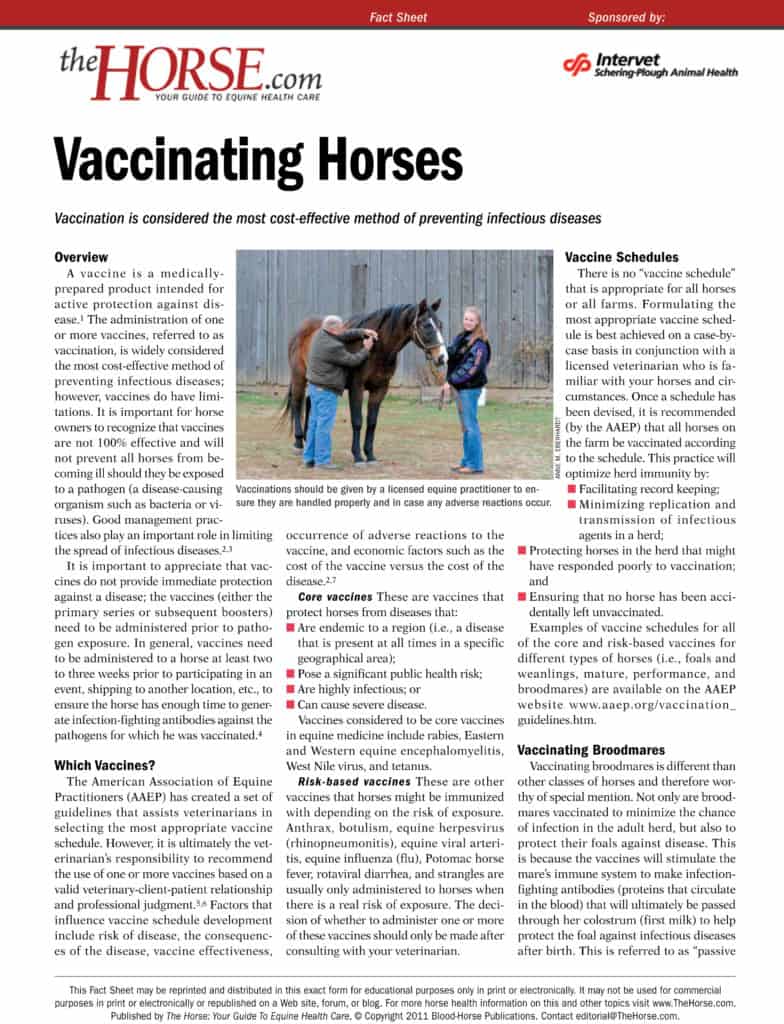
Vaccinating horses is generally considered to be the most cost-effective method of preventing infectious diseases; however, vaccines do have limitations.
The Keeneland sale of 2-year-olds in training, scheduled for April 5 in Lexington, will wrap up the select juvenile selling season, which has enjoyed some modest rebounds following 2009’s major setbacks.
“I don’t know if
Triheptanoin does not appear to be a good fat supplement for polysaccharide storage myopathy (PSSM) horses.
Morphine is a useful part of pain management protocols for horses that have undergone arthroscopic surgery.