Combination Supplements for Horses
Combination supplements claiming to support joints, gut health, coat quality, and more might make feeding time easier, but do they work?

Combination supplements claiming to support joints, gut health, coat quality, and more might make feeding time easier, but do they work?

In any discipline, cross-training in the key to keeping a horse’s neck and back healthy, says Dr. Kevin Haussler of Colorado State University.

Researchers confirmed that a technique called acoustic myography could be useful for evaluating suspensory ligament function, which could mean more straightforward diagnoses, treatment recommendations, and monitoring of these injuries as they heal.

Horses can experience back pain during flexion and bending through the body, which can lead to resistance in the canter. Dr. Kevin Haussler of Colorado State University explains.

How do you deal with negative trailer behaviors such as kicking and pawing while on the road? An equine behavior expert shares advice.

The name might sound romantic, but in reality kissing spines often cause heartbreak and bring nothing but pain. Find out if this condition is the cause of your horse’s back pain or poor performance.

Intra-articular (administered into the joint) polyacrylamide hydrogel helped decreased lameness in horses with naturally occurring arthritis, researchers found.

Dr. Kevin Haussler of Colorado State University describes how a saddle should fit horses and how he investigates saddle-fit issues that might cause back pain.

Dr. Kevin Haussler of Colorado State University describes the skeletal and soft tissues structures of the equine neck and back and what can go wrong with them.

Both cold and heat therapy can help improve injury healing, but they can be difficult to apply to horses. So, researchers recently tested a pneumatic sleeve designed specifically for administering contrast therapy to horses’ lower limbs. Here’s what they found.

Recommendations include avoiding using bisphosphonates in manners inconsistent with indications of use on the label and discontinuing bisphosphonates use in any horses in training regardless of age, having every jurisdiction employ a full-time equine medical director, and more.

Why does a horse’s hooves grow faster than his stablemates’ that are on the same diet and exercise schedule? A veterinarian who’s also a farrier shares his thoughts.
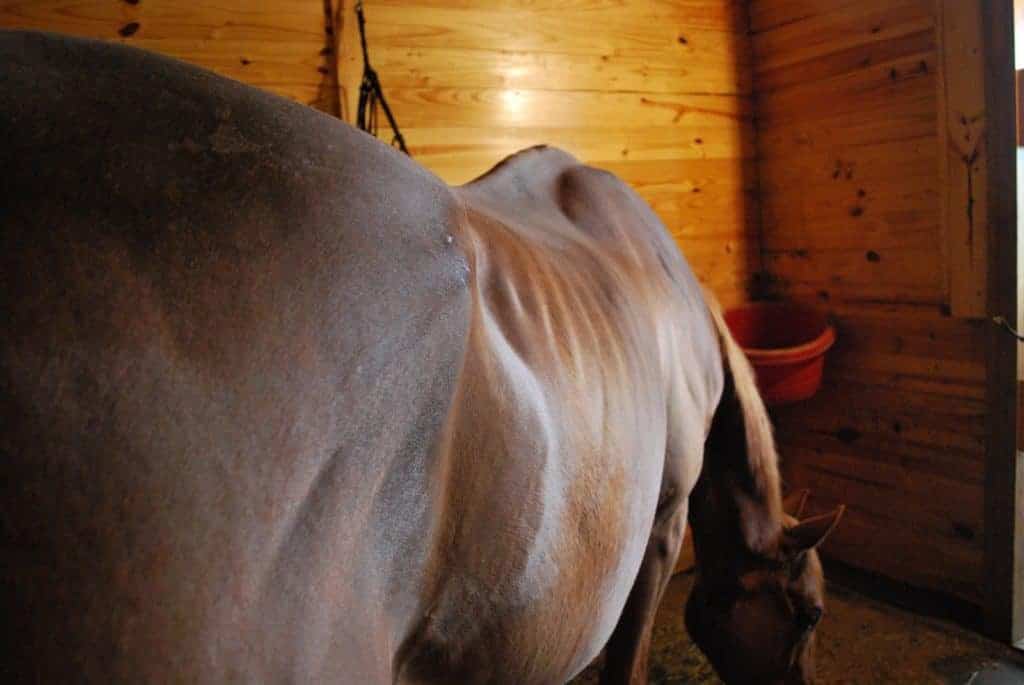
Health conditions, management changes, and palate preferences can affect a horse’s appetite.

Dr. Angela Pelzel-McCluskey explains why certain populations, such as racing Quarter Horses, might have a higher risk for contracting equine infectious anemia.

Researchers identified upper respiratory tract disorders, many of which aren’t common in other horse types, in 92% of the competition draft horses they examined.

Research topics include racehorse injury prevention, stem cells, placentitis treatment, immune responses to EHV-1, and more.