The neighbors are complaining. They live close to your horse farm and dislike the noxious odors emanating from it.
This situation is relatively common because people often keep horses on small acreage within neighborhoods. Mismanaged manure piles and wet paddocks, and buildups of urine can all add up to smelly situations, which can especially bother neighbors without livestock.
Jay Mirro, senior resource manager at the King Conservation District outside of Seattle, Washington, works in a highly populated region of Puget Sound with thousands of horses in the county, many on small acreage with residential homeowners nearby. Mirro promotes mud, manure, and pasture management techniques that protect natural resources, increase chore efficiency, and help reduce noxious odors.
Managing Odors From Horse Manure and Urine
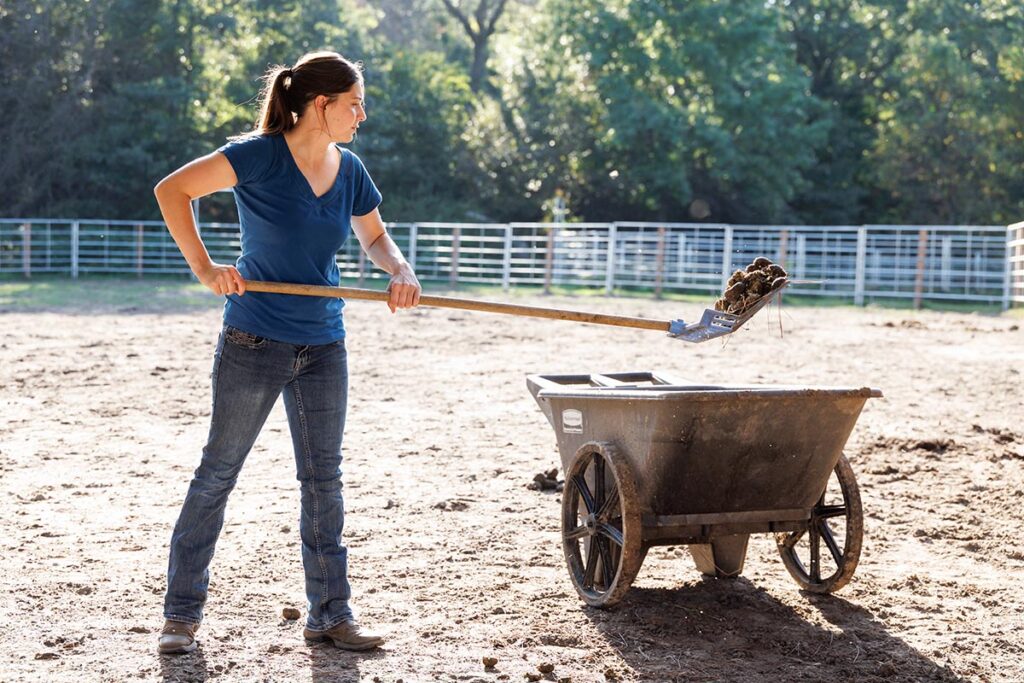
Confinement areas often generate strong odors when mud, manure, and urine build up. In these scenarios Mirro recommends starting with the manure pile. You must pick up manure regularly. “50 pounds per horse, per day is a lot of poop,” says Mirro.
Removal of manure in all confinement areas, high-traffic areas, and runs at least every three days helps decrease the parasite load. Clean more often when aiming to control mud and odor. “Once a day is better and makes chores easier,” says Mirro. “But if you feed twice a day, can you pick up twice a day?” Frequent cleaning can improve your chore efficiency and keep odors away.
Mirro always recommends composting versus stockpiling manure. For composting manure you need the right amount of air (oxygen), the right amount of moisture (damp but not soggy), and the right carbon-to-nitrogen balance (bedding and manure). “Aerobic composting of manure and stall waste should smell earthy and not like manure,” he says. “Stockpiled manure that’s not composting is the potentially stinky process. A well-managed compost pile doesn’t smell bad.”
Managing Odors From Mud on Horse Farms
The next odor-causing issue to tackle is mud, often a result of poor-draining confinement areas.
“There are multiple benefits to keeping animals off pastures when soil is wet or grasses are too short, and the paddock or confinement area becomes the go-to space,” says Mirro. But without the benefits of plant roots, these areas can become muddy quickly, and stinky with manure and urine. “Adding footing helps prevent erosion, increases drainage, and improves chore efficiency.
“When you’re choosing a footing product, you want to balance the footing’s ability to drain along with your horses’ ability to stand on it,” he says. For most situations Mirro suggests coarse washed sand or crushed gravel. Talk with your local gravel companies, extension specialists, or horse-owning neighbors for advice on choosing a product that will work best in your area.
Managing Odors from Horse Urine
Next comes the buildup of urine in paddocks. “If you have a gravel paddock and horses urinate in one spot, that area can become compacted and poor draining, with urine pooling on the surface,” says Mirro. Ammonia gives urine its sharp smell. Because nitrogen in ammonia escapes into the air easily and can wash into waterways, it poses a serious pollution risk.
Mirro recommends periodically digging out the worst of the urine spot in a confinement space or run and replacing it with clean, free-draining gravel. “Urine should drain through the gravel to the healthy soil below, where (good) microbes can break it down,” he says, reducing potential foul odors.
Barn owners can even make a portion of confinement into a sort of horse “litter box,” placing wood chips in that area. Typically, horses prefer to urinate where urine won’t splash. The wood chips break down the odiferous nitrogen, so there’s little or no smell. Mirro recommends replacing chips once you begin to notice odors.
Using Plants to Managing Horse Farm Odors
Plants and vegetative barriers, such as windbreaks or native plant buffers, offer another way to control odors on horse properties of any size. Vegetative buffers can serve as an uncomplicated, low-maintenance tool for effective odor control, say authors of an article published by Michigan State University Extension.
The authors mention five ways in which plants help control odors on livestock facilities:
- Lifting and mixing: Vegetative buffers lift the odorous air and dilute it with fresher air.
- Settling: Some odorous compounds leave facilities attached to dust particles, and slower wind speeds near vegetation help these heavier particles settle.
- Filtering: Odor compounds and dust attach to leaf surfaces as odorous air passes through the vegetation.
- Breakdown: Bacteria living on leaf surfaces metabolize odor compounds.
- Aesthetics: Trees soften the look of the facility and can make odors seem less offensive.
The authors suggest including at least three species of trees and shrubs in the buffer. Low-growing shrubs help with lower, ground-level odor control. Evergreen species provide year-round vegetation for odor control and visual appeal, while fast-growing deciduous trees or tall shrubs offer immediate relief. Barn owners can plant a fourth row of later-maturing deciduous trees at the same time to eventually replace the faster-growing species.
Mirro’s conservation district office helps horse and landowners with native plantings, and other conservation districts can, too. Contact your local conservation district or Natural Resources Conservation Service (NRCS) office for help developing a vegetative buffer with plants suitable for your region.
Take-Home Message
Managing odors on horse properties starts with the basics: clean regularly, compost manure properly, and improve drainage to prevent mud and urine buildup. Choose paddock footing carefully and consider adding a “litter box” area with wood chips to control ammonia smells from urine. Vegetative buffers with trees and shrubs can also lift, filter, and break down odor compounds naturally. “It’s more than just about smells—it’s the whole cycle,” says Mirro. Keeping nutrients where they belong benefits your horses, your land, and your neighbors—creating a cleaner, healthier environment for everyone.