Subtle changes in a horse’s behavior or movement can be the first hint of joint pain, long before obvious lameness appears. A once-forward horse might hesitate to move off the leg, or a seasoned competitor could start resisting lead changes or shortening his stride. These shifts might seem minor, but they can be signs of osteoarthritis (OA), a progressive inflammatory joint disease that threatens the horse’s comfort, performance, and long-term soundness. Recognizing and addressing these signs early can help slow the disease process.
How Osteoarthritis Progresses in Horses
Osteoarthritis starts when joint stress, trauma, or instability disrupts normal joint function. Inflammation, a key driver of OA, follows and breaks down joint fluid and cartilage. This leads to pain, accelerated degeneration, and changes in movement. The horse’s body tries to repair the damage by forming new bone (called osteophytes) to stabilize the area.
That process can progress at wildly different rates. Some horses perform comfortably for years with appropriate management, while others deteriorate quickly. If the joint remains unstable, inflammation persists, pain continues, and the joint slowly breaks down. In more advanced cases of OA, the joint becomes fused (ankylosis), reducing pain.
Recognizing Subtle Signs of Equine Osteoarthritis
Before lameness becomes obvious, horses with OA often show early signs of discomfort. The Ridden Horse Pain Ethogram catalogs these subtle clues, such as head tilting, exaggerated blinking, tail swishing, grimacing, or reluctance to move forward, to help owners and veterinarians better understand less obvious signs of pain. “These are behaviors horses with pain exhibit more often than those who are comfortable,” says Lori Bidwell, DVM, Dipl. ACVAA, of East West Equine Sports Medicine, based in Lexington, Kentucky, but also operating out of Thermal, California, and Traverse City, Michigan.
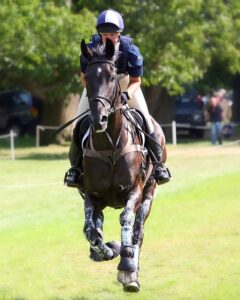
“Competing horses should not show clinical signs of pain,” says Bidwell. She says even mild resistance can signal a larger problem.
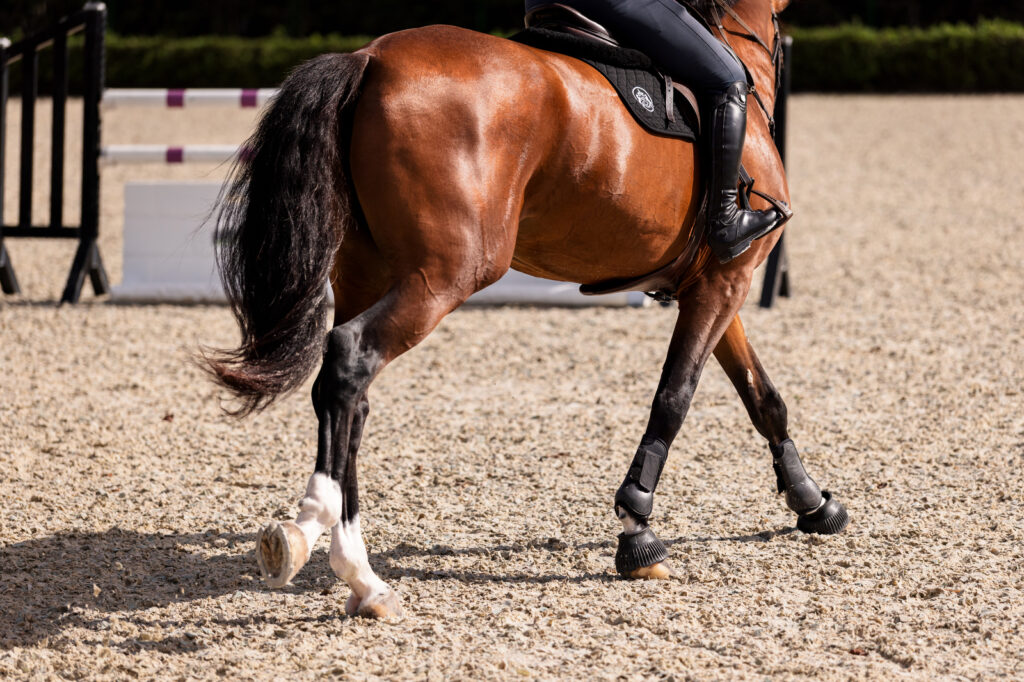
Horses are masters of adaptation, says Bidwell. When one joint hurts, they adjust their movement to protect it. “They’ll figure out that traveling a certain way avoids that painful site,” she says. However, this compensation puts extra strain on other structures, leading to pain in multiple areas.
The Lameness Exam for Pinpointing Osteoarthritis in Horses
During a lameness exam your veterinarian follows several steps to determine the cause(s) of your horse’s discomfort. First, the static exam involves palpating your horse’s body, including the neck, back, limbs, feet, and joints. Next, the dynamic phase, consists of watching the horse move on different surfaces and maybe even under saddle. If the signs of pain remain subtle, your vet might need to watch the horse perform more specialized movements, such as lateral work for a dressage horse.
Your vet might flex specific joints, then have you trot the horse off to see if soreness appears. When a specific location for the lameness becomes clearer, nerve blocks can help localize the pain. With the source identified, diagnostic imaging—such as radiographs or ultrasound—can reveal how much structural change has occurred.
“The challenge is determining which changes are clinically relevant and developing a management plan,” says Bidwell. Sometimes a sore joint appears normal on imaging; other times, visible changes cause no pain at all. In these cases, your veterinarian might recommend more advanced imaging, such as nuclear scintigraphy (bone scan), or a treatment trial.
Using Technology in the Equine Lameness Exam
Gait analysis systems use sensors and artificial intelligence to detect asymmetries, even those we might not be able to see. “These tools are much more sensitive than the human eye and provide objective data over time,” Bidwell says. “They help localize subtle lameness and track progress, but it’s still the veterinarian’s job to determine why that asymmetry exists and what to do about it.”
While technology can’t replace a practitioner’s experience and expertise, it can make early detection and long-term monitoring more precise, especially in competition horses under consistent workload.
Managing Pain and Preserving Motion in Arthritic Horses
Once a veterinarian diagnoses a horse with OA, the goal shifts to balance relieving pain with maintaining joint health and mobility. “The joint mechanics, stage of arthritis, and the horse’s job all play a role in treatment decisions,” Bidwell says.
Management options for horses with OA might include:
- Modified exercise to strengthen supportive structures and avoid overuse
- Systemic or intra-articular therapies (such as anti-inflammatories, joint injections, or biologics) to reduce inflammation and help restore joint balance
- Complementary therapies such as acupuncture, shock wave, or laser treatments
.
Bidwell notes that some therapies modify clinical signs (pain relief), while others target the disease process itself. “Ideally, we use disease-modifying treatments to slow progression, but the best approach depends on the joint, the horse’s needs, and the stage of arthritis,” she says.
Practical Strategies for Managing Horses With OA
Bidwell says owners can use these practical tips to manage horses with OA:
- Mix up your horse’s workload. Repetitive, high-intensity work wears down joints. Cross-training with alternate flatwork, trail riding, pole work, and turnout days can be beneficial. Focus on training quality over quantity.
- Prioritize good footing and farriery. Consistent, shock-absorbing footing and balanced shoeing reduce stress on equine joints.
- Manage your horse’s weight wisely. Keep him fit and strong without allowing him to become overweight, which can put extra strain on joints.
- Encourage natural movement. Turnout promotes natural, low-impact motion beneficial to joint cartilage.
- Watch for early warning signs of joint pain. A sticky transition, head tilt, or tail flick can be a sign of joint discomfort.
- Build a partnership with your veterinarian so they know your horse’s baseline and can help you spot problems. Schedule regular performance and wellness exams to support early detection and maintain joint health.
These small, consistent management habits often make the biggest difference in long-term joint comfort, she says.
Take-Home Message
Osteoarthritis usually doesn’t start with a limp. Subtle behaviors such as a shortened stride or tail swishing can be early signs of joint pain in horses. Identifying these clues promptly and working with your veterinarian to confirm OA and manage it can slow disease progression and preserve comfort. Through thoughtful training, good footing, consistent exercise, and proactive care, owners can protect their horses’ joint health and keep them performing comfortably for years.
Editor’s note: In addition to Bidwell, Kyle Clark, VMD; Sara Holtz, MS; Madalyn Kalscheur, DVM; Brooke Pearson, DVM, CVA; and Duncan Peters, DVM, Dipl. ACVSMR, all of the East West Equine Sports Medicine team, contributed to this article. You can follow them at @EastWestEquineVet on Facebook and @EastWestEquineSportsMedicine on Instagram.