From palpation to nerve blocks: a look inside today’s lameness exam in horses
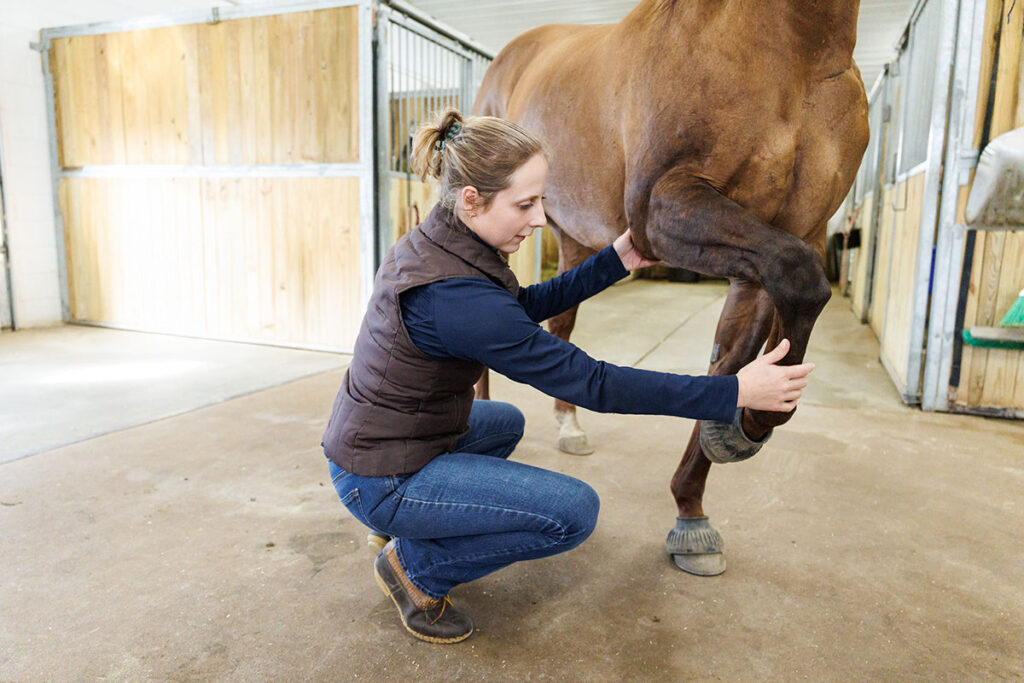
The equine lameness examination mixes art with science. The detective work of pinpointing lameness in a horse takes experience, educated observation, and the strategic use of various diagnostic tools. In recent years this process has evolved with technological advances, but the goal remains the same: Find the source of horses’ pain. In this article we’ve reviewed pertinent research and consulted lameness specialists to give you an inside look at the equine lameness workup. Let’s dive in.
Which Horses Need Lameness Exams and When?
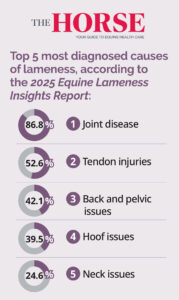
Authors of the 2025 Equine Lameness Insights Report, which summarizes the feedback of more than 100 veterinarians in the global International Society of Equine Locomotor Pathology (ISELP) community, found 95% of respondents believe earlier detection could have prevented more serious lameness outcomes (tinyurl.com/yna843z7). Sleip, a gait analysis app company, conducted the survey. Most sport horse veterinarians recommend musculoskeletal evaluations twice a year to identify issues early.
Take, for example, Jillian Mills, DMV, a board-certified specialist in equine sports medicine and rehabilitation (Dipl. ACVSMR) and owner of Presidio Equine Sports Medicine, based in Encinitas, California. Mills also holds certifications as an equine rehabilitation practitioner (CERP) and veterinary acupuncturist (CVA), is a member of ISELP, and an FEI-permitted treating veterinarian.
 “Routine performance reviews allow your veterinarian to detect issues that may be subclinical before overt clinical signs of lameness appear,” Mills explains, naming specific changes the doctor could be looking for during such an exam:
- Asymmetric fluid filling in joints or tendon sheaths that differs from findings on previous evaluations
- Palpable thickening or sensitivity in a soft tissue structure, such as a tendon or ligament, that wasn’t there before
- Resistance to flexion of a specific joint
- Lameness elicited when evaluating the horse dynamically following static flexion or pressure testing of a sensitive soft tissue region (in other words, the horse flexes positive)
“Any of these findings can be indicative of a subclinical (does not produce obvious clinical signs) issue that may warrant further evaluation and treatment,” Mills says.
First, Localize the Problem
What exactly do vets look for when they jog, flex, numb, radiograph, and ultrasound your horse? And why do they use such a systematic process, following a specific order?
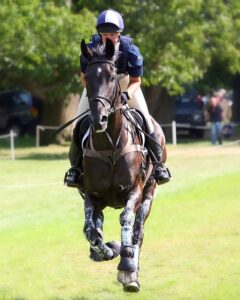
Tackling the first part, Elizabeth Davidson, DVM, Dipl. ACVS, ACVSMR-Equine, professor of sports medicine at the University of Pennsylvania’s New Bolton Center, in Kennett Square, describes the lens through which she watches a horse move during a lameness exam. “I look for an asymmetrical or otherwise uneven gait,” she says. “A lame horse adapts the limb and body movement away from the lameness, shifting his weight away from the pain.”
With forelimb lameness Davidson says the horse shifts his head and neck away from the lame leg, resulting in downward head and neck movement onto the sound limb, hence the popular phrase “down on the sound.” She says it can be more difficult to appreciate hind-limb lameness. “When a horse is lame in a hind limb, there is upward movement of the pelvis when the lame hind limb bears weight (a pelvic hike),” she explains
This story requires a subscription to The Horse magazine.
Current magazine subscribers can click here to and continue reading.
Subscribe now and gain unlimited access to premium content.
Subscribe NowWe at The Horse work to provide you with the latest and most reliable news and information on equine health, care, management, and welfare through our magazine and TheHorse.com. Our explanatory journalism provides an understandable resource on important and sometimes complex health issues. Your subscription will help The Horse continue to offer this vital resource to horse owners of all breeds, disciplines, and experience levels.