Christa Lesté-Lasserre, MA

Passionate about horses and science from the time she was riding her first Shetland Pony in Texas, Christa Lesté-Lasserre writes about scientific research that contributes to a better understanding of all equids. After undergrad studies in science, journalism, and literature, she received a master’s degree in creative writing. Now based in France, she aims to present the most fascinating aspect of equine science: the story it creates. Follow Lesté-Lasserre on Twitter @christalestelas.

Articles by: Christa Lesté-Lasserre, MA

Coldblooded Trotter Career Length

Scientists Study Coldblooded Trotter Career Length

Most Norwegian-Swedish Coldblooded Trotters are bred for racing. Thus, understanding how long their careers typically last is essential not just from a product quality perspective but also from an animal welfare perspective, researchers said.

Read More
horse tail swishing

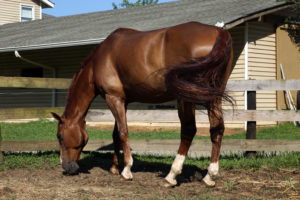
Horse Tail Swishing: More Than Meets the Eye

We all know horses use their tails to ward off flying insects. But the mechanics behind that effective tail swatting is intriguing scientists, and it could lead to tail-inspired bug repellent technology.

Read More
abortion in horses; determining equine fetal sex; Warm Winter Could Affect Tall Fescue Toxicosis in Broodmares

Determining Equine Fetal Sex in Midgestation

Researchers have confirmed that, by following a few recently described steps, veterinarians can sex fetuses over a much longer time period than previously though and without clipping or sedating mares.

Read More
Researchers Study Head

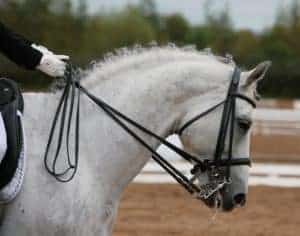
Debate Over Noseband Checks at Horse Shows

Dr. Janne Winther Christensen penned an open letter to World Horse Welfare, on behalf of ISES, highlighting the importance of noseband checks for equine health and welfare, and Roly Owers, of WHW, responded.

Read More
eye problems in old horses

Study: Most Senior Horses Have Eye Problems

To boot, researchers found that it’s not always easy for owners to spot ocular issues: Owners reported that fewer than 4% of the study horses had some sort of ocular disease, but researchers determined that nearly 90% of them did.

Read More
orthopoxvirus in brazilian horses

Getting to the Bottom of Orthopoxvirus in Brazilian Horses

After several pox outbreaks in horses and donkeys in Brazil, researchers are still working to understand how the equids got the vaccinia virus, why humans don’t seem to get it from equids, and why some equids get it in a population and others don’t.

Read More

More From The Horse

screwworm-fly-photo-by-usda_large
Horses, Mutual Grooming, social interaction-iStock
horse
Horse Acting Up on Longe Line

Stay on top of the most recent Horse Health news with

FREE weekly newsletters from TheHorse.com

Sponsored Content

Weekly Poll

sponsored by:

What’s your biggest challenge when trying to improve barn air quality?
51 votes · 51 answers

Readers’ Most Popular

The Horse
Privacy Overview

This website uses cookies so that we can provide you with the best user experience possible. Cookie information is stored in your browser and performs functions such as recognising you when you return to our website and helping our team to understand which sections of the website you find most interesting and useful.