Tying-Up in Horses: Where Do We Stand?
Experts share information about the steps needed to identify PSSM, how to distinguish between the types, and recommendations for managing affected horses.


Experts share information about the steps needed to identify PSSM, how to distinguish between the types, and recommendations for managing affected horses.

The name might sound romantic, but in reality kissing spines often cause heartbreak and bring nothing but pain. Find out if this condition is the cause of your horse’s back pain or poor performance.

With an estimated 88% of horses over 20 years of age diagnosed with dental disease, veterinarians must be sure to maintain these patients differently than their younger counterparts.
Multiple hoof-related factors can affect a horse’s performance—including balance, trim, shoes, pads, support materials, and more. Here’s how farriers can help a horse reach his potential.

The earlier a veterinarian can intervene and begin treatment in a laminitic case, the greater chances of success, which could mean saving the horse’s life.

Recognizing and treating club feet in young horses can help them succeed in their intended discipline and, ultimately, prevent lifelong hoof complications.

A systematic approach to examining the equine foot can help veterinarians identify causes of lameness more quickly and accurately.
The transitional period between anestrus and estrus is officially complete once a mare has had her first heat of the year. Getting some mares to this point, however, and deciding when to breed them can be tricky.
From when to administer ulcer medication to how to deal with recurring ulcers, veterinarians offer tips and tricks on managing this common horse health condition.

Consider these tips to help protect your horse’s breathing zone and most effectively achieve optimal respiratory health this winter.

Researchers tested a sulfadiazine and trimethoprim suspension specifically designed for oral administration with positive results.

Regenerative therapies can help horses recover following injury. Download this free fact sheet to learn more about stem cell, IRAP, and PRP therapy use in horses.
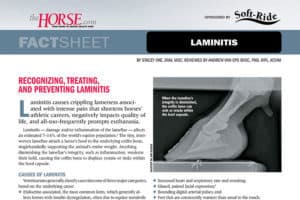
Laminitis causes crippling lameness associated with intense pain that shortens horses’ athletic careers. Download this fact sheet to learn more about recognizing, treating, and preventing laminitis in horses.

Magnesium, an important macromineral found in most feedstuffs, plays integral roles in muscle contraction, skeletal growth, and a variety of enzyme systems, such as those involved in energy production.

Learn about special characteristics of each part of the horse’s digestive tract and different medical conditions that can develop there.

Do all young horses with fluid-filled joints or lameness have osteochondritis dissecans (OCD)? Download this fact sheet to find out.