Haylie Pfeffer

Haylie Pfeffer, Digital Editor, holds a degree in equine studies with a concentration in communications and a minor in social media marketing. She is a Pennsylvania native and, as a horse owner herself, has a passion for helping owners provide the best care for their horses. When she is not writing or in the barn, she is spending time with her dog, Clementine.

Articles by: Haylie Pfeffer

Incorporating Acupuncture/Alternative Therapies

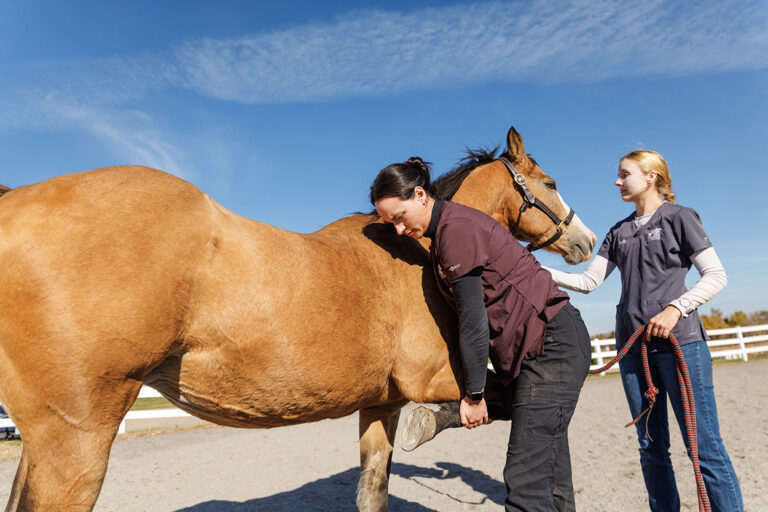
Discussion in the session primarily revolved around personal experiences with courses in acupuncture and chiropractic, incorporation of what they’ve learned in these courses, payment for these services, and the reminder that Western medicine should never be forgotten when treating patients.
Read More

COX-2 Selective Drugs Considered Safe for Horses

Following the release of human clinical trial data demonstrating the link between pain-relieving medications known as COX-2 inhibitors and an increased risk of heart attack and stroke, the U.S. Food and Drug Administration recently issued a public health advisory recommending limited use of the drugs. The advisory, which also covers various non-steroidal anti-inflammatory drugs (NSAIDs)

Read More

AAEP Convention 2004: Hormone Therapy in the Mare

This discussion at the 50th annual American Association of Equine Practitioners (AAEP) Convention in Denver, Colo., Dec. 4-8, 2004, was presided over by Patrick McCue, DVM, PhD, Dipl. ACT, associate professor of equine ambulatory medicine at

Read More

AAEP Convention 2004: Therapeutic Options Forum

While it might seem like any method of treating a horse would be termed a therapeutic option, equine veterinarians use this term to describe treatments that are generally considered alternative options to more heavily studied Western modalities. As such, the Therapeutic Options forum held during the Denver American Association of Equine Practitioners convention on Dec. 4-8, 2004, focused

Read More

AAEP Convention 2004: Lameness Diagnosis via Head and Pelvis Movement

“I used to think I knew how to evaluate a horse’s movement for lameness, until I started to look more carefully. Two different highly experienced practitioners can evaluate a lame horse, and come up with different [lame] legs,” said Kevin Keegan, DVM, MS, Dipl. ACVS, associate professor of veterinary medicine and surgery at the University of Missouri, in his presentation on lameness

Read More

Hock Injections (AAEP 2004)

The hock, or tarsus, is a complex collection of joints in the horse. Identifying lameness in one or more of those joints, and treating the problem, can be challenging. However, Alberto Serena, DMV, MRCVS, of Auburn University, and colleagues have found that injecting medication into one joint can treat an adjacent joint as well.

Read More

Silicone to Lube Joints? (AAEP Convention 2004)

“We had heard several anecdotal reports of intra-articular administration of liquid silicone being used as a lubricant in equine joints (to treat osteoarthritis),” began Daniel Burba, DVM, Dipl. ACVS, professor of equine surgery at Louisiana State University, at the 50th annual American Association of Equine Practitioners (AAEP) Convention in Denver, Colo., Dec. 4-8, 2004. “It sounded kind of

Read More

Sperm Membrane Integrity (AAEP 2004)

While a large part of microscopic semen evaluation centers around motility (directional sperm movement) and morphology (sperm structure), some reproductive specialists think there’s more to the story. In an attempt to better understand stallion fertility, Steven P. Brinsko, DVM, MS, PhD, Dipl. ACT, associate professor of theriogenology at Texas A&M University, presented the results of

Read More

hCG and Ovulation

Managing a mare’s estrous cycle is an integral part of breeding management, and human chorionic gonadotropin (hCG) is one hormone option for doing just that. Patrick McCue, DVM, PhD, Dipl. ACT, associate professor of equine science at Colorado State University, discussed the use of hCG to manage ovulation.

“Most of us have used hCG throughout our practice lifetimes,” he began. “It’s used to

Read More

Pregnancies from Dead Mare Ovaries

“Death or euthanasia of a valuable mare results in loss of her genetic potential,” she said. “However, when a mare dies, her ovaries still contain potentially viable oocytes that can be harvested to produce additional offspring. Some mares seem to have a lot of viable oocytes, while others have very few.”

Read More

AAEP Convention 2004: Emerging Technologies Table Topic

Tablet computers, Metron PX, Hi-8, true digital, megapixels, lithium vs. NiMH batteries, inverters, iGo Juice, Photoshop–what do all these things have to do with the equine veterinarian? The message of the Emerging Technologies Table Topic was they can do quite a lot to help.

“You get into a lot of these things out of necessity, not fun and games,” said moderator Dick Galley, DVM, a

Read More

Equine Anesthesia (AAEP 2004)

Since then, more advanced drugs including new inhalant anesthetics have been developed to reduce stress on horses being put under anesthesia, and during recovery. Since the 1980s, research into the importance of monitoring blood pressure, respiration, and blood gases during anesthesia has also been documented.

Read More

The Maladjusted Foal

The basic theme of Rossdale’s presentation was that problems suffered by the fetus before birth and during the birthing process can have long-term effects on the animal’s performance capability and overall health as it grows and matures. With that as a premise, he identified and discussed some of the factors that can have a negative effect before the foal is born and during birth.

Read More

AAEP Convention 2004: Sports Medicine Part I

Several studies have been conducted on extracorporeal shock wave therapy (ESWT) at various institutions this past year. One presented by C. Wayne McIlwraith, BVSc, PhD, DSc, FRCVS, DrMedVet (hc), Dipl. ACVS, director of Colorado State University’s Gail Holmes Equine Orthopaedic Research Center, at the 50th annual American Association of Equine Practitioners (AAEP) Convention in Denver, Colo.,

Read More

Stopping Aggression Problems With an Equine Shock Collar

To determine whether equine shock collars could eliminate aggressive behavior, Kennedy looked at a group of 15 horses that were either aggressive toward a new horse in the pasture, aggressive toward a horse on the opposite side of a fence, or aggressive within an established herd.

Read More

Prostaglandins: Reducing Drug Costs and Side Effects

A major use of prostaglandin is to manipulate mares’ estrous cycles. Some side effects observed when mares are treated with labeled doses of these medications include sweating and colic, and as a result owner distaste for using the drugs is growing.

Read More

More From The Horse

knee flexion, lameness exam
Mückenplage auf der Pferdeweide
screwworm-fly-photo-by-usda_large
pastern bone damage in sport horses; horse arena footing; How Uneven Feet Affect a Horse in Motion

Stay on top of the most recent Horse Health news with

FREE weekly newsletters from TheHorse.com

Sponsored Content

Weekly Poll

sponsored by:

What is your biggest challenge when caring for horses in hot weather?
57 votes · 57 answers

Readers’ Most Popular

The Horse
Privacy Overview

This website uses cookies so that we can provide you with the best user experience possible. Cookie information is stored in your browser and performs functions such as recognising you when you return to our website and helping our team to understand which sections of the website you find most interesting and useful.