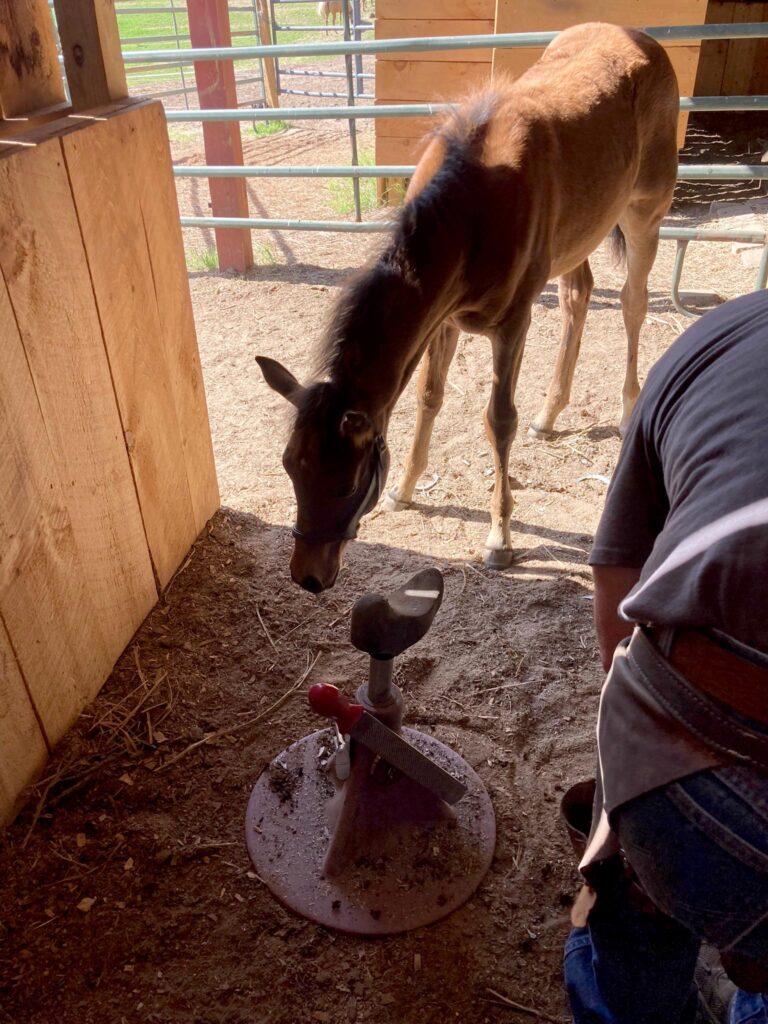
Preparing your foal for his first farrier visit begins within a few days of birth. Early hoof handling helps create positive experiences that make routine care and any necessary interventions safer and more efficient throughout the foal’s life.
For healthy foals, plan a farrier visit within the first two weeks of life and every two weeks after for the first few months, says Ben Flakoll, DVM, podiatry specialist and associate veterinarian for Rood & Riddle Equine Hospital in Saratoga, New York.
“There is a lot that can go wrong that needs to be worked on quickly, like flexural deformities, where your baby’s (tendons) are contracted or too lax,” he explains. “Angular limb deformities, when the horse toes in or out, can be corrected when they’re young, but you lose that window after 3 or 4 months old.”
Handling foals shortly after birth will help set them up for success for both routine farrier visits and any interventions they might need.
When Should I Start Handling My Foal’s Feet?
Begin handling your foal’s feet as early as the day of foaling or the next day.
Zack Petroski, owner of Petroski Farrier Services, in Honesdale, Pennsylvania says he’s found the earlier you start working with the foal’s feet, the better. “Start touching the foal’s ears, picking up their feet, and letting them get used to the sensation of doing something they might not want to from Day 1.”
How Do I Teach My Foal to Pick Up His Feet?
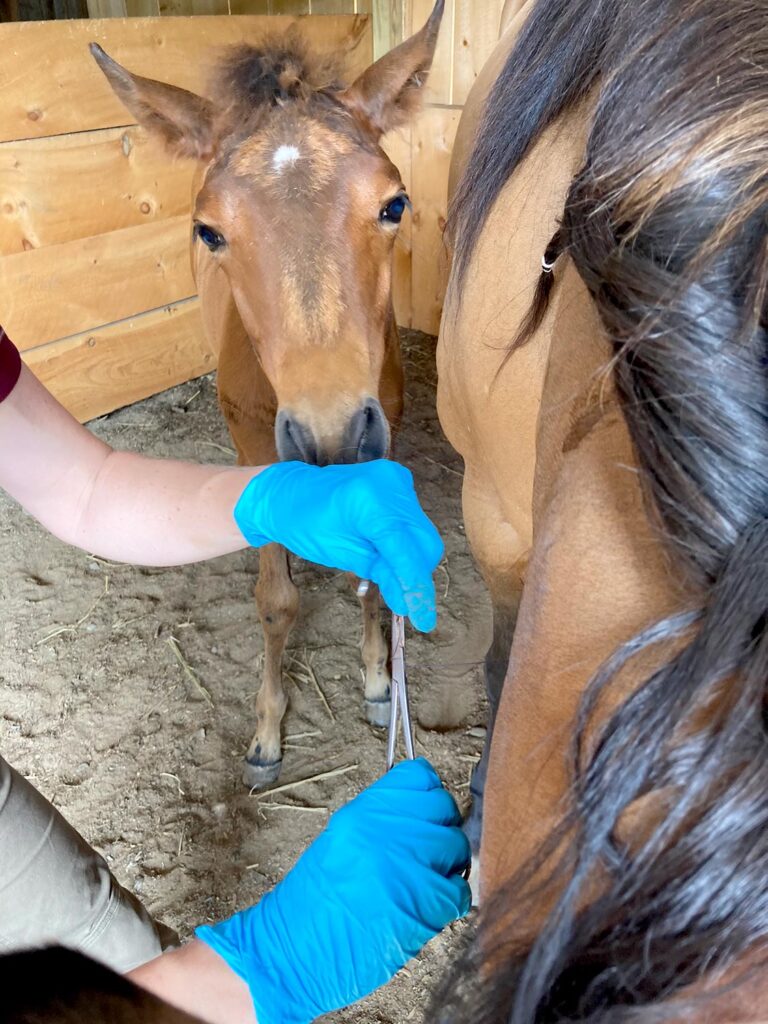
Select a quiet, spacious area where the foal feels at ease, the mare can stay nearby, and handlers can work without risk.
- Step 1: Gently run your hand down each of the foal’s legs.
- Step 2: Apply light pressure near one fetlock to introduce the sensation of picking up the hoof.
- Step 3: Pick up the hoof. Offer praise or a scratch in their favorite spot to reinforce it as a positive experience.
- Step 4: Hold the hoof up for a few seconds and then set it back on the ground.
- Step 5: Gradually increase the length of time you hold up the hoof.
- Step 6: Repeat the process on each hoof daily.
- Step 7: After a few sessions, gently use a hoof pick to introduce the foal to the sensation of tools touching his hooves.
Spending as few as five minutes a day handling each hoof provides a solid foundation on which your farrier can build. Some foals willingly accept the process. Others try to hop around and pull away. Even mostly agreeable foals might have days they don’t want their legs and hooves handled.
“Work with the baby to make it as easy as possible for your farrier,” Flakoll says. “Technically, (training is) not the job farriers sign up to do.”
Once you can pick up your foal’s feet, make sure you have multiple people handle them. “A lot of times, foals only see one person—their owner—and then when I come in, it’s a whole new ballgame,” Petroski says. “Don’t be afraid to ask your friends if they can pick up your horse’s feet.”
Take-Home Message
Preparing your foal for his first farrier visit starts well before the farrier arrives. Early handling—beginning as soon as the day of foaling—lays the groundwork for positive, stress-free hoof care throughout your horse’s life.