Researchers recently found regional differences in the fungi present in the lower airways of asthmatic horses, adding to growing evidence that environmental fungal exposure influences airway inflammation and respiratory disease.
The researchers evaluated bronchoalveolar lavage fluid (BALF) samples from horses presented to veterinarians for poor performance or respiratory signs across several U.S. ecoregions. They found that neutrophil and eosinophil (types of white blood cells) proportions differed by region, while fungal genera such as Aspergillus, Alternaria, Cladosporium, and Epicoccum also varied geographically. The researchers studied horses in Six ecoregions of North America: Northern Forests, Eastern Temperate Forests, Great Plains, North American Desserts, and Mediterranean California.
The authors noted fungal exposure has long been implicated in equine asthma and inhaling environmental dust particles and mold plays a central role in the disease process.
Managing Dust and Fungal Exposure on Horse Farms
Kathleen Ivester, DVM, PhD, Dipl. ACVS, a researcher at Purdue University, in West Lafayette, Indiana, said current management recommendations continue to focus on reducing dust and improving ventilation on horse farms. She said the regional differences in fungal types reaching horses’ lower airways of horses “might be due to differences in the fungi present in the ambient environment or differences in the fungi released from bedding, hay, or other feed stuffs specific to those regions.”
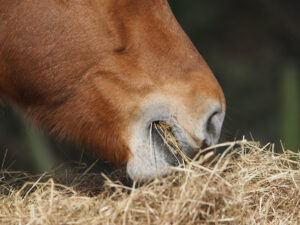
Ivester added that regional differences in hay production, harvest conditions, and storage methods likely contribute to those exposures. Even good-quality hay can expose horses to fungal spores and fragments, she explained. Feeding your horse hay outside or in well-ventilated areas, steaming hay, or feeding a pelleted forage can help reduce risk. She also noted that large round bales generally release more dust and fungi than high-quality square bales.
Owners should also avoid bedding with visible mold contamination or a musty odor. If using straw bedding, Ivester recommended inspecting it for mold.
Barn Chores and Equine Asthma
Routine barn chores can temporarily increase airborne dust levels, including fungal spores.
“Resuspension of settled dust particles can increase the airborne concentration of particulate matter, including fungal spores, for several hours,” Ivester said. “If possible, activities such as sweeping and mucking out should be performed when horses are not in the barn, particularly those horses that have been diagnosed with asthma.”
For horse owners concerned about environmental exposure, Ivester said measuring dust particles can provide a useful practical indicator, even though direct fungal testing often involves specialized laboratory techniques. “We have developed a real-time monitor to measure dust, designed to be worn on a halter,” she said. “This monitor allows measurement of dust levels in the breathing zone of the horse, providing the best estimate of the amount of dust the horse is exposed to. We hope to make this monitor commercially available in the future, and we are actively using it in our own research.” She added that measuring to identify high-dust activities can provide a good marker for inhaled fungi exposure.
Take-Home Message
Researchers identified regional differences in the fungi found in the lower airways of horses with asthma, suggesting geography and environmental exposure could influence airway inflammation. Until researchers can make region-specific recommendations, reducing dust through good ventilation, careful hay and bedding management, and minimizing airborne particles in the barn remain key strategies for managing equine asthma.