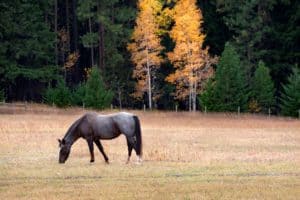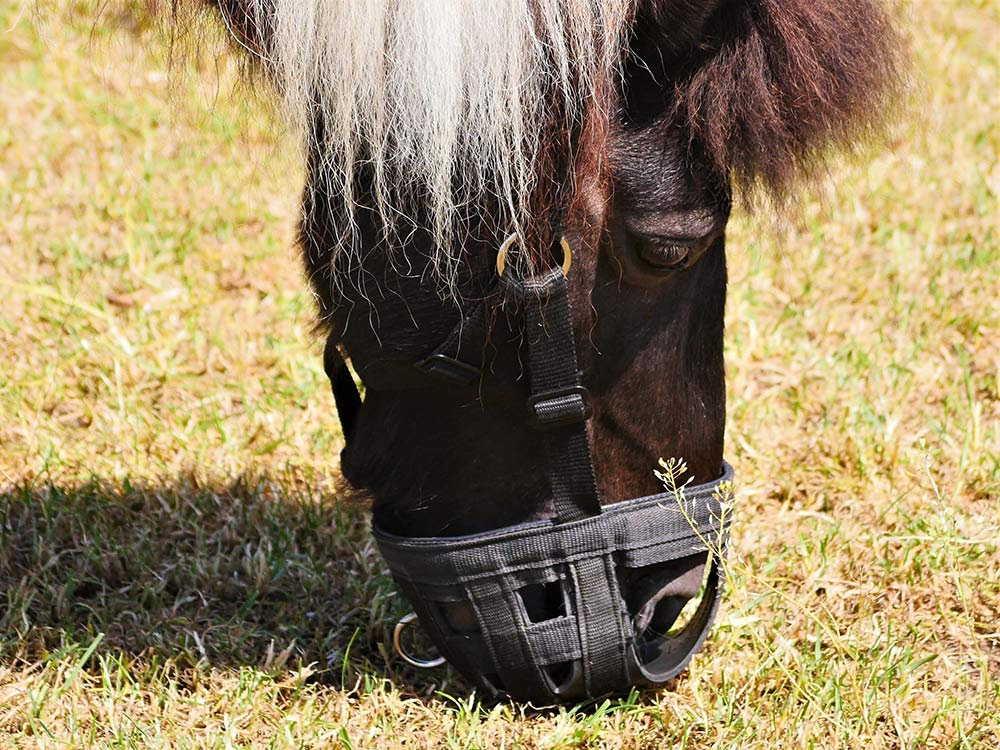
Grazing muzzles limit pasture intake in horses, but until recently researchers had not tested how wearing one affects insulin responses in individuals with insulin dysregulation (ID). In a new University of Kentucky (UK) study, ID horses had lower insulin concentrations while wearing muzzles than when grazing without them.
Nine ID horses spent 10 hours on Kentucky pasture with and without muzzles (referred to as treatments) on separate sampling days in summer 2025. Each horse completed each treatment twice. Researchers collected blood and pasture samples every two hours from 9 a.m. to 7 p.m. They measured insulin and glucose in blood and nonstructural carbohydrates (NSC) in grass. Pasture NSC ranged from 6% to 13.8% of dry matter.
Grazing Muzzles and Peak Equine Insulin
The horses wearing grazing muzzles had significantly lower peak insulin concentrations than unmuzzled horses. Peak insulin averaged 24.31 microinternational units per milliliter (µIU/mL) in muzzled horses compared to 45.59 µIU/mL in unmuzzled horses.
Insulin concentrations rose after grazing began when horses wore no muzzle. When horses wore muzzles, insulin concentrations fell below their starting levels later in the day.
Researchers didn’t consider the average peak insulin concentrations high, whether the horses wore muzzles or grazed without them. They noted that the relatively low to moderate pasture NSC, grass height, and severity of the horses’ ID might help explain these results. They said they didn’t know whether muzzles would adequately limit insulin responses on higher-NSC pasture.
“The important point is not that a muzzle eliminates the metabolic risk of pasture, but that it may help reduce pasture intake and therefore moderate the postprandial (postmeal) insulin response,” said Morgan Askins, PhD, who completed the study with colleagues when she worked in UK’s Department of Veterinary Science, in Lexington.
Variability in Pasture NSC Levels
Pasture NSC levels can change considerably throughout the course of one day.
In this study pasture NSC varied throughout the 10-hour grazing period. Levels were below 10% at the 9 and 11 a.m. sampling times and peaked, on average, at 5 p.m. Askins noted researchers from her laboratory previously found pasture NSC can be lower in the morning (about 3 a.m. to 10 a.m.) and higher later in the day, with a peak around 7 p.m.
Because the team conducted the study in July in Kentucky, she acknowledged the results might not apply to pasture conditions in other seasons or locations. Previously, researchers have found pasture NSC levels considerably higher during spring and stayed elevated for extended periods.
Using a Grazing Muzzle in Horses
Owners should use a grazing muzzle alongside other approaches for managing their horses’ weight and diet. Depending on the horse, this plan might also include limiting pasture access with a dry lot or stall time, providing low-NSC forage and concentrates (10-12% NSC; test forages and check feed labels to determine the levels), monitoring body condition and weight, and working with a veterinarian to assess and monitor ID through regular bloodwork.
“Muzzle fit, duration of use, pasture conditions, and the horse’s individual response should also be considered,” Askins said. Owners need to balance limiting pasture intake with the horse’s behavioral and welfare needs (for turnout and social interaction).
In earlier studies some horses compensated for restricted intake by grazing more after owners removed their muzzles, Askins and colleagues noted.
Take-Home Message
A grazing muzzle can reduce pasture intake and might help moderate insulin responses to grazing in horses with ID. It does not eliminate pasture NSC exposure, however, so owners should consider the pasture’s NSC content, the timing and duration of turnout, the season, and the individual horse’s health status when deciding how to use a muzzle.
Researchers tested only nine horses on one Kentucky pasture during four 10-hour sampling periods and did not measure grass intake. They acknowledged they need longer studies across seasons and pasture types, including measurements of intake and behavior, to understand how muzzles affect insulin responses over time.
Askins emphasized the importance of incorporating grazing muzzles into a broader equine metabolic management plan.
The study, “Short-term effects of grazing muzzles on insulin in horses with insulin dysregulation out at pasture,” was published in the Journal of Equine Veterinary Science in Dec. 2026.