Lecture: Regulation of Muscle Mass in Horses
Kristine Urschel, PhD, discussed factors that regulate equine muscle protein accretion and relevant research.

Kristine Urschel, PhD, discussed factors that regulate equine muscle protein accretion and relevant research.
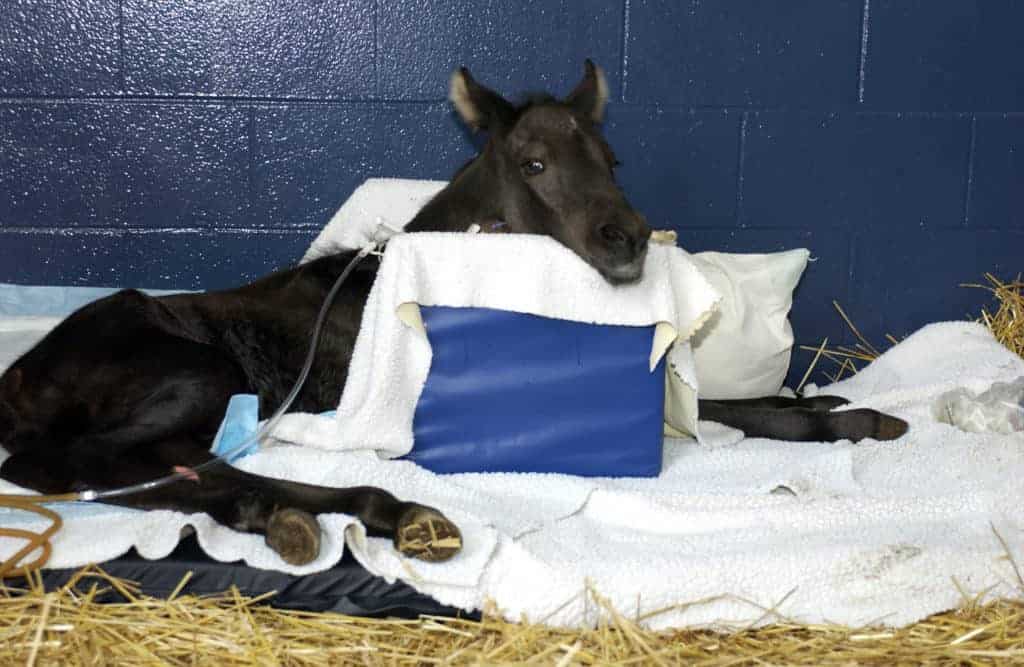
Researchers in the Netherlands have completed further research into developing an effective vaccine for the bacteria Rhodococcus equi, which is known to cause pneumonia and other sometimes fatal infections in young foals.

Nutritional support could reduce the stresses and health challenges that weaning places on young horses.
The New York City Police Department mounted unit will be called upon to observe the 10th anniversary of 9/11.
Protecting a foal from infectious diseases begins before birth.
When a horse needs surgery, what’s his prognosis for a full recovery? What problems can occur during recovery?

The second year of a horse’s life brings significant changes not only in his development but also his use.
Cornell University researchers are examining the use of degradable pins for treating OCD lesions in horses.

University of Kentucky researchers examine the genetics of congenital flexural limb deformities in foals.

Special considerations should be made when evaluating a colicky foal as opposed to an adult horse.
Dr. Sue McDonnell answers a reader’s quesion about foal imprint training.
Foals are small enough to fit in the gantry of a CT machine, which is helpful in assessing lung disease.
Meconium impaction, ulcers, diarrhea, and other GI problems can arise in foals.
Craig N. Carter, DVM, PhD, Dipl. ACVPM, received a prestigious award at the 2011 AVMA Convention.
Why should foals eating feces be classed as normal behavior when the foal is obviously lacking some nutrient?