Gluck Center Study on Equine Proliferative Enteropathy
Study revealed that exposure equine proliferativ enteropathy’s causative bacterium can continue into March…

Study revealed that exposure equine proliferativ enteropathy’s causative bacterium can continue into March…

Adjusting what a horse consumes can help prevent or squelch some equine ailments.

In the last two months of a high-risk pregnancy, this technique can help determine whether the unborn foal is healthy.
One of the most dangerous organisms that can sicken horses is the bacterium Clostridium difficile.
Foals should start a course of vaccinations as soon as the antibody levels obtained from the mare’s colostrum
Prevention and monitoring strategies for equine proliferative enteropathy, a disease that affects weanlings
Equine proliferative enteropathy, a gastrointestinal disease of foals and weanlings that’s increasing in
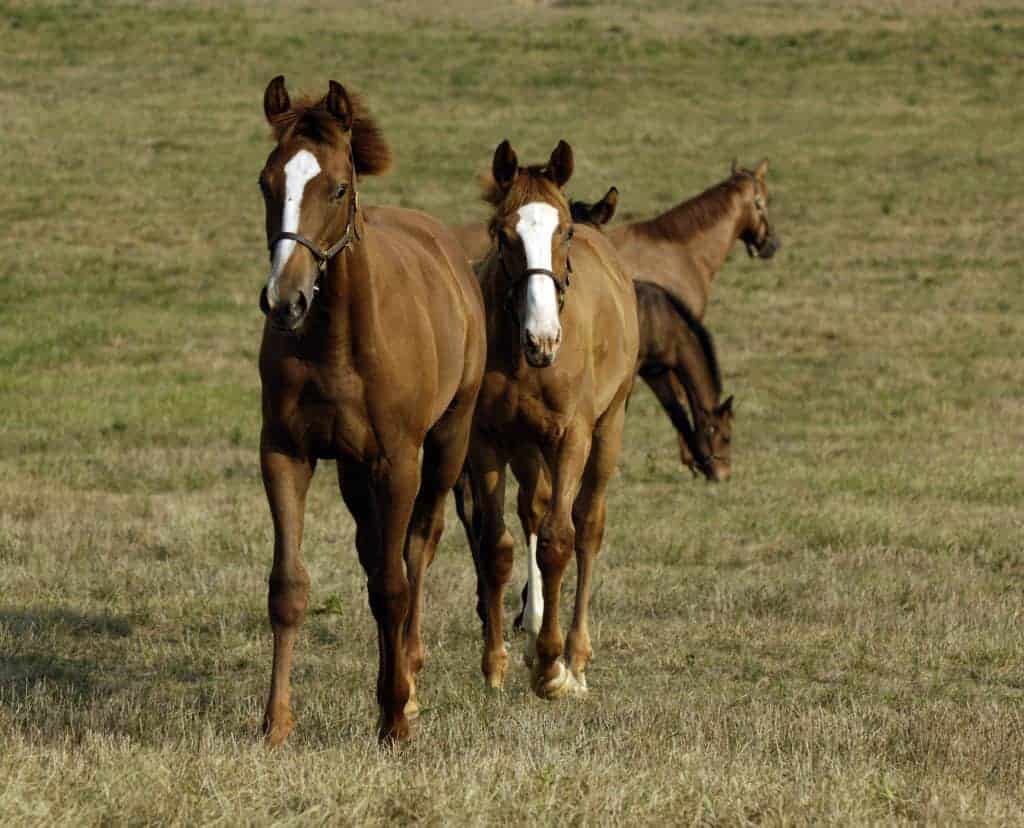
How you manage, feed, and care for your young horse can affect his future performance.
Nothing disrupts the joy of foal ownership like the observation of potential problems: A disinterest in nursing, a depressed attitude, strange mannerisms, or seizures could mean a foal is suffering from some serious neurologic problems. During a
There’s nothing more heart-wrenching than watching a newborn foal fight for his life.

Gastric ulcers can affect horses of all breeds, ages, shapes, and sizes, including weanlings.
The immune system allows humans and animals including horses to survive in a complex world filled with harmful bacteria and viruses that can use our bodies for nourishment and reproduce within us. The immune system protects us from those organisms
A nursing foal’s nutritional requirements will exceed his dam’s ability to supply nutrients a few months after birth, making creep feeding a good way to get the young horse off on the right hoof.
The fairly new concept of e-verification for immigration workers was one of the topics at a March 8 forum hosted by Blue Grass Farms Charities in conjunction with attorneys from Wyatt, Tarrant and Combs in Lexington, Ky. About 40 Thoroughbred
It isn’t for lack of effort that the equine industry still doesn’t have new options for treating Rhodococcus equi pneumonia in foals.
Although about 30% of foals that develop Rhodococcus equi foal pneumonia do not survive, the majority of foals can be treated successfully and proceed with a normal life. But why is it that only foals are affected by this respiratory disease?