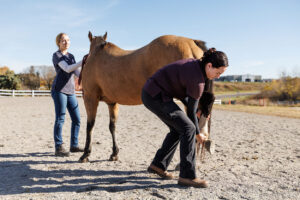
Vernon Downs EHV-1: One Horse Euthanized
One of three EHV-1 positive horses at Vernon Downs has been euthanized, a May 8 statement said.

One of three EHV-1 positive horses at Vernon Downs has been euthanized, a May 8 statement said.

Laboratory tests indicate at least four horses stabled at Vernon Downs are positive for EHV-1.
A combination of inclement weather and a suffering economy are creating tough times for English horse owners.

Officials implemented a quarantine at Vernon Downs in New York after confirming a case of EHV-1 on May 4.

Vets might be able to determine if some mares are at risk of late-term abortion by conducting a blood test.
The BLM is studying the spaying of fertile wild mares in order to control wild horse population growth.
Neurotrophic equine herpesvirus-1 (EHV-1) was recently confirmed in Wellington County, Ontario, Canada.
My mare was bred more than 390 days ago and still has not foaled. Is it possible she has grass poisoning?
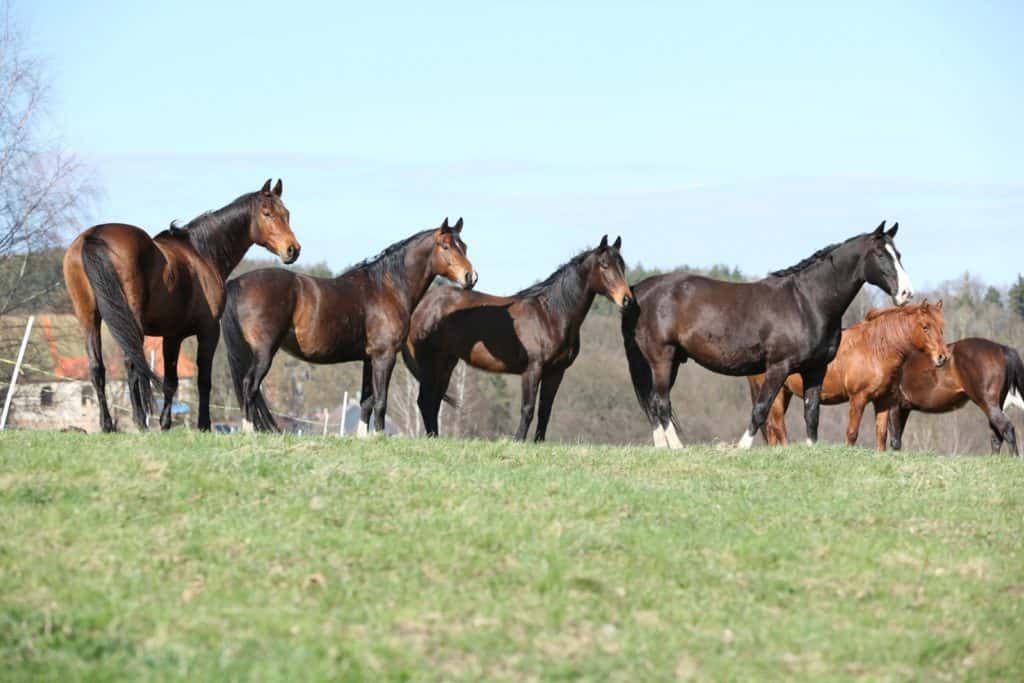
Researchers are studying multiple parts of the Y chromosome to determine how modern sport horses came to be.

In this University of Kentucky Diagnostic Lecture Series presentation, equine reproductive specialist Dr. Karen Wolfsdorf shares her clinical experience with placentitis in mares.
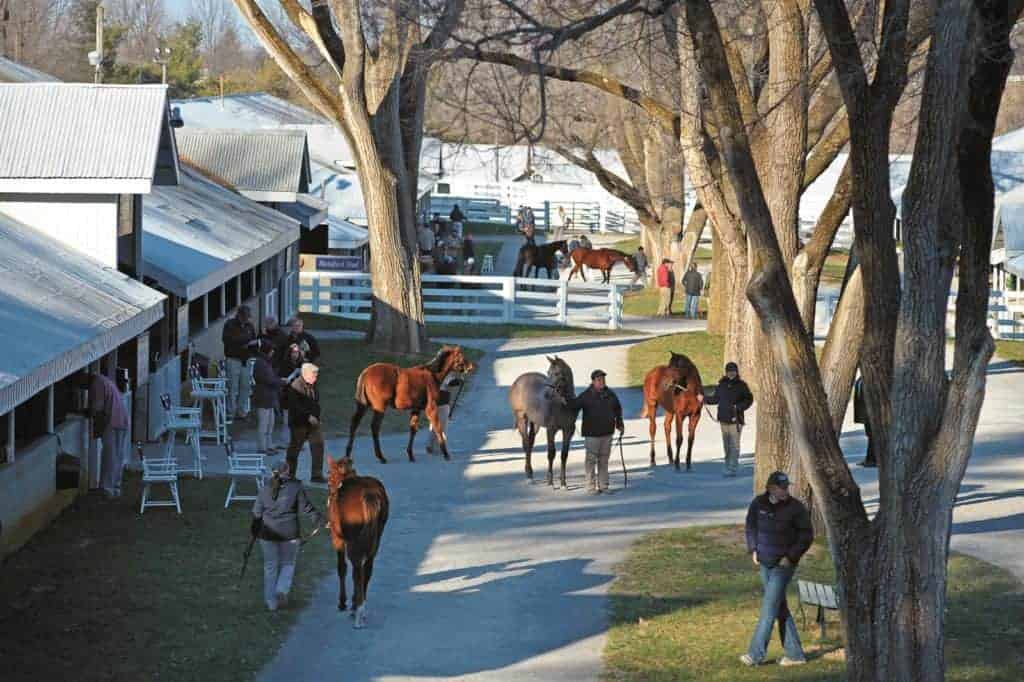
Remember to employ good biosecurity practices to help prevent infectious disease spread.

Researchers recently investigated two ways to help advance the breeding season in mares.
The organizations are leading the charge to track and provide information on equine disease threats.
Reported diseases include contagious equine metritis, strangles, influenza, equine herpesvirus, and more.
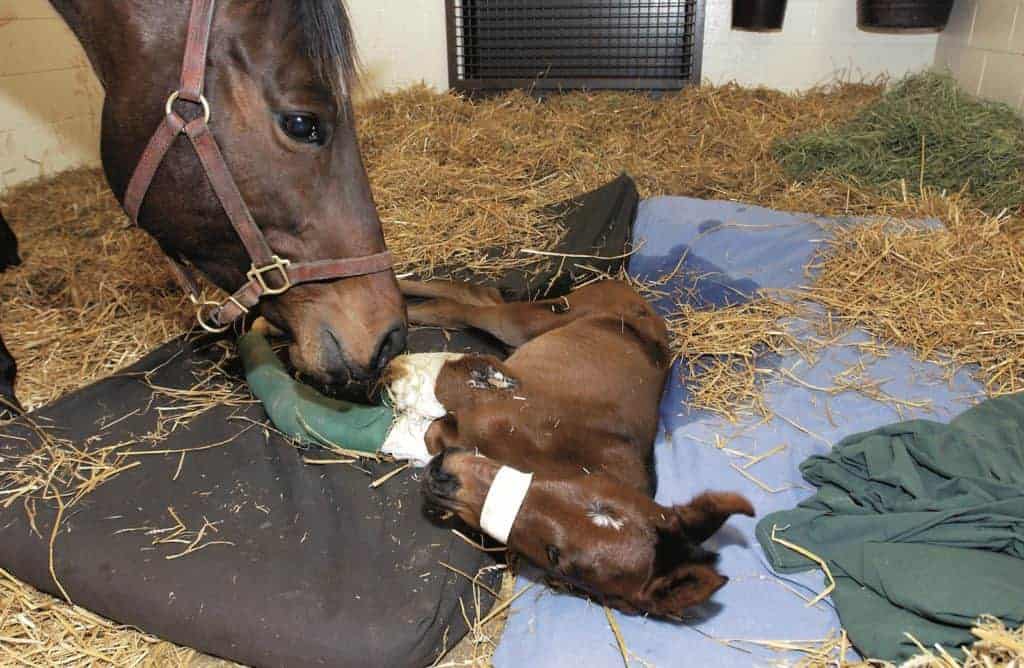
Researchers developed a uniform system for classifying cases of contracted foal syndrome (CFS).

Common foaling problems include red bag delivery, difficult birth, and retained fetal membranes.