EHV-2 and EHV-5: More Questions Than Answers?
EHV-2 and EHV-5 behave unlike EHV-1 and -4 and respond differently to antivirals, leaving researchers eager to better understand their importance.

EHV-2 and EHV-5 behave unlike EHV-1 and -4 and respond differently to antivirals, leaving researchers eager to better understand their importance.

The readily available modality can reveal more information so veterinarians can make a definitive diagnosis.

Have you considered using a surrogate to carry your performance mare’s foal? Learn about the process and what you can expect.

Neonatal maladjustment syndrome is a diagnosis of exclusion that must be reached quickly to save the foal. Learn about commonsense approaches to nursing “dummy foals” back to health.

The three major macronutrients—carbohydrates, fats, and protein—make up the bulk of the equine diet and are the main nutrient sources necessary for all aspects of life.

Many factors influence stallion fertility, a good number of which can be managed and improved.

Age can affect a stallion’s fertility and his ability to settle mares. Reproduction specialist Dr. Ryan Ferris explains.

Learn about horse breeding and fertility March 7-12, 2022, on TheHorse.com.

Learn how proper nutrition can help improve horses’ musculoskeletal, immune, endocrine, and gastrointestinal health.

Routine health monitoring and broader testing helped veterinarians identify an outbreak quickly.
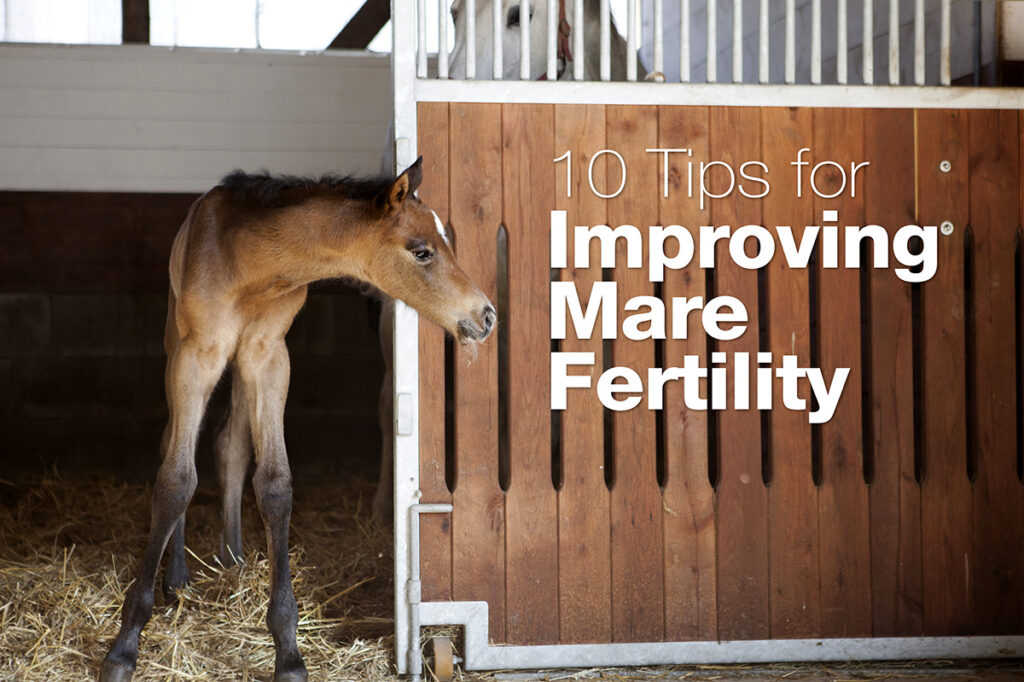
Use this visual guide to maximize your mares’ chances of conception and a healthy pregnancy.

Dr. Barry Ball describes what he learned as the University of Kentucky’s Clay Endowed Chair in Equine Reproduction and over his 35 cumulative years of research.

Some developmental disorders can be dangerous and performance-limiting if not treated promptly and properly.

Fescue toxicosis can cause pregnancy losses and reduced reproductive efficiency in mares. Learn more in this visual guide.

Warm, wet winter weather could lead to higher ergovaline concentrations in pastures, putting broodmares at risk for fescue toxicosis.

Intact males with hidden testes can present owners with increased costs and dilemmas.