Botulism Vaccination Protocols for Horses
Dr. Daniela Luethy covers recommendations for the botulism vaccination and booster series for horses.

Dr. Daniela Luethy covers recommendations for the botulism vaccination and booster series for horses.

Dr. Daniela Luethy outlines the signs a horse might have botulism, including muscle weakness, lethargy, and the inability to eat.

Think botulism can’t happen to your horses? Think again. An owner describes her mare’s battle with the deadly disease.

Critical conditions such as colic, injuries, and dehydration can strike when you’re at a competition with your horse. Here’s how to handle them.

Horses are one of the most susceptible species to botulism. Find out how to protect your horse from this deadly neurologic disease.

A pony from Frederick County, Maryland, died July 30 after contracting Potomac horse fever.

Horse are especially sensitive to endotoxemia. To address the issue, Dr. Stacy Anderson of Lincoln Memorial University, in Harrogate, Tennessee, presents her research on neutrophil apoptosis (the death of cells that occurs as a normal and controlled part of an organism’s growth or development) in horses.

One horse has died and several more are recovering after developing signs of Potomac horse fever (PHF) at the Liberty University Equestrian Center, in Lynchburg, Virginia.

As of July 23, the University of Kentucky Veterinary Diagnostic Laboratory (UKVDL) had seen five positive PHF cases this month.

If a horse tests positive for Lyme disease antibodies, does that mean the horse has the disease? Dr. Eric Swinebroad responds.

Equine internal medicine specialist Dr. Eric Swinebroad offers an overview of testing available for Lyme disease.

Find out where Lyme disease is most prevalent in the U.S. and Canada from Dr. Eric Swinebroad.
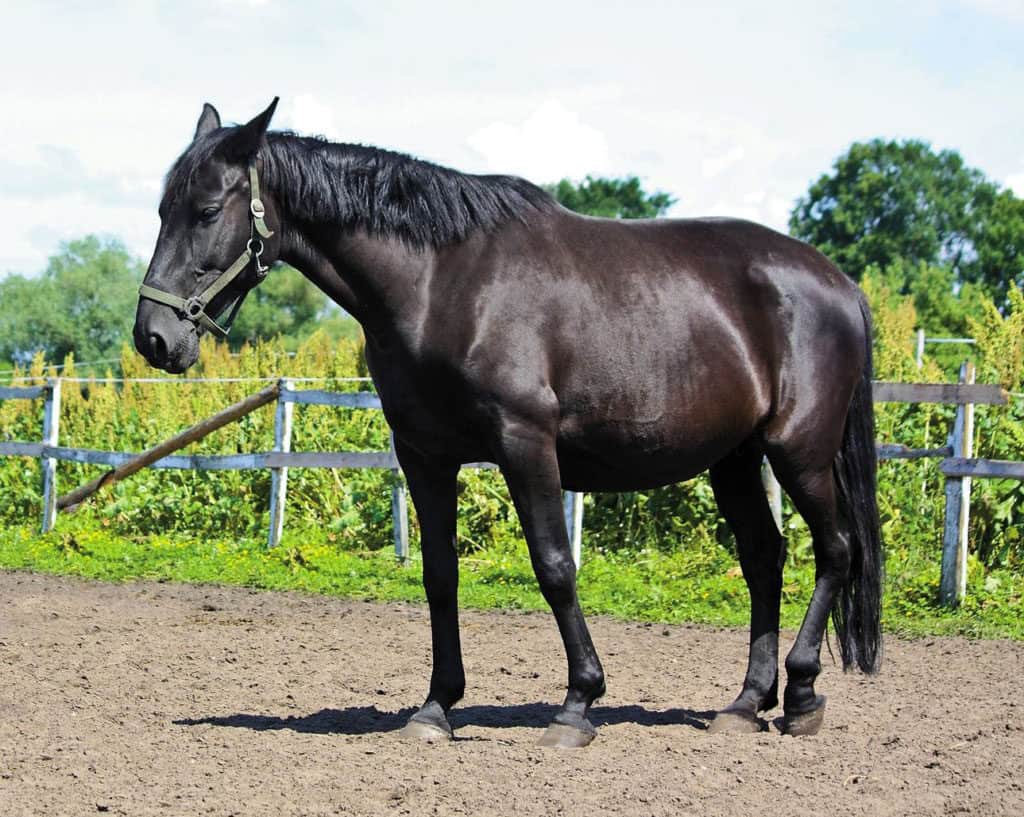
Dr. Eric Swinebroad gives an overview of Lyme disease’s potential clinical signs.

An unvaccinated 19-year-old Quarter Horse gelding presented with hind end ataxia with no improvement after anti-inflammatory treatment.

Lyme disease is notoriously difficult to diagnose and has (or might not have) a myriad of vague (or not-so-vague) clinical signs in horses. Learn about this tick-borne disease and get your questions answered during our live Q&A.
We’ve compiled 10 resources to help you get and stay up to speed on Lyme in case you’re ever faced with an infected horse.