The Many Faces of Equine Metabolic Syndrome
Find out which horses and ponies have a higher genetic risk for EMS and how to manage them.

Find out which horses and ponies have a higher genetic risk for EMS and how to manage them.

Overweight horses and some breeds are predisposed to metabolic problems. Here’s how to feed horses with ID and calculate if your horse’s meal has a safe level of NSCs.

Sourcing lower-energy hay and implementing slow-feeding strategies can help reduce your horse’s risk of becoming obese and developing metabolic problems.

Not all carbohydrates are created equal, and “low-carb” definitely doesn’t mean “no-carb.” A nutritionist explains.
A podiatrist gives his tips for keeping a horse with chronic laminitis and equine metabolic syndrome comfortable.

Find out how to recognize when a horse is at risk of developing EMS-related laminitis and what you can do to either prevent or manage it so he stays sound.
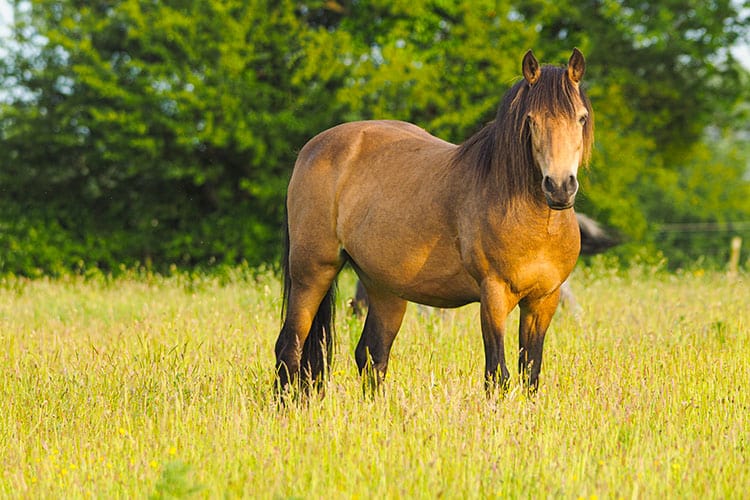
Here are some tips for promoting nonworking horses’ optimal health (and preventing potential problems) with nutrition.

Here’s what veterinarians should consider before injecting a metabolic horse’s joints.

Driving horses, whether pulling a plow, going for a pleasure drive, or competing, face health considerations similar to and distinct from those of typical sport horses.
Test your knowledge about the tricky world of PPID, EMS, ID, and more.

Rapid weight loss can lead to hyperlipemia, a serious and sometimes fatal condition.

Learn how to interpret feed tags and consider your horse’s specific dietary requirements so you can make informed decisions to maintain his health and performance.

Find out how you can keep your metabolically efficient horse healthy when he’s laid up with an injury or chronic illness.

Is one grass hay variety more palatable than another? Should I feed my horse the first or second cutting of hay? Equine nutritionists answer these questions and more.

An equine nutritionist describes how to promote weight loss in horses that cannot be ridden.

Dr. Frank Andrews describes how you can reduce your horse’s risk of hindgut ulcers while helping him safely lose weight.