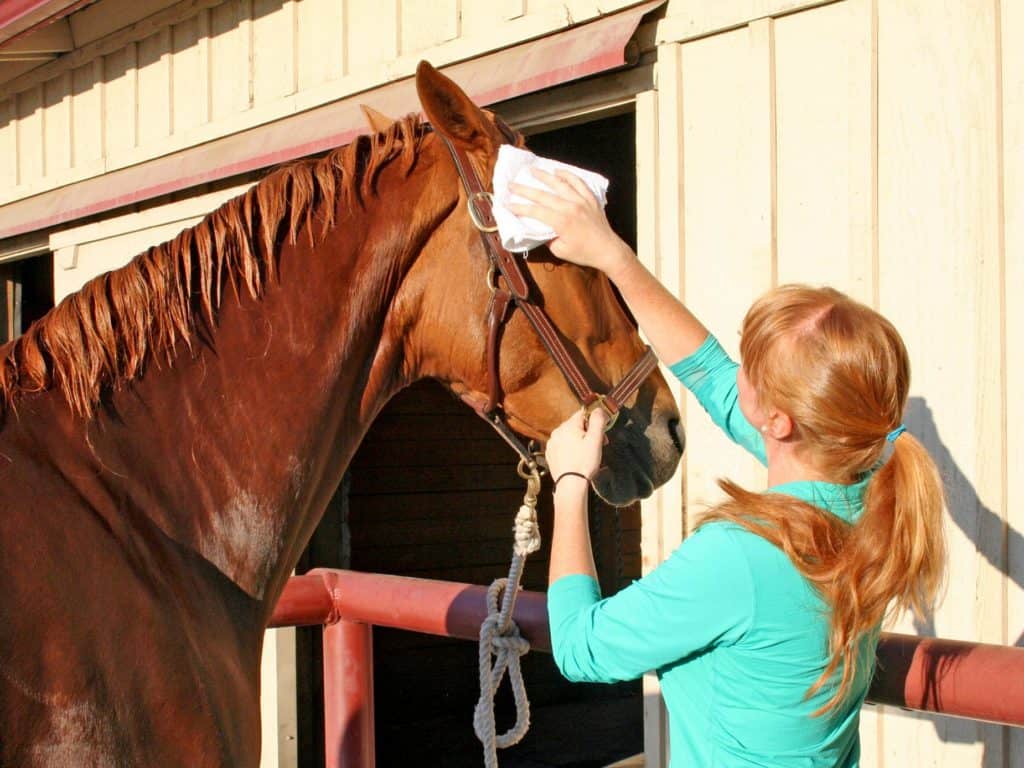
Equine Detailing: Elevate Your Grooming Routine
Here are four crucial areas to include in your horse grooming routine.

Here are four crucial areas to include in your horse grooming routine.

The affected 14-year-old Quarter Horse mare began exhibiting clinical signs on March 21. By April 1 she was described as clinically normal but remains quarantined.

The affected horse is under veterinary care at a private facility, which is now under quarantine.

Studies have shown that vaccines can be effective in reducing the risk of horses contracting both EEE and WNV when administered appropriately. Here’s why you should vaccinate your horses.

Orphan foals raised with a correct balance of nutrients and monitored for growth, food consumption, and weight gain can be every bit as tall, strong, and athletic as foals raised by their dams.
A 20-year-old Quarter Horse mare developed severe neurologic signs on March 25 and was euthanized. This case is not associated with the one reported in the same county on March 25.

Officials reported cases in Maricopa and Yavapai counties, in Arizona, and in Polk County, Iowa.

The affected 3-year-old Thoroughbred filly from Alameda County was euthanized due to the severity of her neurologic signs.
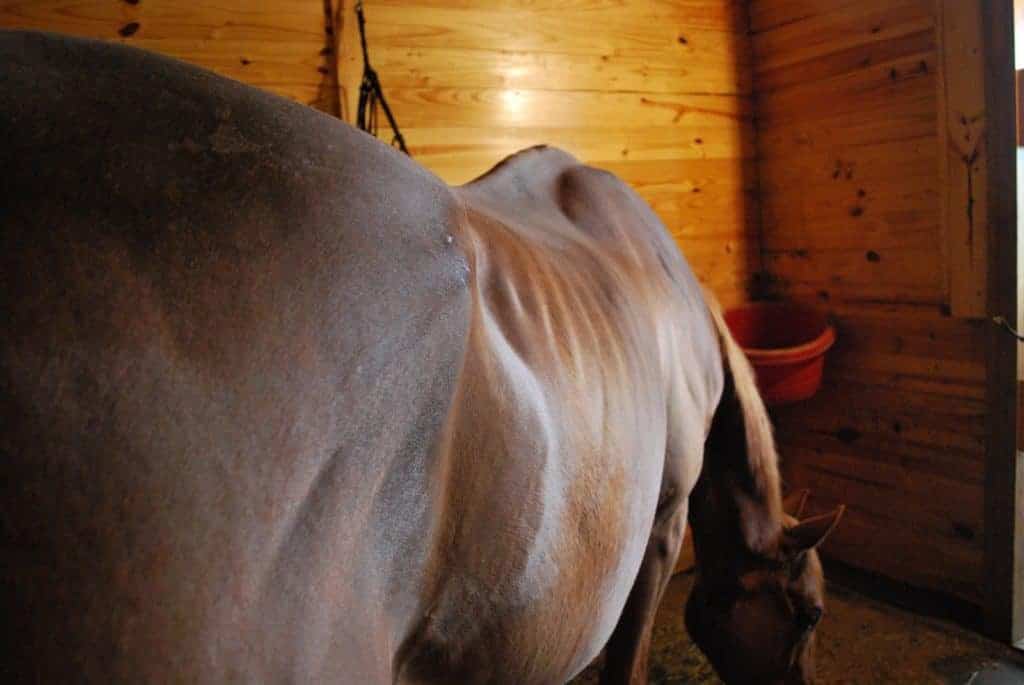
Health conditions, management changes, and palate preferences can affect a horse’s appetite.

Dr. Angela Pelzel-McCluskey explains why certain populations, such as racing Quarter Horses, might have a higher risk for contracting equine infectious anemia.

Researchers identified upper respiratory tract disorders, many of which aren’t common in other horse types, in 92% of the competition draft horses they examined.

Dr. Angela Pelzel-McCluskey gives an overview of how horses are tested for equine infectious anemia.

Dr. Angela Pelzel-McCluskey gives an overview of equine infectious anemia, a deadly disease in horses, and explains why it’s important to prevent its spread.
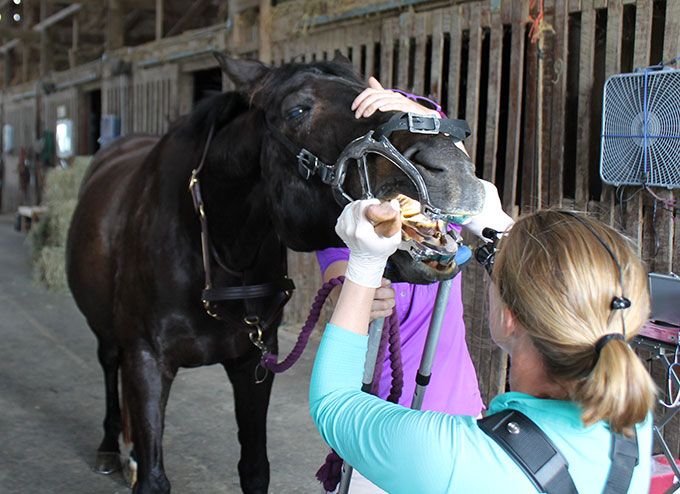
With an estimated 88% of horses over 20 years of age diagnosed with dental disease, veterinarians must be sure to maintain these patients differently than their younger counterparts.

Rotavirus is a leading cause of diarrhea in foals up to six months of age at breeding farms worldwide.

Three horses in Clark County have tested positive for EHV-1, and three facilities there have been quarantined.