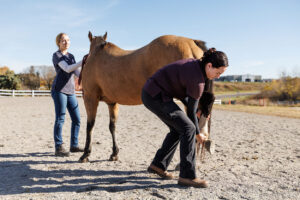
Getting a Second Wind: Helping Equine Athletes Breathe
Are breathing issues slowing your horse down? Here are some surgical and management options that might help.

Are breathing issues slowing your horse down? Here are some surgical and management options that might help.

Look for equine respiratory health content during Respiratory Care Awareness Week, which takes place October 22-26, 2018.

Find out how long it takes for a horse to be protected from disease after vaccination. Dr. Elizabeth Davis explains.

The New York State Department of Agriculture and Markets confirmed EEE in a 3-month-old filly from Oswego County and WNV in three horses from Chenango, Livingston, and Washington counties.
Find out from Dr. Elizabeth Davis how vaccines prime the immune system and why some horses might still get sick.

The FDA warned Gilman Co-Op Creamery and Farmers/Ranchers Cooperative Association of Ainsworth about monensin contamination in horse feed they produced. Monensin is an animal drug approved for use in cattle, swine, and poultry that is highly toxic and potentially lethal to horses, even at relatively low levels.

A high-fat, high-fiber “museli” mix appeared to supply sports ponies with enough energy to perform well and maintain body condition while reducing blood glucose levels after meals, potentially reducing their risk of metabolic disorders.


To help support its members with the provision of good primary equine dental care, the British Equine Veterinary Association (BEVA) has introduced some new online dental resources.

According to EDCC data, officials have now confirmed 43 cases of WNV in Ohio horses so far this year—more than triple the number of cases confirmed last year.

An unvaccinated 22-year-old Tennessee Walking Horse gelding from Smyth County developed an abnormal gait on Oct. 8. His condition has slowly with supportive therapy.

Dr. Jacquelin Boggs shares why horses need a rabies vaccine every year and how long vaccines protect horses in general.

Dr. Elizabeth Davis explains how experts selected the vaccines every horse should receive.

Two unvaccinated Tennessee Walking Horses from Lewis County are recovering. So far in 2018, 11 Kentucky horses have tested positive for WNV.

Cranial nuchal bursitis occurs when nuchal ligament (located near the horse’s poll) bursae become inflamed and sometimes infected. It generally causes pain, limited head and neck flexion, and poor performance.

Skin problems were the most common general disease reported (33% of all syndromes recorded) and nonhoof-related lower limb lameness was the most common individual issue reported (18.5% of all syndromes recorded).