Direct application of carboxymethylcellulose (CBMC) to the small intestines and surrounding tissues of horses during colic surgery for small intestinal disease improves postoperative survival.
As colic surgeries go, the procedure that U.S. Olympic dressage competitor Brentina underwent Feb. 10 was “pretty routine,” according to her surgeon, Nicole Johnson, DVM, Dipl. ACVS, of Humphrey, Giacopuzzi & Associates Equine Hospital in
Reed believes that future goals for managing neurologic disease in horses should be to decrease mortality and improve outcomes. This would be best achieved by developing improved diagnostic tools to facilitate early diagnosis and treatment
Thoroughbred stallion Sky Mesa, whose son General Quarters entered the Triple Crown picture with an upset victory in the Sam F. Davis Stakes on Feb. 14, has been taken out of service after undergoing surgery for colic over the weekend.
Olympian Debbie McDonald reported Feb. 12 that her equine partner Brentina had downed her first four meals, consisting of soaked timothy pellets, following surgery Feb. 10 to remove an impaction from her small intestine.
In an attempt to quiet the fluttering of horses’ hearts caused by atrial fibrillation, researchers in Belgium found that a human medication does not restore a normal cardiac rhythm, despite reaching therapeutic levels.
Brentina, the 18-year-old chestnut Hanoverian mare who has been the partner of U.S. dressage rider Debbie McDonald, underwent surgery Feb. 10 to remove an impaction from her small intestine. According to news reports, the procedure took place at
A horse in the Hamilton Lane/North Yarnallton Pike area of Lexington, Ky., has tested positive for rabies, according to a statement from the Lexington-Fayette County Health Department.
Department Spokesman Kevin Hall said the Thoroughbred
To test novel techniques for managing laryngeal hemiplegia, more commonly referred to as “roaring,” a research team from Cornell University has created a working model of the equine larynx.
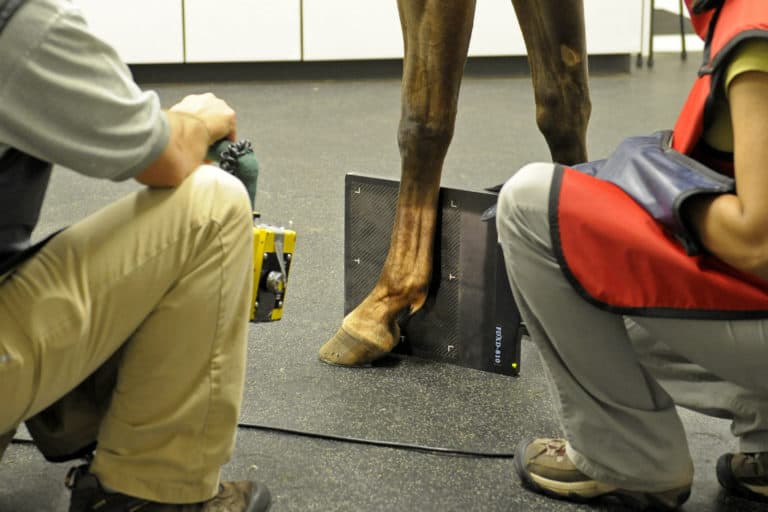
How the horse’s head is positioned for radiographs (X rays) evaluating the efficacy of a tie-forward surgery can have a dramatic impact on the results, researchers from the United Kingdom report.
Virginia-Maryland Regional College of Veterinary Medicine
February 4, 2009
The book provides a thorough discussion of normal and abnormal anatomy and physiology of the horse’s gastrointestinal tract and includes surgical techniques and medical treatments for the diseases that cause colic.
Sand’s heavy, abrasive nature makes it worth specific investigation when it comes to impaction in the equine intestine, according to a group of Israeli researchers who conducted a 12-year review of horses undergoing surgery to relieve
TheHorse.com launched the first in a series of Fact Sheets on Jan. 13 to widespread acclaim. This week we present more Fact Sheets on topics that our readers have indicated are
Emmy Widman, Washington State University College of Veterinary Medicine
January 30, 2009
Due to its contagious nature, outbreaks of the bacterial disease strangles, which can cause serious complications, periodically occur. This can send owners scrambling to protect their horses.