Health Considerations for World Equestrian Games Horses
Quarantine, confinement, and stress can affect World Equestrian Games (WEG) horses.

Quarantine, confinement, and stress can affect World Equestrian Games (WEG) horses.

Common cocklebur is distributed widely across the United States and occurs in pastures and cultivated crops. Infestations in pastures are usually more of a problem during periods of drought or due to overgrazing and most frequently occur in field margins.
The wet spring weather and abundant clover growth in Central Kentucky has made 2010 a bumper year for slaframine toxin, or “slobber toxin.”
Detailed agricultural weather information that can be customized to a horse farm’s exact location is just one of the pieces of information available to Kentucky horse owners through the University of Kentucky’s College of Agriculture Weather Center.

Poison hemlock, cocklebur, Johnsongrass, and common ragweed can all be poisonous to horses under the right conditions. Dr. William Witt of the University of Kentucky discusses these weeds’ habitats and how to get rid of them.

Goosegrass is a warm-season grass that germinates and emerges in spring and grows throughout the summer until the first killing frost.
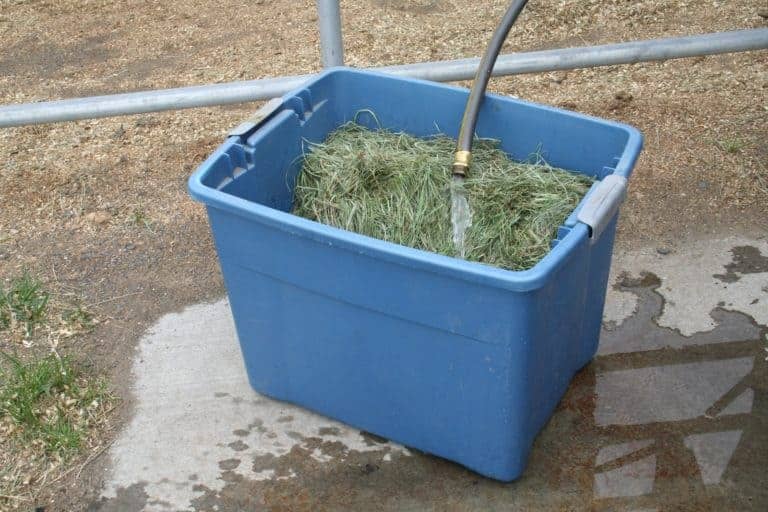
Tight budgets have caused several Central Kentucky horse farm managers to reduce straw bedding costs by harvesting overmature grass pastures and using the resulting stemmy hay as bedding.
The University of Kentucky Equine Initiative will host an equine farm and facilities expo June 1 from 3:30 to 8 p.m. EDT at Lexington’s Spy Coast Farm on Newtown Pike.
It is important to thoroughly clean and disinfect stalls where mares foal. Disinfectants such as phenolic compounds will kill rotavirus, as well as salmonella, R. equi, and other equine pathogens.

Efficiently managing manure is an important aspect of caring for horses. Composting is an economical and efficient method for managing manure for virtually any equine operation, regardless of size.

Canada thistle is distributed across the northern United States and Canada. It’s listed as noxious in many states and classified as a prohibited noxious weed seed in many state seed laws.
Owning horses can be a serious business for some people or a pleasant hobby for others. There is no legal requirement that a horse operation must be classified as a “business,” but if you plan to operate a commercial boarding stable,
Dr. Kristina Hiney, PhD, Omega Fields Equine Nutrition Advisor, has prepared a series of seasonal tips to help horse owners transitioning their horses from one season to another.
Horses often seem to be accidents waiting to happen. It’s important to shield yourself from liability.
Champion Rags to Riches, winner of the 2007 Belmont Stakes, delivered a Henrythenavigator colt March 17 in Ireland, where she is scheduled to be bred to Coolmore stallion Galileo.
Rags to Riches, the champion 3-year-old filly of 2007
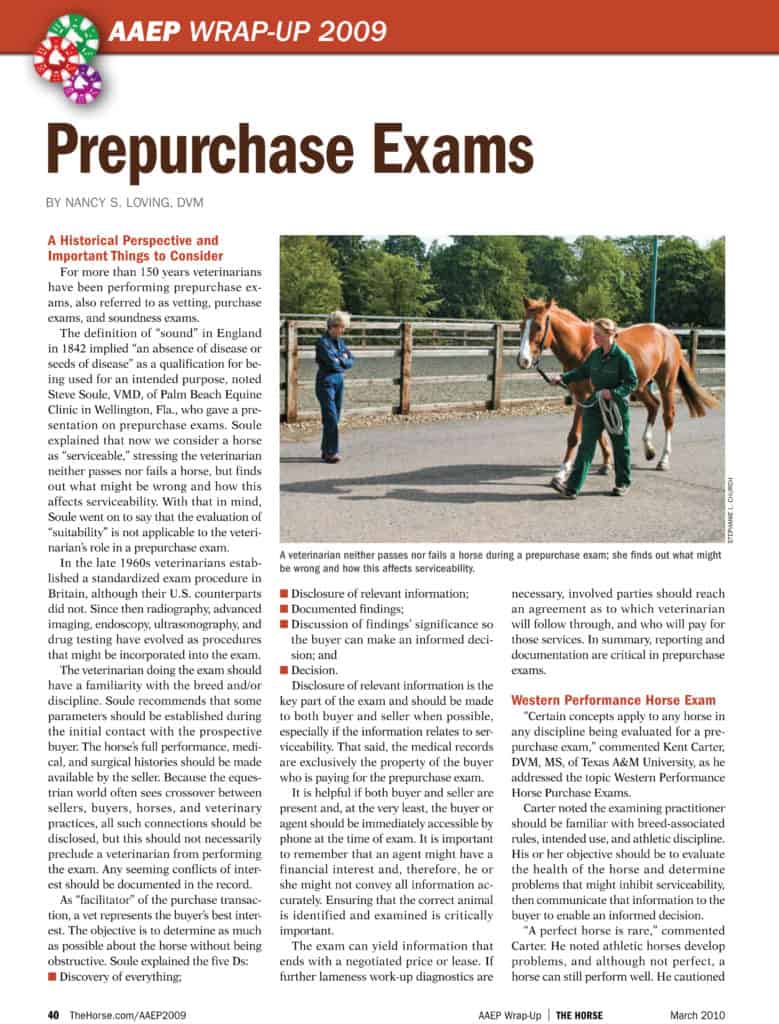
For more than 150 years veterinarians have been performing prepurchase exams, also referred to as vetting, purchase exams, and soundness exams. Two veterinarians discussed purchase exams in general and specifically for Western performance horses at the 2009 American Association of Equine Practitioners Convention.