Ex-Laminitic Ponies Overproduce Vasodilators
Researchers have discovered that ponies that have suffered from laminitis have higher blood pressure and therefore overproduce vasodilators.

Researchers have discovered that ponies that have suffered from laminitis have higher blood pressure and therefore overproduce vasodilators.

Dr. Lori Bidwell lists pain relief medications and therapies that can help horses with acute or chronic laminitis.

Keeping donor and recipient mares in moderate body condition might improve survival rates of transferred embryos.

An equine veterinary podiatrist gives 6 steps for addressing the acutely laminitic horse.

Despite poor hoof quality, the feral horses on Sable Island had a low prevalence of laminitis.

Aging mules and donkeys need to be managed just as carefully as horses. Here’s what you need to know.

Here’s what researchers know about the use of bisphosphonates and future opportunities for further investigation.

A veterinarian describes what causes podotrochlosis and how practitioners diagnose and manage it.

Because the hooves are integral to soundness, veterinarians and farriers should work together to give lame horses the best prognosis.

Dr. Andrew van Eps gives his advice for returning a previously laminitic horse to movement and exercise slowly.

A veterinarian explains the relationship between high insulin and laminitis in horses.
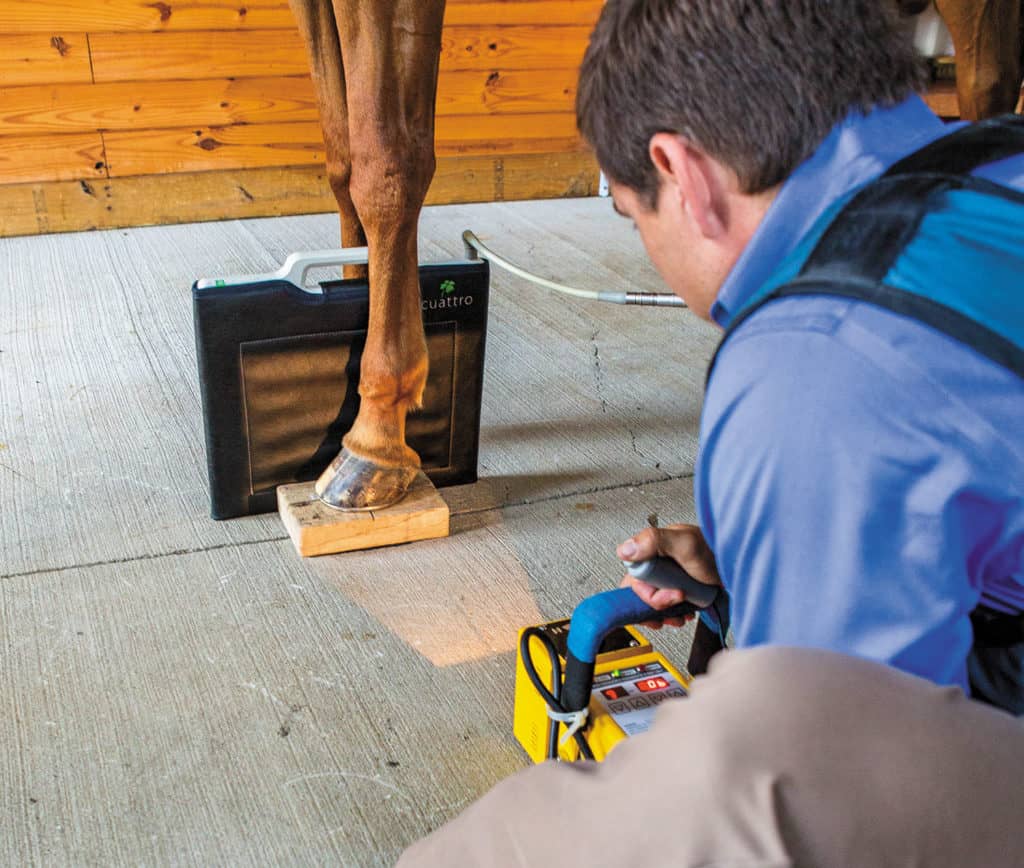
A veterinary podiatrist explains how X rays can be a useful tool for managing horses with chronic laminitis.

These tips can provide an interim solution to dealing with a loose shoe while you wait for the farrier.

Typically, grass has less sugar overnight and in the early morning than during the day.

A veterinarian explains the process of using poultice and wrapping a hoof.
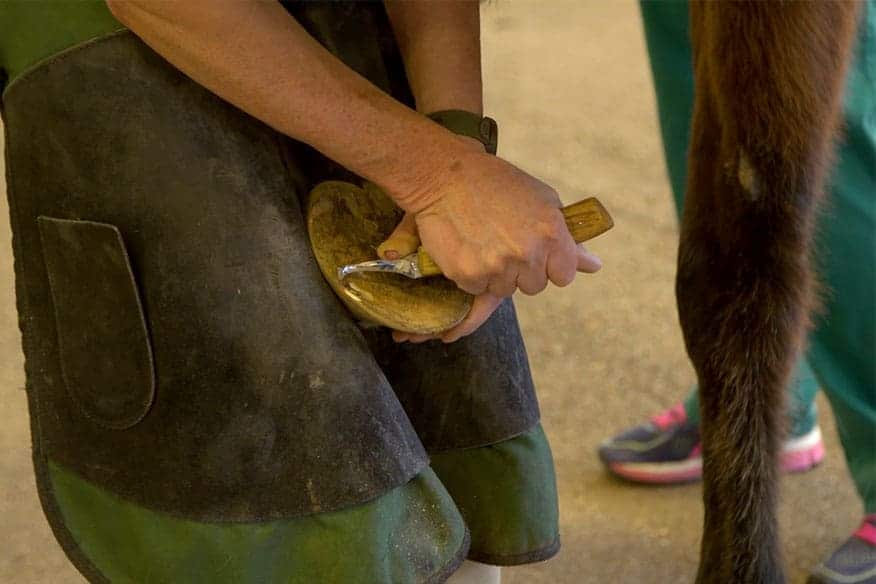
Addressing hoof abscesses early can help horses have the best outcome.