What’s New With Weaning Foals?
As you consider ways you can help your foal—and his dam—through the weaning process, examine proven methods based on research findings to formulate a plan.

As you consider ways you can help your foal—and his dam—through the weaning process, examine proven methods based on research findings to formulate a plan.

British researchers analyzed 4,000 road incidents between cars and ridden or handled horses and found drivers’ passing too closely, speeding, and road rage all contributed to conflicts and injury.

Researchers found many people accept that working with horses is dangerous—especially more experienced riders or those working with horses for financial gain.

Although horse sports—and three-day eventing in particular—carry inherent risks to both horse and rider, significant safety efforts in recent years have led to safer competitions, according to two sports medicine specialists.

Slow feeders and haynets offer many benefits for horses, such as metered forage intake, but can also create safety issues. Here are solutions to common challenges.

A new sensor cap designed just for helmet wearers is giving feedback that could not only improve fit but also lead to better diagnostics and treatment when riders fall.
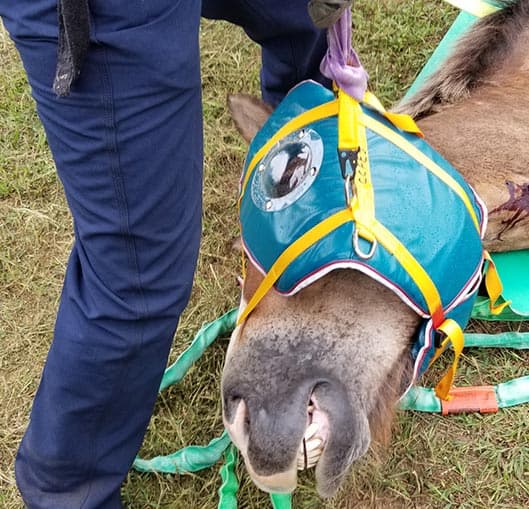
Vets and handlers can take these steps to keep horses restrained during recovery or rescue.

Does freezing weather turn urine and water in your stalls’ runs into pee-filled ice rinks? There’s no perfect solution, but here are some tips that might help.

PRCA Hall of Famer Douglas Corey, DVM, offered insight into rodeo horse care and welfare during the American Association of Equine Practitioner’s annual convention.

Fire remains a threat to equine operations worldwide. Learn how to protect yours from barn and wildfires.

Before you bring a horse home, there’s a host of things to prepare and much to consider. Our sources share their recommendations for owners making the transition to at-home horse care.
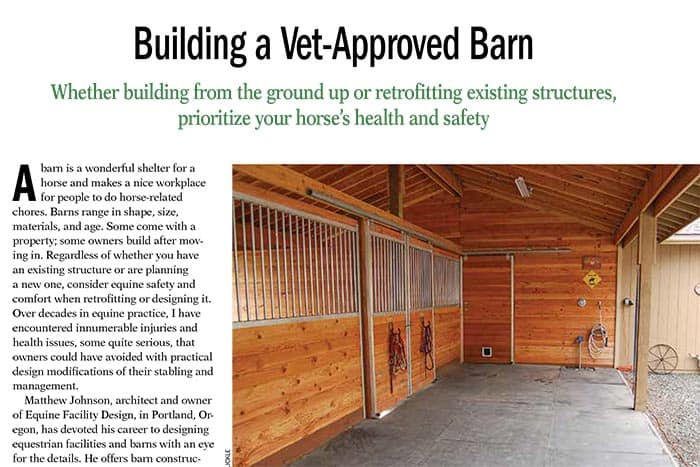
Attention to small design details can make barns safer and more comfortable for you and your horse, along with improving chore efficiency. Download this free report for tips on constructing or retrofitting your barn to optimize horse health and reduce accidents and injury.

Find out what items should be in your horse’s first-aid kit, what they’re used for, and how to store them.

According to British researchers, fence color could make a significant difference in racehorses’ ability to visualize obstacles as they approach them.

An analysis of data from the Equine Injury Database (EID) shows a decrease in the rate of fatal injury in 2019 (1.53 per 1,000 starts) in Thoroughbred racing.

We often think our horses are safe when tucked in the barn … but think again. Here, veterinarians share common causes of equine injuries that lurk in most barns.