What We’re Learning About Senior Horses
Hot topics include digestion, metabolism, soft tissue injuries, and inflamm-aging.

Hot topics include digestion, metabolism, soft tissue injuries, and inflamm-aging.

Do you feel unsafe with your horse when you’re on the ground or riding? Our behavior and vet experts are here to help!

Preventing disease is less expensive than treating it, so officials are encouraging horse owners to be proactive.

Get tips on steps you can take to help soothe your horse’s nerves and create a safer environment for everyone involved.

Many nosebands were so tight that even the tip of the measuring gauge could not fit under at the frontal nasal plane.
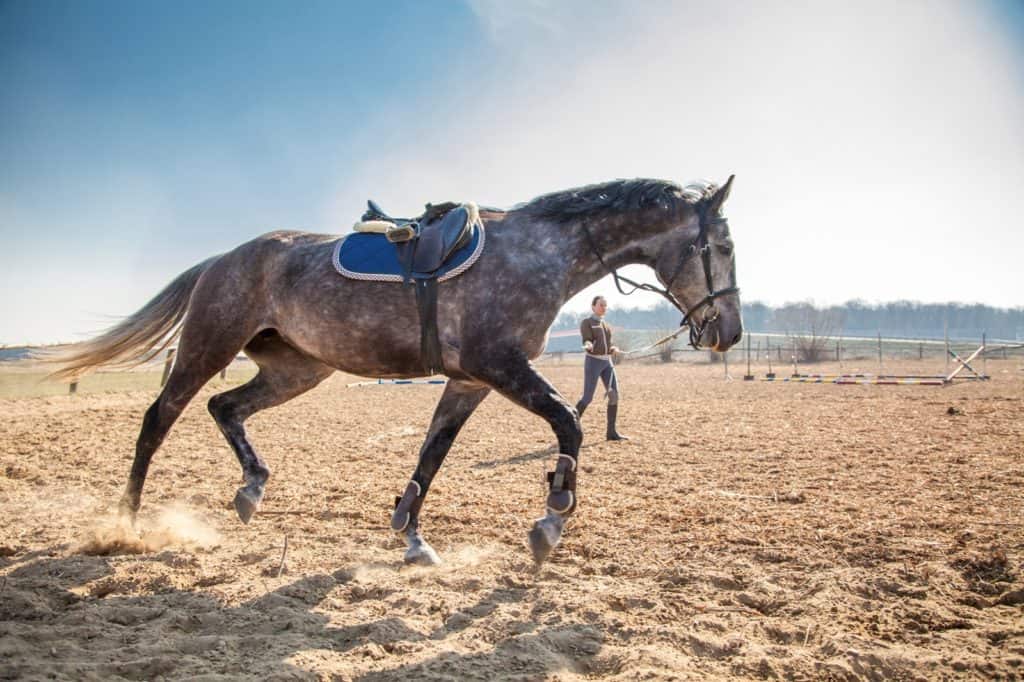
I’m worried about putting too much stress on my 3-year-old’s body. When is it safe to ride her on a regular basis?
Contributions will be used to provide supplies and equipment necessary to care for horses and other animals.

Your horse’s best chance of overcoming this hoof disease might lie in your ability to catch it early.

Drs. Norm Ducharme, Sue Dyson, and Susan Stover will be inducted into the UK Equine Research Hall of Fame in October.

There has been one confirmed equine WNV case in the state so far this year.
Several horses had allegedly received clenbuterol, and groom Marian Vega was found to be in possession of the drug.

Naive horses that watched an experienced horse perform a scary task were less fearful when it was their turn.
Find out how you can assist with the rescue and care of horses impacted by the flooding in Louisiana.
The AAEP Foundation provided $10,000 toward the UHC’s $50,000 goal to geld 500 horses.
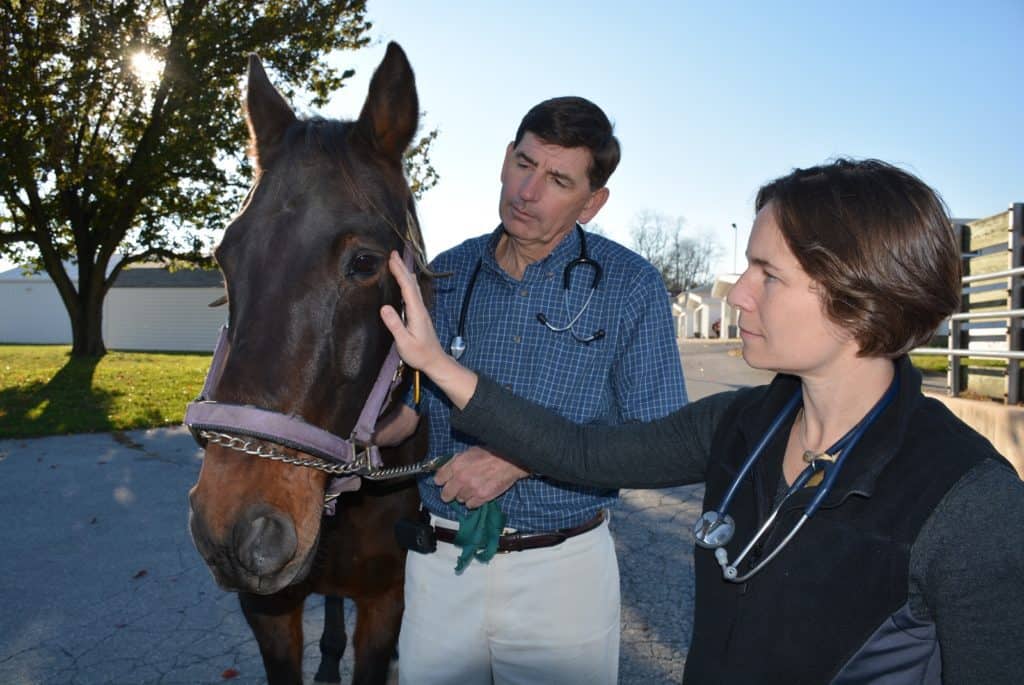
Dr. Amy Johnson will conduct live equine neurologic exam demonstrations as part of the lecture.

A new device determines horses’ heart rate changes due to stress and “subtracts” changes due to physical activity.