The Whole Horse
As we step back from our machines and relearn the art of looking at the equine patient as a whole we might realize that some of the most complicated problems have rather simple solutions.

As we step back from our machines and relearn the art of looking at the equine patient as a whole we might realize that some of the most complicated problems have rather simple solutions.
Your equine athlete’s performance hasn’t been blue ribbon-worthy as of late. Or maybe your broodmare’s gaits are looking a little off kilter. Could long toes on the hind feet be to blame? According to the results of a recent study, the answer in some
The most common ailment to affect a horse is lameness. A University of Missouri equine veterinarian has developed a system to effectively assess this problem using motion detection. The system is referred to as “Lameness Locator.” Kevin Keegan
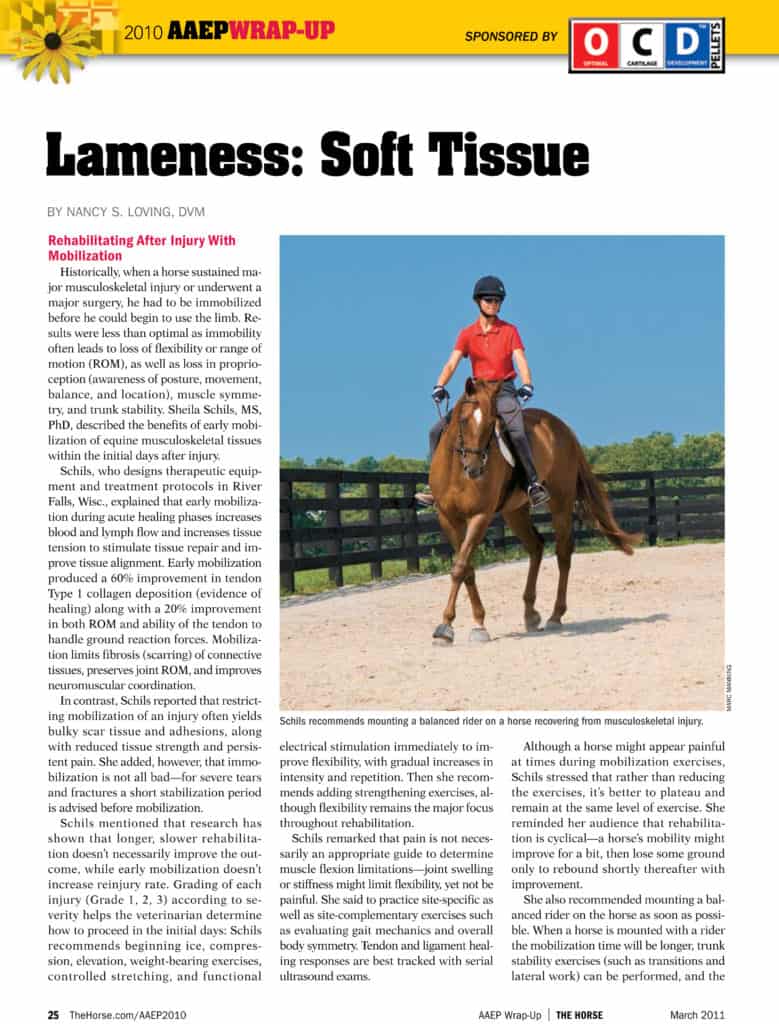
Soft tissue lameness topics from the 2010 American Association of Equine Practitioners convention included early mobilization for soft tissue injury, hyaluronic acid-based biomaterial for wounds, back pain, lameness from pigeon fever abscesses, chiropractic care, and enostosislike lesions within long bones.
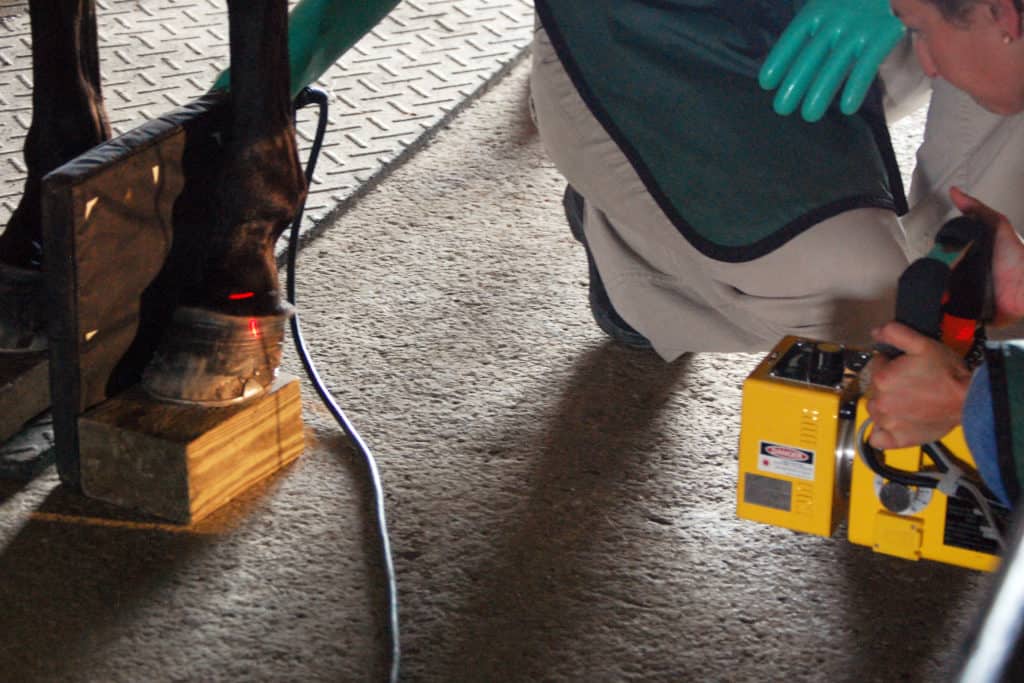
Dr. Vernon Dryden of Rood & Riddle Equine Hospital demonstrates navicular syndrome diagnosis in a 16-year-old Quarter Horse.

Equine lameness, defined as a deviation from a normal gait, is an indicator of a structural or functional disorder of the musculoskeletal system (the limbs or spinal column) that is noted while the horse is either moving or stationary.
Pinpointing lameness in horses is crucial before proper treatment can be prescribed. There are several approaches to lameness examinations and diagnostic methods, which will be partly determined by the age of the horse and what it does for living.
In a retrospective study of 118 French Trotters, a team of veterinarians found that horses with back pain had more severe and localized lesions identifiable on X ray than horses with no evidence of back pain, but even pain-free horses had lesio
Foot lameness in horses was the topic of two separate Table Topics during the 2009 American Association of Equine Practitioners (AAEP) Convention in Las Vegas, Nev., in early December. About 100 veterinarians attended each session.
A
Strategies to identify specific problems in a horse with indistinct or unusual gait deficits, particularly if
A recent study of coffin bone (distal phalanx) fractures in foals found they were far from rare. In fact, all 20 of the Warmblood foals in the study (all foals on a particular farm in one season) had fractures at some point in their first year of life.

Knowing how the hoof is built and what it is capable of can help you understand what it needs to stay healthy and recover if compromised.
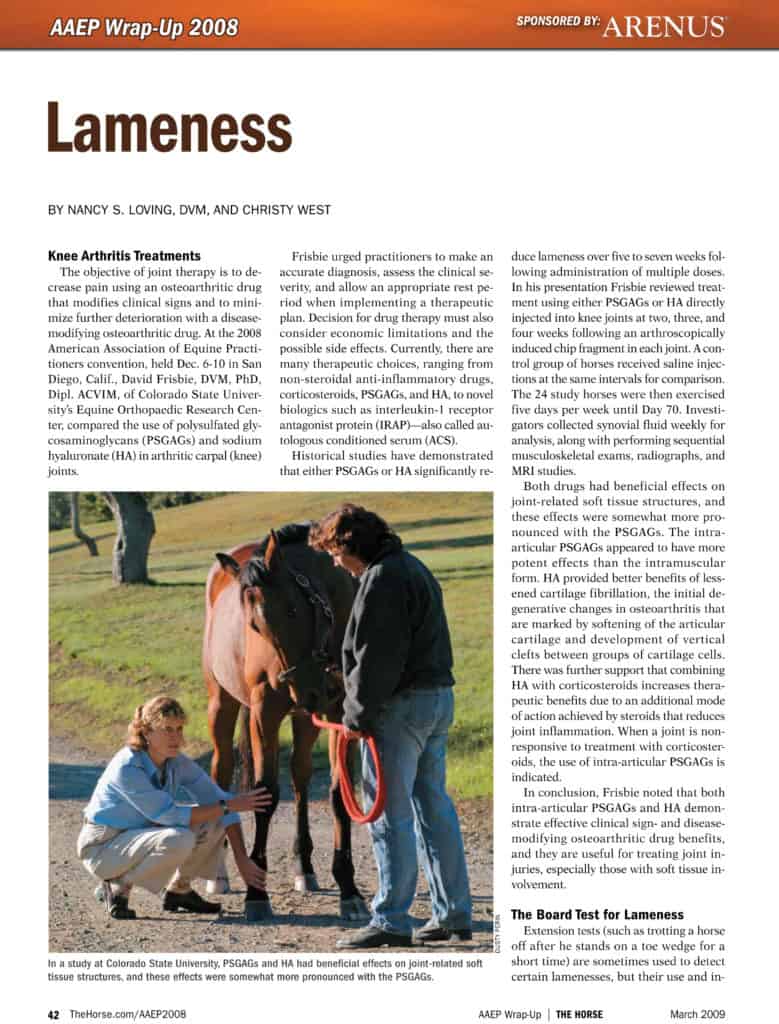
Lameness was an important topic at the 2008 American Association of Equine Practitioners Convention. Topics included arthritis treatments, extension tests, racetrack surfaces, navicular bursa injections, bone fragility syndrome, oral joint health supplements, nutraceuticals, sport horses, gaited horses and more.
Being able to tell the difference between a mild lameness and subtle spinal ataxia is an important, yet challenging, endeavor in equine practice. Ohio State researchers recently reported that kinetic gait analysis–the computer
When we got a call from our boarding stable, we weren’t expecting to hear the word “ataxia.”

MRI uses magnetic fields to create various types of cross-sectional and three-dimensional images.