Drugs, Devices, and Decisions: Understanding Your Options in Managing Equine Degenerative Joint Disease (DJD)
Dr. Avi Blake describes equine degenerative joint disease, how it occurs, clinical signs, diagnostics, and treatment options.

Dr. Avi Blake describes equine degenerative joint disease, how it occurs, clinical signs, diagnostics, and treatment options.
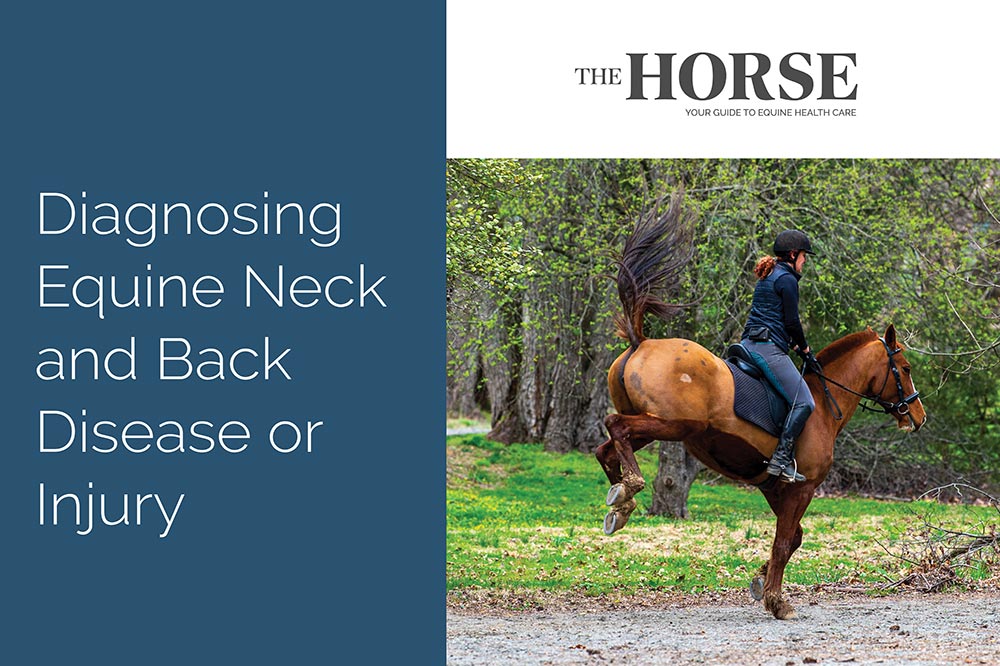
Learn about the clinical signs of neck or back issues in horses and how they are diagnosed.

Find out how you can keep your metabolically efficient horse healthy when he’s laid up with an injury or chronic illness.

There are right and wrong ways to bandage horses’ limbs, no matter the wrap’s purpose.

What’s going on inside your horse’s hooves during injury or disease? Sources reveal what they’ve learned about common hoof conditions such as abscesses and sheared heels.

Getting to the root of podotrochlosis is an ongoing process. Learn about risk factors for the disease and how veterinarians diagnose it.

Navicular syndrome, once feared as a career-ending diagnosis, can now be managed more effectively, despite ongoing challenges.

With so many supplements to choose from, it’s important to know what options are effective. Here’s a look at supplement ingredients that are backed by science.

Are horses that develop sepsis-related, supporting-limb, or idiopathic laminitis at a higher risk of developing endocrinopathic laminitis down the road?

Discover how veterinarians use lameness exams and diagnostic tools to help pinpoint the source of equine lameness in this visual guide.

Dr. Howland Mansfield explains the pros and cons of these two common treatments for osteoarthritis in horses.

How veterinarians put foals with angular limb deformities on the path to alignment.

Dr. Steve Adair describes exercises that could help relieve discomfort and stiffness caused by equine osteoarthritis.

What’s in your horse’s hoof-care box? Here are the items that hoof care professionals recommend you keep on hand.

Dr. Steve Adair describes the common signs of pain and discomfort you should look for in horses with osteoarthritis, such as decreased performance and stiffness.

Drs. Howland Mansfield and Steve Adair explain how owners can keep horses with neck arthritis comfortable in light work.