Collaborating to Make Horse Racing Safer
Collaborative efforts among horse health researchers, the racing industry, and governments could lead to effective measures that will improve safety for both horses and jockeys, one equitation scientist says.

Collaborative efforts among horse health researchers, the racing industry, and governments could lead to effective measures that will improve safety for both horses and jockeys, one equitation scientist says.

U.S. Olympic show jumper Kent Farrington discusses horsemanship, training, recognizing each horse’s individuality, his “ponies,” and more.

Monomoy Girl, a daughter of Tapizar, covered the 1 1/8 miles in 1:49.13.

An ideal conditioning and racing program allows racehorses to perform at their peak, remain sound through their racing careers, and be ready to commence a second career in another discipline.

Catch a ride with U.S. Team eventer Boyd Martin and find out what it takes to prepare high-performance horses for competition.

Take an inside look at the rules and regulations regarding importing horses to the United States solely for competition.

There’s been very little scientific study into sudden death in sport horses, but researchers recently reviewed a number of incidents with the ultimate goal of reducing the number of fatalities that occur.

Scientists hope an estimation of the forces applied to the ligaments and tendons can be used to test the soft-tissue structures’ strain when the limb is faced with variable footing and ground reaction forces.

The ultimate goal of any post-mortem exam program is to mitigate racehorse injury risk and, in turn, that of the exercise riders and jockeys involved.

The BHA will investigate recent equine fatalities and long-term injuries at the Cheltenham Festival before publishing recommendations to improve racehorse welfare.

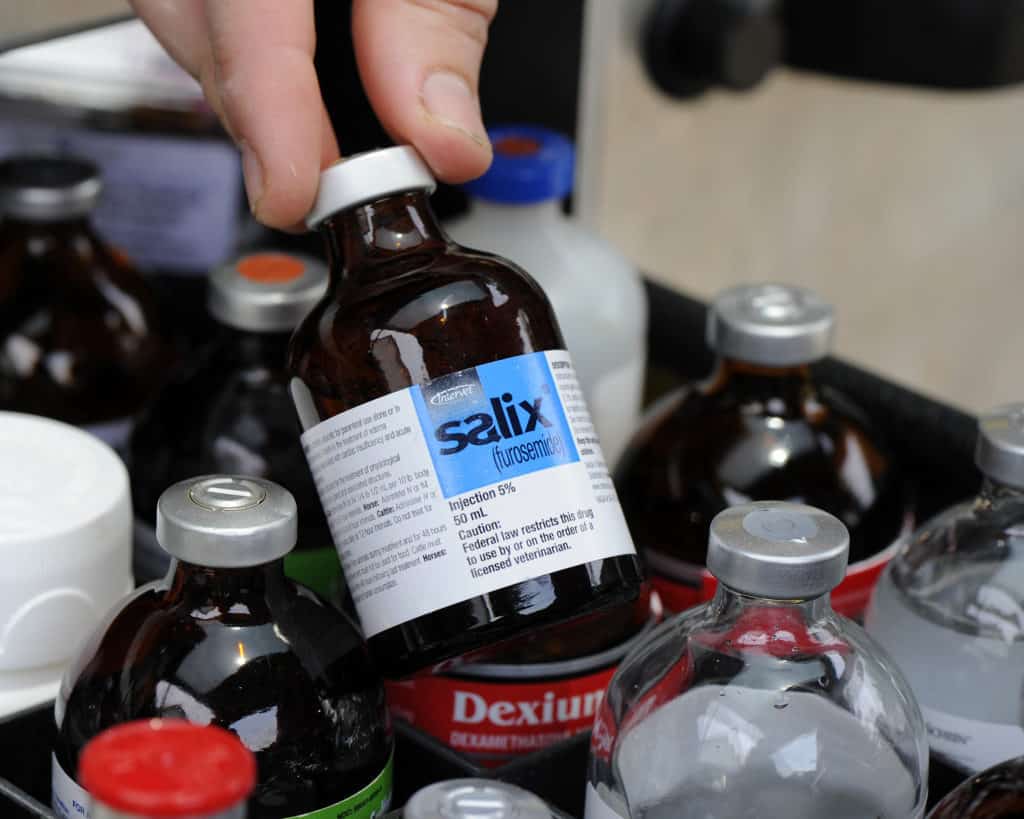
Researchers are working to find other potential race-day therapies that can be used to manage EIPH if proposed legislation banning race-day furosemide use in the U.S. is passed.

Also, the FEI Tribunal issued its final decision in a case against an Italian jumper whose horse tested positive for stanozolol and ketoprofen.

Recent study results suggest heart rate monitoring can allow trainers to assess workloads and adjust training for improved conditioning and race outcomes.

Equine Injury Database statistics revealed a modest increase in 2017 (1.61 per 1,000 starts) compared to 2016 (1.54 per 1,000 starts).

When horses received furosemide four hours before exercise, 93% had a zero EIPH score one hour post-exercise versus 60% when it was given 24 hours before exercise.

With this release, there are no barns under restriction or quarantine at Turfway Park Race Course.
Stay on top of the most recent Horse Health news with
"*" indicates required fields