
A Nail in the Hoof: What Would You Do?
How would you react if your horse stepped on a nail? One practitioner outlines the steps you should take.

How would you react if your horse stepped on a nail? One practitioner outlines the steps you should take.

Veterinarians sought to determine whether phosphorylated neurofilament heavy (pNfH), a protein unique to neurons, could be used to diagnose CVCM, eNAD/EDM, and shivers.

Researchers used CT scan and microscopic exam to characterize anatomical findings of the lumbosacral spine and document any damage or disease.

Dr. Nathan Slovis covers new technologies in accurately diagnosing the causes of infectious diarrhea in foals.

Computed tomography creates cross-sectional, 3D images to help veterinarians diagnose a variety of equine injuries and lamenesses.

Lame horse? Advanced diagnostic and management strategies for navicular syndrome have improved long-term outcomes.

To help horse owners better understand MRI, we’ve scoured our archives and collected 10 resources about this diagnostic modality and some of the ailments it can help identify, all available to you free on TheHorse.com.
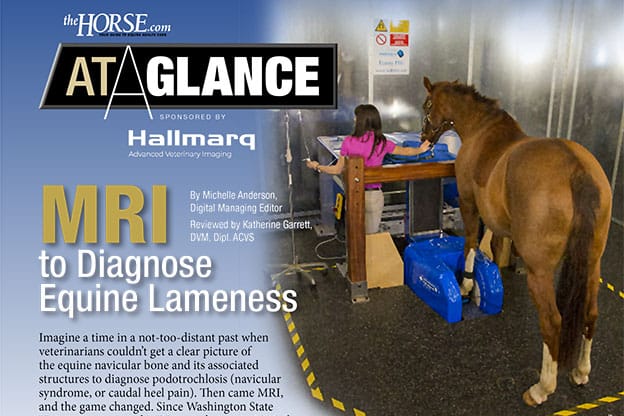
MRI has become easier to use and more accessible. Using this diagnostic tool early leads to improved outcomes for lame horses. Sponsored by Hallmarq Veterinary Imaging.

Chokes are common equine emergencies with potentially serious consequences. Here’s what you need to know.

Don’t let 2020 come to a close without stocking up on all your veterinary necessities. Download a free copy of The Horse‘s Equine Practitioner Product Guide for information on equipment, supplies, and product specials for veterinarians.

A study using the test found asthmatic horses appear to have allergic triggers similar to humans, including a common arena footing material: latex.

Acute respiratory distress syndrome (ARDS) causes rapidly progressive and severe respiratory failure and is associated with high mortality in affected patients.

Veterinarians need to assess horses, diagnose the cause of pain, and start medical management early for the best prognosis.

Though it can, rarely, resolve on its own, airway noise always merits investigation. Learn about the three most common noise-making pathologies and how they’re treated.

Researchers designed the smartphone technology to rapidly identify equine viral respiratory cases. Now, they believe the same technology could help identify COVID-19 in humans.

The body delivers blood to help tendons heal. Power Doppler can identify when blood is present in horses’ injuries that veterinarians might otherwise believe to have recovered.






