
Study: Most X Ray Abnormalities Don’t Delay Racing Careers
Only enlarged proximal sesamoid bones were identified as being a risk for delaying a 2-year-old’s first start.

Only enlarged proximal sesamoid bones were identified as being a risk for delaying a 2-year-old’s first start.

Penn Vet researchers tested more efficient ways to identify blood compatibility and type prior to transfusions.

This approach involves inserting a video endoscope into the epidural space to visualize potentially painful lesions.

Understand the costs of veterinary care before you’re faced with a sick or injured horse.

Diseases and abnormalities of the upper airway are some of the main reasons for poor performance in sport horses.

A University of Illinois’ Veterinary Teaching Hospital researcher is seeking new approaches for treating corneal ulcers.

An accurate diagnosis with MRI can play a significant role in a horse’s long-term return to activity after DDFT injury.

Researchers found that “an unexpectedly large number of normal horses” had temporomandibular joint (TMJ) variations.

Frequent findings included osteoarthritic changes, sclerosis, and mild bone spurs, among others.

Nuclear scintigraphy is especially useful for honing in on the locations of active bone conditions in horses.

Even small deviations in sensor placement can result in an inaccurate hind-limb lameness diagnosis, researchers found.
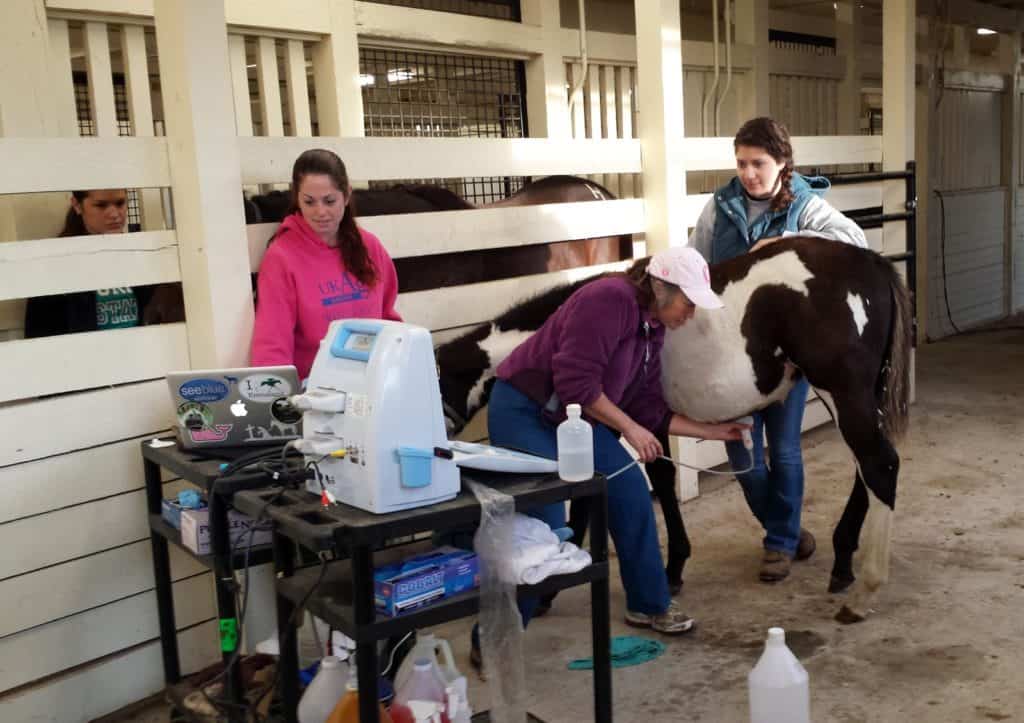
Researchers confirmed that transabdominal ultrasonography can reliably identify worm burdens of more than 10 ascarids.

The new scanner is wider than the standard size, which should allow most of a horse’s neck to be examined.

A researcher offers tips on how veterinarians can pinpoint the cause in unresolved upper hind limb lameness cases.
The University of Kentucky Veterinary Diagnostic Laboratory offers real-time polymerase chain reaction assay testing for Rhodococcus equi.






