Researchers have found equine gastric ulcer syndrome (EGUS) commonly affects horses across different breeds, disciplines, and management types, but horse owners might not recognize signs of the disease. Not all gastric ulcers produce obvious signs—horses with subclinical EGUS might exhibit subtle or even no clinical signs, making them difficult for veterinarians to diagnosis. Identifying and understanding this “silent” source of gastric pain in horses can make a big difference in managing this condition known for compromising horse health, performance, and welfare.
EGUS—The Hidden Stomach Pain
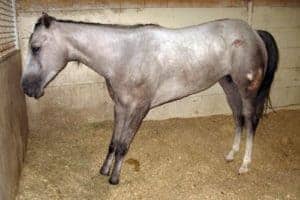
Well-recognized clinical signs of EGUS include girthiness, loss of appetite, repeated colic (abdominal pain) episodes, teeth grinding, weight loss, and a dull coat. But again, subclinical EGUS proves you don’t always see obvious signs of the condition. “We are increasingly recognizing that subtle behavioral change is the horse’s pain language,” says Ben Sykes, BSc, BVMS, MS, MBA, Dipl. ACVIM, PhD, FHEA, a consultant based in Coffs Harbour, Australia. “This is well captured by Sue Dyson’s work on the ridden horse pain ethogram, which had been validated for EGUS.” In a recent literature review, Sykes found researchers describe EGUS as a common but inconsistently supported cause of aversive behavior, with some showing behavioral improvement in horses after ulcer treatment, and others not.2
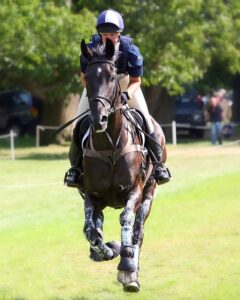
“Usually, horses with subclinical EGUS will show the most dramatic clinical signs during periods of high stress, such as competition, where they might not perform as well,” says Frank Andrews, DVM, MS, Dipl. ACVIM-LAIM, professor of equine health and sports performance at the Louisiana State University School of Veterinary Medicine, in Baton Rouge. “Some owners chalk this up to the horse having a bad day (and fail to recognize the underlying problem). If the horse has a series of poor performances, that might indicate EGUS. Additionally, if lameness is an issue, the resulting pain may lead to secondary EGUS,” he says.
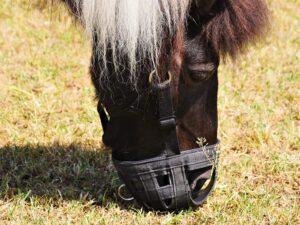
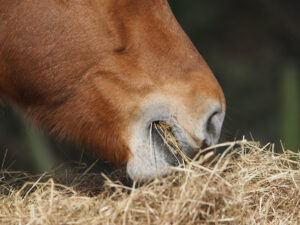
Additionally, Andrews notes silent ulcers can affect feeding behavior in subtle ways. “Horses with EGUS may eat more slowly,” he says. “This is not always the case, but watching and knowing your horse’s behavior is a good way to determine if ulcers could be an issue.”
When considering the possibility of stomach ulcers, he advises horse owners to watch for unusual behavior and have their veterinarians conduct a thorough whole-body clinical exam of their horses if they have concerns.
Types of Gastric Ulcers in Horses
“It was once said that every horse will have an ulcer in their lifetime,” says Andrews, “and this is due to the way the stomach is designed. The lower half of the stomach, called the glandular region, is where stomach acid is secreted. This region is lined with a mucus-bicarbonate layer, which, in most cases, protects it from damage due to gastric acid.” The upper part of the horse’s stomach (the squamous region) lacks protection from acidic conditions, he adds.
Ulcers can develop in both regions and result in varying levels of clinical signs. “Squamous and glandular stomach ulcers alike can cause subtle behavioral issues,” Sykes says. However, some distinctions exist in their typical presentation. “Changes in appetite and weight loss are most commonly associated with squamous disease. In contrast, horses with glandular disease typically have a normal appetite and normal body condition.”
Diagnostic Challenges With EGUS
Due to the lack of visible indicators in horses with subclinical EGUS, diagnosis can be challenging. Sykes says well-trained horses that have historically been willing but become resistant might be suspects for the condition. Today the only definitive way to diagnose stomach ulcers in horses remains a gastroscopy. But due to the cost and invasiveness of the procedure, efforts to develop alternative diagnostic methods continue, with varying success.
“A recent study evaluated biomarkers in saliva from 147 horses that were either affected by EGUS, affected by diseases clinically similar to EGUS but did not have ulcers at gastroscopic examination, or who were healthy,1” explains Andrews. “From the 23 biomarkers studied, 17 showed increased values in EGUS horses when compared to healthy horses. Additionally, three specific biomarkers (uric acid, triglycerides, and calcium) were significantly increased in horses with EGUS compared to horses with other diseases exhibiting similar clinical signs.” These results showed some salivary biomarkers might be useful in diagnosing EGUS, but more research is needed.
In another study published in 2024, researchers measured plasma (blood) gastrin (peptide hormone) and pepsinogen (precursor to the digestive enzyme pepsin) levels in horses with and without EGUS. “The conclusion was that gastrin and pepsinogen levels have a limited value in the diagnosis of EGUS,” Andrews says. “The authors did find some biomarkers associated with oxidative stress that were increased in the EGUS-affected horses.”
The inflammatory cytokines (cell-signaling proteins) tumor necrosis factor-alpha (TNF-α) and interleukin-6 (IL-6) can indicate the presence of inflammation. The biomarkers malondialdehyde (MDA), TNF-α, and IL-6 could reflect oxidative stress and systemic inflammation. “Higher levels of TNF-α and IL-6 indicate their role in EGUS,” Andrews says.
“Additionally, MDA, TNF-α, and IL-6 could be used as preliminary screening markers for EGUS,” he adds, noting that despite these developments, gastroscopy remains the gold standard for diagnosing EGUS.
The Effects of Undiagnosed Gastric Ulcers
Does EGUS—clinical or subclinical—usually lead to severe gastric ulceration if left undiagnosed and untreated? “That really depends,” says Andrews. “Some ulcers appear and then go away, healing on their own. But that is not usually the case if the horse continues to show or compete,” hence the importance of early detection. “In the original EGUS study that led to the FDA approval of Gastrogard (FDA-approved omeprazole), 90% of horses that were not treated and continued in race training had ulcers over the entire 57 days of the study.4 Some of these horses showed some improvement, and some got worse during the study. It is hard to predict which horses are going to get severe gastric ulceration if left undiagnosed and untreated. It is like having heartburn; it is worse some days than others.”
Take-Home Message
Equine gastric ulcer syndrome affects many horses but often goes undetected, particularly in subclinical cases with few or no visible signs. Gastroscopy remains the gold standard for diagnosis, but researchers continue to investigate less invasive screening methods. Salivary and blood biomarkers—such as TNF-α, IL-6, and MDA—show potential, though experts say further study is needed to determine how these markers might help identify EGUS when horses lack overt clinical signs.
References
1 Dyson S. The Ridden Horse Pain Ethogram. Equine Veterinary Education. 2022;34(7):372–380.
2 Sykes B, Lovett A. Can All Behavioral Problems Be Blamed on Equine Gastric Ulcer Syndrome? Animals. 2025;15(3):306.
3 Muñoz-Prieto, A, Cerón, JJ, Rubio CP, Contreras-Aguilar, MD, Pardo-Marín, L, Ayala-de la Peña, I, Martín-Cuervo M, Holm Henriksen IM, Arense-Gonzalo JJ, Tecles F, Hansen S. Evaluation of a Comprehensive Profile of Salivary Analytes for the Diagnosis of the Equine Gastric Ulcer Syndrome. Animals. 2022;12(23):3261. https://doi.org/10.3390/ani12233261
4 Andrews FM, Sifferman RL, Bernard W, Hughes FE, Holste JE, Daurio CP, Alva R, Cox JL. Efficacy of omeprazole paste in the treatment and prevention of gastric ulcers in horses. Equine Vet J Suppl. 1999 Apr;(29):81–6. doi: 10.1111/j.2042-3306.1999.tb05176.x.