From locking plates to 3D-printed implants and surgical navigation, advancements have expanded what’s possible for injured horses
Most of the time it shows up like a little straggly hair—a dark, thin, not-so-logical line over the white bone in an X ray. As you squint and think, “What is that?” the veterinarian runs her fingers over that part of the screen and confirms what the line represents: a fracture.
Even the public knows broken bones can mean very bad news for horses and their owners. The fact equine fracture patients have generally had to be euthanized has become such common knowledge it’s rampant in popular culture, from films to Gary Larson’s The Far Side.
Fortunately, today’s outlook is far less bleak. As equine medicine and surgical technology improve, veterinarians and other scientists continue to discover new ways to repair fractures and help more horses return to comfortable lives. In this article we’ll look at what’s new in fracture repair and what it means for horse health and welfare.
Locking Plates
Surgeons can sometimes hold simple fractures together with screws alone, but they often use screws to secure metal plates to bone and provide greater stability under bending, twisting, and shearing forces. However, screws can loosen, even with the use of plates, says Brad Nelson, DVM, PhD, Dipl. ACVS (LA), an associate professor of equine surgery at the Johnson Family Equine Hospital and Veterinary Teaching Hospital in the College of Veterinary Medicine at Colorado State University, in Fort Collins.
In the early 2000s, equine surgeons brought locking plates over from human medicine and started using them on horse fractures, he says. Threads on each screwhead align with matching threads in the plate, locking the screw to the plate at a fixed angle, reducing pullout from the bone. The resulting rigid framework distributes forces across the entire repair. Newer variable-angle locking plates even allow surgeons to direct screws along different trajectories.
The technology provides rigidity and stability, resisting collapse and breakdown even under the substantial forces a horse generates during movement, says Henry O’Neill, MVB, DVM, MS, Dipl. ACVS (LA), MRCVS, a surgeon at Donnington Grove Equine Vets, in Newbury, U.K. “It’s really transformed our ability to stably repair long bone fractures especially—like the cannon bone and radius (forearm),” he says. “It’s been pretty awesome, honestly.”
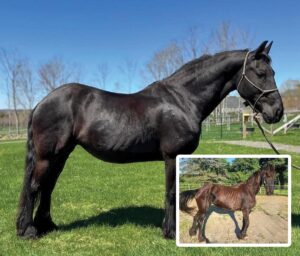
Nelson repaired a complete, displaced humeral fracture in a 4-month-old Quarter Horse foal using locking plates, he says. (The humerus runs downward and backward from the shoulder to the elbow joint, where it meets the radius and ulna.) The bone healed, and although a local infection led to removal of the implants, the foal was running without lameness at 11 months.
“These plates are a real cornerstone in being able to fix some of these fractures in our equine patients, especially those higher up in the limb or subject to a lot of force,” says Nelson. “They let us say, ‘Well, this is a repair we couldn’t have done in the past, but now we might have an opportunity here
This story requires a subscription to The Horse magazine.
Current magazine subscribers can click here to and continue reading.
Subscribe now and gain unlimited access to premium content.
Subscribe NowWe at The Horse work to provide you with the latest and most reliable news and information on equine health, care, management, and welfare through our magazine and TheHorse.com. Our explanatory journalism provides an understandable resource on important and sometimes complex health issues. Your subscription will help The Horse continue to offer this vital resource to horse owners of all breeds, disciplines, and experience levels.