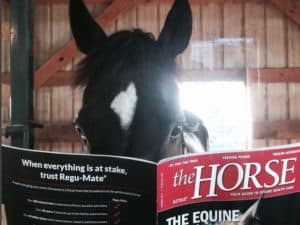
‘That’s a Horse!’: Horses Recognize Horse Faces in Photos
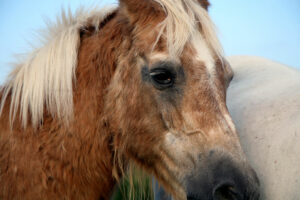
An Italian study shows horses know horse faces in photos, but not faces of other animals. The finding reveals information about how horses see 2D images.


An Italian study shows horses know horse faces in photos, but not faces of other animals. The finding reveals information about how horses see 2D images.

Administered by the UC Davis School of Veterinary Medicine, the program will support and train a network of government agencies, individuals, and organizations to aid domestic animals and livestock during emergencies.
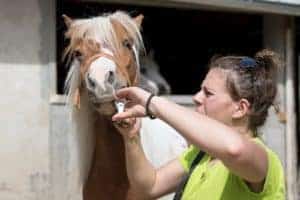
A study found omeprazole protected horses against phenylbutazone-induced equine glandular gastric disease but might exacerbate phenylbutazone-induced intestinal disease.

Meet Tokyo Olympic Head Farrier Ben Benson of Great Britain, and learn what it takes to keep high-performance horses shod during the Games.

This case in Weld County marks the state’s first confirmed West Nile virus case in 2021.

Veterinarians have confirmed no new cases new equine herpesvirus-1 cases related to the racetrack outbreak.

The California Department of Food and Agriculture continues to monitor horses from the Sonoma County show and the index case’s home premises.
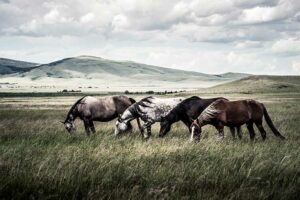
Feeding horses in keeping with their nature and managing their stress can help support a healthy hindgut and microbiome.
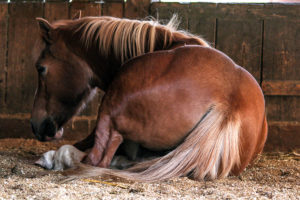
Fasting a horse overnight prior to giving an omeprazole dose to treat ulcers improves treatment outcomes, especially for glandular ulcers, a researcher found.
Researchers described normal pituitary gland appearance on MRI. Their findings might help veterinarians identify PPID in horses and start treatment earlier.

Swiss horse Jet Set, ridden by Robin Godel, was euthanized due to an injury sustained during Equestrian Eventing at the 2020 Tokyo Olympics on Aug. 1, 2021.

Does your horse have gastric ulcers? Research suggests the odds are yes. Learn more about EGUS with educational content throughout August.
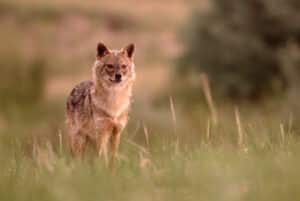
Researchers monitored mares’ heart rate responses to sounds of certain predators. Here’s what they found.
Another mare has shown neurologic signs but has tested negative for EHV-1.
The CDFA reports one neurologic, one febrile, four suspected cases that tested negative, and one euthanized horse.
Because of difficulty in isolating new arrivals at Kentucky tracks, more stringent requirements have been established.