Researchers investigated how the novel surgical technique improved lameness and radiographic appearance in subchondral cystic lesions of the medial femoral condyle.

Researchers used CT scan and microscopic exam to characterize anatomical findings of the lumbosacral spine and document any damage or disease.
The original hold order has been reset.

The case marks the province’s fifth confirmed case of EHV-1 resulting in EHM.

Two additional horses are suspected to have equine influenza, and four additional horses were exposed.

Research shows resistance among cyathostomins (small strongyles) to the three main groups of anthelmintic (antiparasitic) drugs commonly used to deworm horses.
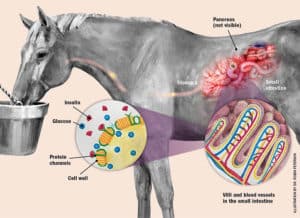
Insulin dysregulation can cause abnormally high levels of insulin and sometimes glucose to circulate in the bloodstream, putting a horse at risk of regional adiposity, obesity, and/or laminitis. Learn more in our visual guide.

Consider doing tiebacks in horses where the problem is or will be performance-limiting.
Are you wondering when your pregnant mare will foal? Use our Mare Gestation Calculator to estimate her foaling date!

Safety in Thoroughbred horse racing became a very public concern two years ago when a series of catastrophic breakdowns at Santa Anita Park in Southern California became national news. Veterinarians presented safety measures put in place to protect horses and humans.

Three exposed mares remain under 21-day quarantine.

One of the horses was euthanized. The state has placed an additional 22 potentially exposed horses under quarantine.


The Sonoma County horse is undergoing treatment at a veterinary isolation unit.

Researchers used PRP-L to treat joint infections caused by the common bacterium Staphylococcus aureus, with encouraging results.